What carbon neutral private aviation really means for charter clients
Executive summary. Carbon neutral private aviation today usually means a mix of three things: cutting fuel burn where possible, using sustainable aviation fuel (SAF) when it is genuinely available, and buying carbon credits to compensate for the remaining emissions. For charter and jet card clients, the practical task is to distinguish between real reductions at the aircraft and fuel level and purely financial offsets that leave the underlying emissions unchanged.
Carbon neutral private aviation sounds reassuring until you unpack the math. For a typical private jet flight from Paris Le Bourget to New York Teterboro in a Gulfstream G650, you are looking at roughly 20 to 25 metric tons of carbon dioxide equivalent (CO2e) for six passengers. That estimate is consistent with emissions calculators based on ICAO and European Environment Agency (EEA) fuel-burn methodologies for long haul business jets, and it translates into as much as 30 to 40 times more carbon per person than a full commercial widebody on the same route. When charter operators promise a carbon neutral private jet charter, they are usually talking about a financial carbon offset, not a physical change to the aircraft, the aviation fuel, or the jet’s emissions profile.
In practice, carbon neutrality in private aviation today usually combines three levers, and each lever has very different credibility. First, you can reduce private flying emissions at the source by flying more efficient jets, optimizing fuel burn, and using sustainable aviation fuel blends when available, which directly reduce jet emissions in the air. Second, you can support verified carbon projects through carbon offsetting and carbon credits, which attempt to balance remaining carbon emissions by funding renewable energy, reforestation, or methane capture, but these offsets do not erase the original fuel burn from the aircraft engines. Third, you can change behavior by consolidating private jets, choosing smaller aircraft for short legs, or replacing some short hops with rail or electric vehicles, which is the only lever that truly reduces the total metric tons of carbon emitted by the aviation industry.
For a charter or jet card client, the key is to separate marketing language from operational reality. When an operator claims carbon neutral private aviation, ask whether they are reducing emissions at the aircraft level or simply buying verified carbon credits after the fact, because the climate impact is very different. A credible path to carbon neutrality in private aviation will always start with sustainable aviation practices such as lower fuel burn, smarter flight planning, and meaningful use of SAF, and only then use carbon offsetting to address the residual carbon emissions that cannot yet be engineered out of the flight.
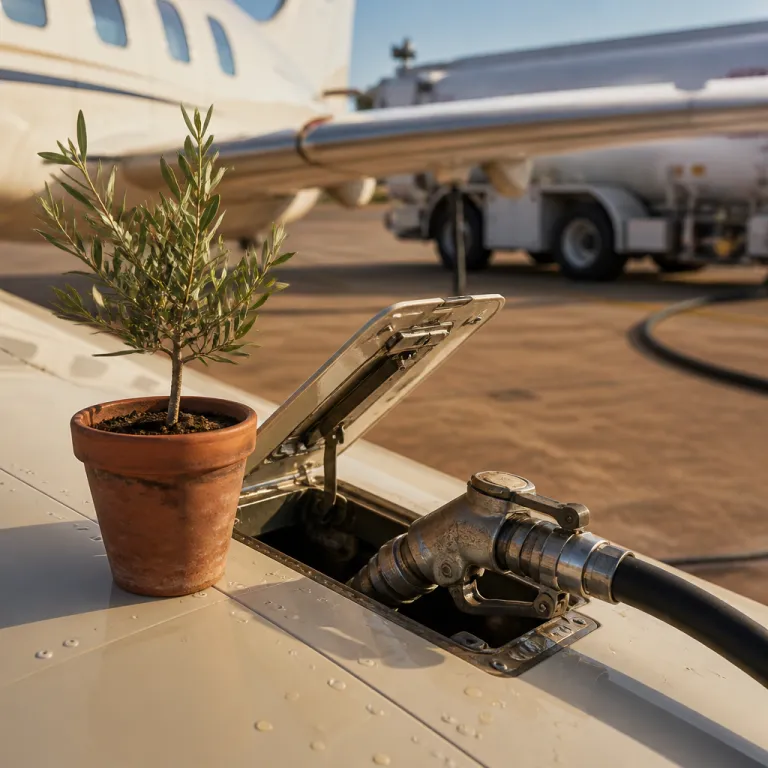
Most private jets still run entirely on conventional aviation fuel, even when the brochure talks about sustainable aviation and green energy. A Bombardier Global 7500 or Dassault Falcon 8X can technically accept a SAF blend, but the actual availability of sustainable aviation fuel at FBOs in Europe, the Middle East, and secondary United States airports remains patchy, which means many flights marketed as sustainable still load standard Jet A. True carbon neutral private aviation would require not only widespread SAF supply but also transparent reporting of how much sustainable fuel was uplifted for each flight, how that reduced carbon emissions in metric tons, and how any remaining jet emissions were handled through verified carbon offsetting.
There is also a subtle but important distinction between carbon neutral and climate neutral in private aviation. Carbon neutrality focuses on balancing carbon dioxide emissions, while climate neutrality would also consider non-CO2 effects such as contrails and nitrogen oxides, which can amplify the warming impact of a private jet at cruise altitude. When you hear an operator talk about carbon neutral private jets, remember that even perfect carbon offsetting of carbon emissions does not fully address these broader aviation industry impacts, so the term can overstate the environmental benefit of a given flight.
For high frequency flyers using a jet card or fractional program, the cumulative impact is what matters. Fifty to two hundred hours of private aviation per year can easily translate into several hundred metric tons of carbon emissions, depending on aircraft size and typical stage length, which is far beyond the footprint of occasional commercial travel. In that context, carbon neutral private aviation is less about a single symbolic offset project and more about a systematic strategy to reduce private flying emissions through aircraft choice, operational discipline, and verifiable use of renewable energy backed solutions such as solar power or wind projects that displace fossil fuel generation on the grid.
Worked example: how a private jet flight is calculated. To understand how these numbers are derived, most serious operators use fuel-burn-based methodologies similar to the ICAO Carbon Emissions Calculator or the European Environment Agency’s guidance: they estimate total fuel uplift for the mission, apply a standard emissions factor of around 3.15 kg CO2 per kilogram of jet fuel, then adjust for non-CO2 effects with a multiplier where appropriate. For example, a long range business jet burning 8,000 kg of fuel on a transatlantic leg would generate about 25.2 metric tons of CO2 (8,000 × 3.15), which can then be expressed as CO2e if a multiplier is used. Dividing the resulting CO2e by the number of passengers gives a per-seat figure that can be compared with commercial aviation benchmarks.
Hybrid, electric and saf: where the technology really stands
The most credible path toward carbon neutral private aviation does not start with paperwork, it starts with propulsion. Hybrid electric aircraft, fully electric jets for short hops, and high-blend SAF for longer range missions are the three pillars that can materially reduce carbon emissions before anyone talks about carbon credits. For a charter client, the question is not whether these technologies exist, but when they will be available at your preferred FBO and at what premium over conventional aviation fuel.
On the electric side, eVTOL aircraft promise zero direct in-flight emissions for urban and regional trips under 200 kilometers, which could replace many helicopter transfers and some very short private jet flights. These electric aircraft will not carry you from London to Dubai, but they can reduce private aviation fuel burn on feeder legs to major hubs, where you then board a larger jet that may use a SAF blend to cut jet emissions on the long sector. For a client who flies 50 to 200 hours per year, shifting a portion of those hours to electric aircraft could meaningfully reduce total metric tons of carbon, especially if the charging infrastructure is powered by renewable energy such as solar power or wind.
Hybrid propulsion is the bridge technology for private jets that need range but want lower fuel burn. Concepts under study for future light and midsize jets pair a conventional turbine with an electric motor and battery pack, allowing the aircraft to use electric power during taxi, takeoff, or climb, which are the most fuel-intensive phases of flight. This approach can reduce jet emissions and aviation fuel consumption by double-digit percentages on typical private jet missions, which directly supports sustainable aviation goals without relying solely on carbon offsetting or external carbon credits.
SAF is the workhorse of near term carbon neutral private aviation, but availability and cost are the hard constraints. Lifecycle analysis of sustainable aviation fuel by industry bodies such as IATA and the International Civil Aviation Organization indicates that high quality SAF can reduce lifecycle carbon emissions by up to 80 percent compared with fossil-based aviation fuel, depending on the feedstock and production pathway, which makes it central to any realistic decarbonization roadmap. When you ask operators about sustainability, press them on where they can actually uplift SAF, what blend percentage they use on specific aircraft, and how that translates into verified carbon reductions per flight rather than generic marketing claims about sustainable aviation.
Cost is where the romance of green flying meets the reality of your charter invoice. SAF can cost two to four times more than conventional aviation fuel, and when you blend even 30 to 50 percent into the tanks of a large cabin private jet, the fuel line on your bill can rise sharply, especially on long haul flights. For a charter operator running a mixed fleet of private jets, committing to SAF at scale can add several percentage points to overall operating costs, which either compresses margins or flows through to higher hourly rates for jet card and on-demand clients.
Hybrid and electric technology also reshape the economics of carbon neutral private aviation in more subtle ways. Electric aircraft have lower direct energy costs per hour but require heavy upfront investment in charging infrastructure and grid upgrades, ideally powered by renewable energy to avoid simply shifting carbon emissions upstream. For a client evaluating future-focused operators, look for those who are not only talking about hybrid and electric jets but are also engaging with airport authorities on grid capacity, on-site solar power, and long term contracts for verified renewable energy, because these are the foundations of credible sustainable aviation rather than aspirational press releases about distant prototypes.
When you want a deeper dive into how hybrid and electric jets could reshape luxury flying, it is worth reading detailed technical and economic analyses of future hybrid electric business aircraft that dissect cabin expectations, range trade-offs, and the likely adoption curve for high net worth travelers. That kind of granular view helps you judge whether an operator’s sustainability roadmap is grounded in the real capabilities of future aircraft or simply using buzzwords like carbon neutral and sustainable aviation to keep up with industry trends. As always in private aviation, the details of the aircraft, the route, and the fuel determine the true environmental impact, not the slogan on the brochure.
Offsets, credits and the fine line between rigor and greenwashing
Once you have squeezed every possible efficiency from aircraft choice, SAF usage, and operational discipline, you still face residual carbon emissions that current technology cannot eliminate. This is where carbon offsetting and carbon credits enter the picture for private aviation, and where the gap between serious climate strategy and polished greenwashing becomes painfully obvious. For a charter client, understanding how these markets work is essential if you want carbon neutral private aviation that means more than a line item on your invoice.
A carbon offset is a financial instrument that represents one metric ton of carbon dioxide equivalent avoided or removed from the atmosphere through a specific project, such as a renewable energy plant, a reforestation program, or an industrial gas capture facility. When a private jet operator claims carbon neutrality, they are often buying enough verified carbon credits to match the calculated carbon emissions from your flight, then retiring those credits in a registry to signal that they will not be resold. In theory, this balances the climate impact of your private jets by funding equivalent emissions reductions elsewhere, but in practice the quality of the underlying project and the rigor of the verification process make all the difference.
High quality carbon credits come from projects that are additional, permanent, and independently audited, meaning the emissions reductions would not have happened without the project, will last for a long period, and are confirmed by a third party. In the context of private aviation, that might mean funding a wind farm that displaces coal-based electricity, a solar power installation that brings renewable energy to a growing region, or a methane capture system at a landfill, all of which can be quantified in metric tons of avoided carbon emissions. Low quality offsets, by contrast, may pay landowners not to cut forests that were never at real risk, or may double count the same emissions reductions across multiple schemes, which undermines the integrity of carbon neutral claims for private jets.
For a charter client, the key is to ask operators specific questions about their carbon offsetting programs rather than accepting generic sustainability language. Which registries do they use for verified carbon credits, such as Gold Standard or Verra, and how do they select each project in their portfolio. Do they publish annual data on total jet emissions, total metric tons offset, and the mix of renewable energy versus nature-based projects, or do they simply state that all flights are carbon neutral without any supporting numbers.
There is also a structural tension between using offsets as a bridge and using them as a permanent license to pollute. Carbon neutral private aviation built entirely on purchased offsets can allow operators to avoid harder decisions about fleet renewal, SAF procurement, and operational changes that would actually reduce private flying emissions. A more credible model treats carbon offsetting as the last step after aggressive efforts to reduce fuel burn, adopt sustainable aviation fuel where available, and explore hybrid or electric aircraft for suitable routes, which aligns financial incentives with real world reductions in aviation fuel consumption.
Clients should also be wary of one-size-fits-all offset multipliers that do not reflect the specific aircraft, route, and load factor of each flight. A light jet flying two passengers from Geneva to Nice has a very different carbon emissions profile from a large cabin private jet flying eight passengers from London to Los Angeles, even if both are marketed as carbon neutral. Serious operators will calculate jet emissions per flight using recognized methodologies, apply appropriate multipliers for non-CO2 effects, and then purchase verified carbon credits accordingly, rather than using a flat percentage of revenue or fuel volume as a proxy.
As electric aircraft and hybrid jets enter the market, the role of offsets will evolve rather than disappear. Short haul electric flights powered by renewable energy may require minimal or no carbon offsetting, while long haul private aviation will still generate substantial jet emissions that need to be addressed through high quality projects. For a deeper perspective on how electric luxury aircraft could reshape this balance, technical roadmaps for the age of electric business aircraft offer a useful framework for thinking about which segments of private aviation can decarbonize fastest and which will remain offset dependent for longer.
To see how this works in practice, consider a simplified example for a notional carbon neutral private jet charter in 2030. A super midsize jet flying 3,000 kilometers with six passengers might burn around 5,000 kilograms of fuel, producing roughly 15.8 metric tons of CO2 (5,000 × 3.15). If the operator uses a 30 percent SAF blend with a 70 percent lifecycle reduction, the effective emissions could fall by about 3.3 tons, leaving 12.5 tons to be covered by high quality offsets purchased and retired through recognized registries, with project documentation available to clients on request.
Who is serious about 2030 and what clients should demand
By now, every major charter brand has a sustainability page, a carbon neutral pledge, and a glossy photo of a private jet parked under a wind turbine. The question for a client is which operators are actually investing in lower carbon aircraft, SAF supply, and renewable energy infrastructure, and which are simply buying the cheapest offsets they can find to keep marketing claims intact. Carbon neutral private aviation by 2030 is an ambitious target, but it is achievable for a well managed fleet if the operator treats sustainability as a core operating metric rather than a side project.
Serious operators start with fleet strategy, because the aircraft you fly is the single biggest driver of carbon emissions per hour. Moving clients from older, thirsty models to newer, more efficient jets can cut fuel burn by double-digit percentages on the same mission profile, which directly reduces jet emissions before any carbon offsetting is considered. When you evaluate a charter provider or jet card program, ask how quickly they are retiring older aircraft, what proportion of their fleet is next generation models with improved aerodynamics and engines, and how they plan to integrate future hybrid or electric aircraft into their private aviation offering.
Investment in SAF is the second litmus test for a credible 2030 commitment. Operators who are serious about carbon neutral private aviation are signing offtake agreements with fuel suppliers, working with airports to expand sustainable aviation fuel storage, and sometimes paying a premium to bring SAF into markets where it is not yet standard. These steps increase short term operating costs, but they also lock in access to lower carbon aviation fuel that can reduce private flying emissions across hundreds of flights, which is far more impactful than relying solely on carbon credits purchased at the end of the year.
The third indicator is transparency around data and targets. A trustworthy operator will publish annual carbon emissions for their fleet in metric tons, break down the share of flights using SAF, and disclose how many metric tons of jet emissions were addressed through verified carbon credits versus direct reductions in fuel burn. They will also set interim milestones on the path to 2030, such as specific percentages of SAF usage, defined timelines for introducing hybrid aircraft, and clear thresholds for reducing emissions intensity per flight hour across their private jets.
For clients, the practical questions are straightforward, even if the answers are not always comfortable. How much extra per flight hour are you paying for sustainable aviation measures such as SAF, renewable energy backed ground operations, and high quality carbon offsetting, and how does that compare with the base charter rate. On a typical large cabin private jet charter, a robust sustainability package might add 3 to 8 percent to the total cost, depending on the level of SAF usage and the price of verified carbon credits, which is meaningful but not prohibitive for most frequent flyers in this segment.
There is also a strategic dimension to choosing operators who are genuinely aligned with a lower carbon future. By directing your charter and jet card spend toward companies that invest in SAF, hybrid aircraft, and renewable energy infrastructure such as on-site solar power at FBOs, you help shift capital toward the parts of the aviation industry that are actually reducing emissions rather than simply offsetting them. When you read about flagship models like the Falcon 10X and the broader debate on range, cabin comfort, and operating economics, detailed analyses of long range business jets show how aircraft choices intersect with long term sustainability and cost of ownership.
By 2030, the gap between operators who treated carbon neutral private aviation as a serious engineering and investment challenge and those who treated it as a marketing slogan will be obvious in their fleets, their fuel contracts, and their balance sheets. As a client, your leverage lies in the questions you ask and the contracts you sign, because every hour you book sends a signal about whether sustainability is a nice to have or a non-negotiable part of private aviation. In the end, what defines the next decade of private jets will not be the price tag, but the first hour at altitude.
Key figures shaping carbon neutral private aviation
- Private aviation carbon pollution reached at least 15.6 million metric tons of carbon dioxide equivalent in a recent year, according to multiple environmental analyses of business jet traffic in Europe and North America, and this footprint has been rising faster than efficiency gains in new aircraft designs.
- Lifecycle analysis of sustainable aviation fuel shows that high quality SAF can reduce carbon emissions by up to 80 percent compared with conventional aviation fuel, depending on feedstock and production method, which makes SAF the single most powerful near term lever for reducing emissions from private jets.
- Studies comparing travel modes indicate that private jets can emit up to 40 times more carbon per passenger than commercial flights on similar routes, largely because of lower load factors and smaller cabin sizes, which magnifies the importance of fuel burn efficiency and aircraft choice in private aviation.
- Electric vertical takeoff and landing aircraft designed for short range urban missions can achieve zero direct in-flight carbon emissions when powered by renewable energy, which positions eVTOL fleets as a key tool for reducing emissions from short haul private aviation segments such as airport transfers.
- Industry roadmaps for decarbonizing the aviation industry estimate that a combination of SAF, efficiency improvements, and new propulsion technologies could address a majority of aviation-related carbon emissions by mid century, but only if investment in sustainable aviation fuel production and renewable energy infrastructure scales dramatically in the next decade.