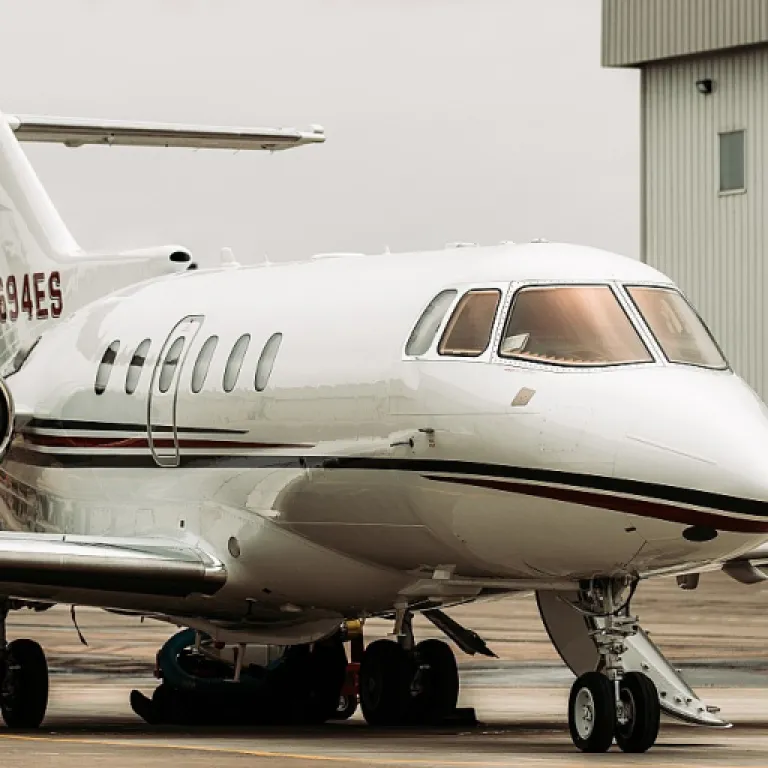

Position of the hawker 4000 jet in the private aviation landscape
How the Hawker 4000 fits in today’s private aviation market
The Hawker 4000 sits in a very specific corner of the private aviation landscape. It is a super midsize business jet, designed to bridge the gap between classic midsize jets and the larger, more expensive long range aircraft from brands like Gulfstream and Dassault Falcon. When it was introduced by Raytheon Aircraft and later marketed under Hawker Beechcraft, the goal was clear : offer transcontinental range, a true stand up cabin, and serious baggage capacity without stepping into large cabin price territory.
To understand where this jet really stands, it helps to compare it with what most business travelers already know. On one side, you have smaller midsize aircraft such as older Hawker models, some Cessna Citations, or even upgraded King Air turboprops. On the other side, you have large cabin business jets from Gulfstream, Bombardier, and Dassault, as well as super midsize competitors like the Embraer Legacy 450/500 family or some Falcon models. The Hawker 4000 was designed to sit right in the middle of this spectrum, offering more cabin volume and range than a typical midsize jet, but with lower fixed costs than a true heavy jet.
From Hawker Horizon concept to Hawker 4000 reality
The aircraft started life under the name Hawker Horizon, a program launched by Raytheon Aircraft in the late 1990s. The idea was ambitious : a composite fuselage, advanced avionics, and performance that would push the Hawker brand into a new era. After delays and certification challenges, the model finally entered service as the Hawker 4000, under the Hawker Beechcraft banner.
This history matters for anyone considering a purchase, fractional share, or regular charter use. The Hawker 4000 is not just another incremental update of a classic Hawker airframe. It is a clean sheet super midsize design that tried to move the brand closer to what companies like Bombardier and Dassault were doing with their larger business jets. That ambition brought real advantages in cabin comfort and performance, but it also created a smaller fleet size and a more complex support story, which has direct implications for maintenance and long term reliability.
For readers who like to understand how a model fits into the broader evolution of business aviation, it can be useful to look at how other aircraft programs were documented and certified. A good example is how detailed performance and operating handbooks are used to define an aircraft’s capabilities in practice. Resources that explain how to read and interpret a pilot operating handbook and performance data can give you a sense of the level of technical detail behind every range or runway number you see in a brochure.
Who the Hawker 4000 really serves best
The Hawker 4000 is aimed at a specific type of user in private aviation. It is not the ideal first step up from a light jet, and it is not a replacement for a large cabin Gulfstream or Dassault Falcon if you routinely fly intercontinental missions. Instead, it is particularly well suited for :
- Companies that need regular non stop flights of around 2 500 to 3 000 nautical miles with 6 to 8 passengers
- Owners who want a spacious stand up cabin and a generous baggage compartment without moving into heavy jet operating costs
- Air charter operators looking to offer a differentiated super midsize product between classic midsize jets and large cabin aircraft
In practice, this means typical missions such as coast to coast flights within large countries, or regional trips between major business centers separated by 2 to 5 hours of flight time. For many corporate flight departments, the Hawker 4000 can replace a mix of older midsize jets and high end turboprops like the King Air, while offering a more consistent cabin experience for executives and guests.
How it compares with key competitors
When you look at the Hawker 4000 in context, it competes most directly with other super midsize and upper midsize business jets. These include some Embraer Legacy variants, certain Bombardier models, and a few Dassault Falcon aircraft that sit just below the large cabin category. The Hawker 4000’s selling points are its composite fuselage, flat floor cabin, and the way it balances range, speed, and cabin volume.
Compared with older Hawker models or other midsize jets, the 4000 offers :
- More cabin height and width, which changes how the space feels on flights longer than two hours
- Better range for typical business missions, reducing the need for fuel stops
- A more modern flight deck and systems architecture for its model year
Against larger aircraft from Gulfstream or Dassault, it cannot match the intercontinental range or the sheer cabin size. However, it usually comes with lower acquisition cost on the pre owned market and lower fuel burn than a heavy jet, which can be attractive if your missions rarely exceed 3 000 nautical miles.
Why its market position matters for your decision
Understanding where the Hawker 4000 sits in the private jet ecosystem is not just an academic exercise. It directly affects how you should think about ownership, charter, or fractional use. A super midsize jet like this will have different fixed costs, crew requirements, and maintenance patterns than a light jet or a turboprop. It will also offer a different cabin experience and performance profile than a large cabin aircraft.
If you are comparing the Hawker 4000 with a King Air, a smaller Hawker model, or a midsize jet from another aircraft company, you are essentially deciding how much you value cabin comfort, nonstop range, and speed versus acquisition price and operating costs. If you are comparing it with a Gulfstream, a large Dassault Falcon, or a big Bombardier, you are deciding whether you truly need long haul capability or if a super midsize solution is enough for your typical missions.
The rest of this guide will go deeper into the performance numbers that actually matter in real world operations, the cabin experience for passengers and crew, the operating costs and budget realities, and the maintenance and support picture that comes with a relatively small but capable fleet. All of these elements are tied to the Hawker 4000’s unique position in the private aviation landscape.
Key performance and technical characteristics that actually matter
Performance numbers that define the Hawker 4000
The Hawker 4000 sits in a competitive corner of private aviation, between traditional midsize jet models and the larger super midsize business jets from aircraft company rivals such as Gulfstream, Bombardier, Dassault Falcon, and Embraer Legacy. To understand where this Hawker Beechcraft design really fits, you need to look past brochure language and focus on a few hard numbers.
Typical performance figures for the Hawker 4000 jet, based on manufacturer data and independent aircraft market references, are :
- Range : about 3,200 to 3,300 nautical miles with 8 passengers, standard reserves
- Cruise speed : around Mach 0.80 (roughly 460 to 470 knots true airspeed)
- Maximum operating altitude : 45,000 feet
- Takeoff distance : about 4,500 to 5,000 feet at typical business jet weights and standard conditions
- Landing distance : roughly 2,600 to 3,000 feet depending on weight and conditions
These numbers place the Hawker 4000 clearly in the super midsize category, with enough range for nonstop flights such as New York to Los Angeles or London to Dubai in favorable conditions, while still being able to use many business aviation airports that are off limits to larger wide cabin jets.
For context and methodology on how performance data is interpreted in the industry, you can look at technical documentation analysis such as this overview of an aircraft performance handbook. The same logic applies when you compare a Hawker 4000 to a King Air turboprop, a midsize jet, or a larger Dassault Falcon or Gulfstream model.
Range and mission profile in real world operations
On paper, the Hawker 4000 range looks very competitive. In practice, range is influenced by payload, weather, routing, and how the aircraft is actually flown by the company or owner.
In real world private aviation operations, you can think of the Hawker 4000 as a solid 6 to 8 passenger jet for :
- Transcontinental flights within North America
- Most Western Europe to Middle East city pairs
- Many Asia regional routes where air traffic and weather allow efficient cruise levels
If you regularly need to fly longer nonstop sectors, some Gulfstream or larger Dassault Falcon business jets will offer more margin. But for most business travel patterns, the Hawker 4000 range is more than adequate, especially when compared with older Hawker models or a typical midsize jet.
For charter clients, this means fewer fuel stops and more direct routings on common business city pairs. For owners, it means the aircraft can cover most corporate missions without stepping up into a much more expensive large cabin jet.
Speed, climb, and cruise efficiency
The Hawker 4000 is not the absolute fastest jet in its class, but it offers a good balance between speed and fuel burn. Normal cruise around Mach 0.80 keeps flight time competitive with super midsize rivals from Bombardier and Embraer Legacy families, while still preserving range.
Climb performance is strong enough to reach higher flight levels quickly, which matters for fuel efficiency and passenger comfort. Getting to thinner air at 41,000 to 45,000 feet reduces turbulence exposure and allows the aircraft to sit above much of the commercial air traffic flow.
From a practical point of view :
- On a 1,500 nautical miles sector, the Hawker 4000 will usually be within a few minutes of similar super midsize business jets
- On longer legs, the combination of speed and range can be more important than a few knots of extra cruise, especially when headwinds are strong
For air charter users comparing quotes, this means that differences in total flight time between a Hawker 4000 and a similar super midsize jet are often small. Pricing and cabin comfort, which are covered elsewhere in this article, may matter more than a marginally faster cruise.
Runway performance and airport access
Runway performance is one of the most practical aspects to understand before you commit to a specific jet Hawker model. The Hawker 4000 needs more runway than a King Air turboprop or some lighter midsize jets, but it still offers good access to many secondary airports used in business aviation.
Key points for typical operations :
- Runways around 5,000 feet are usually workable for most missions, depending on weight and airfield elevation
- Shorter runways, high altitude airports, or very hot conditions can require payload or fuel trade offs
- Compared with larger long range business jets, the Hawker 4000 can still access a wider network of airports closer to city centers
If your company relies on smaller regional airports, it is important to have a detailed performance analysis done for your most frequent routes. This is where a comparison with other aircraft, such as a King Air or a smaller Hawker super midsize alternative, becomes very relevant.
Technology, structure, and systems that actually matter
One of the defining aspects of the Hawker 4000 is its composite fuselage. When Raytheon Aircraft, later Hawker Beechcraft, developed this model, it was positioned as a technologically advanced business jet, closer in concept to some Dassault Falcon and Bombardier designs than to older metal Hawker airframes.
From a user perspective, the composite structure and modern systems translate into :
- A smoother external surface, which helps aerodynamic efficiency
- Potentially lower corrosion issues compared with traditional metal fuselages
- A relatively spacious cabin cross section for a super midsize jet
The avionics suite is designed for high level business operations, with advanced flight management, navigation, and safety systems that align with what you would expect from a modern private jet. This is important for both charter and corporate flight departments, because it supports efficient routing and compliance with evolving air traffic requirements.
However, advanced technology also has implications for maintenance and long term support, which are discussed in more detail in the part of this article dedicated to reliability and the support network.
Payload, baggage, and real usability
Performance numbers only tell part of the story. For many private aviation users, the real question is : how many people and how much baggage can the aircraft carry on the routes that matter to you.
The Hawker 4000 typically offers seating for 8 to 9 passengers in a stand up cabin, with a baggage compartment that is generous for a super midsize jet. This is one of the reasons it is often compared with larger business jets from Gulfstream or Dassault, even though its overall size and fixed costs are closer to a midsize jet.
In practical terms :
- Family or executive groups of 6 to 8 passengers can usually travel with full luggage on medium to long range flights
- The baggage compartment is accessible and sized to handle normal business travel gear, including suitcases and some bulky items
- On very long legs near maximum range, payload planning becomes more critical, as with any private jet
When you compare the Hawker 4000 with other business jets, it is useful to look at usable payload with full fuel, not just maximum payload on paper. This is where the aircraft can offer a good balance between cabin comfort, baggage capacity, and range for typical business missions.
How the Hawker 4000 compares within its competitive set
The Hawker 4000, sometimes referred to as the Hawker Horizon in early program stages, was designed to compete with super midsize and smaller large cabin jets from major aircraft manufacturers. In performance terms, it sits between :
- Traditional midsize jets, which often have shorter range and smaller cabins
- Larger long range business jets, which offer more range but at significantly higher acquisition and operating costs
Compared with older Hawker models and some midsize jet competitors, the Hawker 4000 offers :
- More range and higher cruise altitudes
- A more modern cabin and systems architecture
- Performance closer to aircraft from Bombardier, Dassault Falcon, and Embraer Legacy families
Compared with larger Gulfstream or Dassault Falcon jets, it usually has lower fixed costs and fuel burn, but also less range and cabin volume. This trade off is central when you evaluate whether to buy, charter, or use a fractional solution for this specific model year range of Hawker super midsize aircraft.
Understanding these performance and technical characteristics is essential before you move on to questions of operating costs, ownership profile, and the long term maintenance environment, which are covered in other parts of this article. They define what the Hawker 4000 can realistically do in the air, and how well it fits the missions that matter to your business or personal travel profile.
Cabin experience and comfort for passengers and crew
First impressions when you step on board
The Hawker 4000 was designed from the start as a true super midsize business jet, and you feel that as soon as you walk into the cabin. Unlike many older midsize jet designs that were stretched over time, this aircraft was built around a stand up cabin with a flat floor. Most passengers can move around comfortably without constantly bending, which is not always the case in smaller business jets or earlier Hawker models.
The typical layout is a double club configuration with seating for eight or nine passengers, plus a belted lavatory in some configurations. The cabin cross section is generous for this category, closer to what you might expect from some larger models from Gulfstream or Dassault Falcon, even if the Hawker 4000 does not reach the volume of a long range wide cabin jet.
From a practical point of view, the first things most travelers notice are :
- Wide, well padded seats that swivel and track into multiple positions
- A flat floor that makes it easier to move during the flight
- Large windows that bring in a good amount of natural light
- A quiet cabin compared with many older midsize aircraft
Space, layout, and baggage practicality
Cabin dimensions matter more than brochure photos. The Hawker 4000 offers a cabin height of about 6 feet and a width of roughly 6.5 feet, which puts it clearly above classic midsize jet models and close to some newer super midsize competitors from Embraer Legacy and Bombardier. For most business travelers, this translates into a more relaxed posture on longer legs of 2 000 to 3 000 nautical miles.
The baggage compartment is one of the strong points of this jet. It is accessible in flight, which is not always the case in older designs from Raytheon Aircraft or in some King Air turboprops. You can reach extra coats, documents, or personal items without asking the crew to open an external hold on the ground. For families or teams traveling with multiple suitcases, golf bags, or presentation material, this is a real advantage over smaller private aircraft.
Compared with some competing business jets in the same super midsize category, the Hawker 4000 offers :
- A larger baggage volume than many classic midsize models
- More usable cabin length for eight passengers
- Better separation between seating area and galley than older Hawker Beechcraft designs
Comfort on long flights and cabin environment
Range and speed are important, but comfort over time is what passengers remember. The Hawker 4000 was engineered with a composite fuselage, which allows a smoother interior finish and good insulation from air and engine noise. In practice, the cabin is quieter than many earlier Hawker and Beech models, and closer to what travelers expect from more recent Gulfstream or Dassault Falcon aircraft.
Key comfort elements that frequent flyers usually comment on :
- Cabin altitude that stays relatively low at typical cruise levels, which helps reduce fatigue on flights of three to five hours
- Efficient air circulation that keeps the temperature more even between front and rear seats
- LED lighting and window design that make the cabin feel less confined than some older midsize jet interiors
For business use, the cabin is well suited to working in flight. Tables are large enough for laptops and documents, and the seating layout allows face to face meetings. Many aircraft in this category have been upgraded over time with modern connectivity solutions, so it is important to check the specific equipment of the jet you are considering, especially if you plan to use it as a flying office.
Passenger amenities and in flight experience
The Hawker 4000 typically offers a forward galley, a fully enclosed aft lavatory, and a cabin management system that controls lighting, temperature, and entertainment. The exact specification depends heavily on model year and on how the aircraft company or first owner configured the jet, so it is worth reviewing the equipment list in detail when you compare individual aircraft.
Common amenities you will find on many Hawker 4000 jets include :
- Hot and cold catering capability in the galley
- Audio and video entertainment systems, sometimes upgraded with streaming options
- Power outlets and, on many aircraft, in flight connectivity solutions
- Well finished lavatory with storage and, in some cases, a belted seat
From a passenger perspective, the overall feel is closer to a small airborne lounge than to a narrow tube, which is still the impression in some older midsize designs from Raytheon Aircraft or early Embraer Legacy variants. For charter clients who are used to King Air turboprops or smaller light jets, the step up in comfort is significant.
If you are comparing the Hawker 4000 with larger long range models, it can be useful to look at how cabin comfort is discussed in analyses of other aircraft families, for example in detailed breakdowns of Gulfstream cabin comfort and operating profile. The Hawker will not match the sheer space of a large cabin Gulfstream, but it delivers a solid balance between comfort and operating efficiency for typical regional and transcontinental missions.
Crew workspace and operational comfort
Passenger comfort is only part of the story. For reliable operations in private aviation, the crew must also have a workable environment. The Hawker 4000 cockpit is modern for its generation, with an integrated avionics suite that reduces workload compared with older Hawker and Beechcraft models. A less fatigued crew is a safety and comfort benefit on any business jet flight.
The forward galley and the way the cabin is laid out give the cabin crew enough space to prepare service without constantly disturbing passengers. On shorter air charter legs this might not seem critical, but on longer flights of four or five hours, the ability to move, prepare meals, and manage the cabin discreetly makes a noticeable difference.
From the operator side, this aircraft sits between classic midsize jets and larger long range models from Bombardier or Dassault Falcon. It offers more comfort than many midsize competitors without the full complexity and fixed costs of a large cabin jet, which is one reason some companies and private owners still consider the Hawker 4000 or Hawker Horizon when they evaluate their next business jet.
Who will appreciate this cabin the most
The Hawker 4000 cabin is particularly well suited to :
- Business travelers who need to work in flight and arrive rested after regional or transcontinental sectors
- Small corporate teams who value a proper meeting space in the air
- Families who want more room and baggage capacity than a typical midsize jet without moving to a large cabin aircraft
- Charter clients upgrading from King Air or smaller private jet models and looking for a noticeable step up in comfort
When you compare this Hawker super midsize jet with alternatives from Bombardier, Embraer Legacy, or Dassault Falcon, the key is to match the cabin experience with your usual mission profile, typical passenger count, and expectations for comfort over time. The technical performance and cost profile are important, but for most travelers, the memory of the flight will be defined by how the cabin felt from takeoff to landing.
Operating costs, ownership profile, and budget realities
How the Hawker 4000 really behaves in your budget
When you look at a super midsize private jet like the Hawker 4000, the purchase price is only one part of the story. What really matters over time is the mix of fixed costs, variable costs, and how intensively the aircraft is flown. This is where the Hawker 4000 sits in an interesting position between classic midsize jets and larger business jets from Gulfstream, Dassault Falcon, Bombardier, or Embraer Legacy families.
The Hawker 4000 was designed by Raytheon Aircraft and later marketed under the Hawker Beechcraft and Hawker brands. It offers a large cabin and long range for a midsize jet, but that also means you need to think carefully about hangar space, crew, and maintenance budgets. Compared with a smaller King Air turboprop or an older midsize jet, the step up in comfort and performance is clear, but so is the step up in annual spending.
Breaking down the real cost structure
Every Hawker 4000 operation is different, but the cost structure usually follows the same logic. You have fixed costs that you pay whether the aircraft flies or not, and variable costs that scale with each flight hour or nautical mile.
| Cost category | What it includes | Why it matters for a Hawker 4000 |
|---|---|---|
| Fixed costs | Hangar, insurance, crew salaries, training, subscriptions, some management fees | Higher than for a light or small midsize jet because of aircraft size, systems, and crew requirements |
| Fuel | Jet fuel per flight hour, influenced by cruise altitude and speed | Super midsize performance means more fuel than a King Air or small jet, but efficient for its cabin size and range |
| Maintenance | Scheduled inspections, unscheduled repairs, parts, labor, programs | Key driver of long term cost, especially as the aircraft ages and support evolves |
| Engine and APU programs | Hourly reserves for overhauls and major events | Stabilizes cash flow but adds a clear per hour cost line |
| Navigation and services | Charts, connectivity, cabin Wi Fi, flight planning tools | Passengers expect a business cabin experience similar to larger business jets |
Compared with a turboprop like a King Air or a smaller Hawker model, the Hawker 4000 sits closer to aircraft from Gulfstream, Dassault, and Bombardier in terms of how you need to think about reserves and long term planning. It is still a super midsize jet, but the cabin volume and systems are closer to some larger business jets than to classic midsize designs.
Ownership profile and typical usage patterns
The Hawker 4000 tends to attract owners who fly enough to justify a dedicated aircraft, but not always enough to move into a large cabin Gulfstream or Dassault Falcon. Many operators use it for regional and transcontinental business missions, often between 1 500 and 2 500 nautical miles, with 6 to 8 passengers and a full baggage compartment.
In practice, the typical profile looks like this :
- Corporations that need a private jet for regular business travel across a continent
- Private owners who want a large cabin feel without the full cost of a long range flagship
- Air charter operators that place the Hawker 4000 in a fleet between smaller midsize jets and larger business jets
For these users, the balance between cabin comfort, range, and cost per hour is the main argument. The aircraft can cruise high in thin air, which helps fuel efficiency, and the flat floor cabin gives a business jet experience that is closer to some Dassault Falcon or Embraer Legacy models than to older Hawker or Beech designs.
Budget checkpoints before you commit
Before choosing a Hawker 4000, it is important to look beyond the headline purchase price and ask detailed questions about the specific aircraft and its history. Model year, total time, and maintenance status can change your budget picture significantly.
- Model year and total time : Later model year aircraft or lower total time examples may have higher acquisition prices but can reduce near term maintenance exposure.
- Engine and system programs : Check if the engines and major systems are on hourly programs. This can stabilize costs but you need to understand the rate per hour and coverage limits.
- Upcoming inspections : A Hawker 4000 approaching a major inspection can look attractive on price but may require a large cash outlay soon after purchase.
- Cabin and avionics upgrades : Connectivity, cabin management systems, and cockpit avionics updates can be significant investments, especially if you want the aircraft to compete with newer business jets in charter or corporate use.
Because the Hawker 4000 program had a complex history under Raytheon Aircraft and Hawker Beechcraft, support and parts availability can vary by region and by maintenance provider. This has a direct impact on both downtime and cost, and it is one of the reasons why a detailed pre purchase inspection and a realistic operating budget are essential.
How it compares with other ways to fly
When you compare the Hawker 4000 with other private aviation options, the trade off is usually between control and commitment. Full ownership gives you full control of schedule, cabin configuration, and branding, but it also concentrates all fixed costs on your company or family. Fractional ownership and air charter spread those costs across more users, at the price of less flexibility.
- Versus smaller jets and turboprops : A King Air or smaller midsize jet will almost always win on direct cost, but will not match the Hawker 4000 cabin, speed, or range.
- Versus larger business jets : Gulfstream, Dassault Falcon, and large Bombardier models offer more range and space, but with a clear jump in both fixed and variable costs.
- Versus newer designs : Some newer super midsize and midsize jet models can offer lower fuel burn and more modern avionics, but often at a higher acquisition price.
For many operators, the Hawker 4000 becomes a bridge between classic midsize jets and the world of large cabin business jets. If your missions regularly use its range and cabin, and if your budget can absorb the fixed costs, it can be a compelling aircraft. If your flying is more occasional, or if you mainly use shorter routes, charter or fractional access to a Hawker 4000 or similar super midsize jet may be a more rational choice from a cost perspective.
Sources : manufacturer documentation and archived technical data from Raytheon Aircraft and Hawker Beechcraft, independent business aviation market reports, and operating cost analyses from established aircraft company and private aviation research providers.
Maintenance, support network, and long term reliability concerns
How the Hawker 4000’s support story really unfolded
The Hawker 4000 is not a typical super midsize business jet when it comes to long term support. It was launched under Raytheon Aircraft, then passed to Hawker Beechcraft, and the production line eventually closed. For any private aviation buyer, that corporate history matters as much as range in nautical miles or cabin size.
Today, support is handled through successor entities and independent maintenance organizations rather than a single large aircraft company like Gulfstream, Bombardier, Dassault or Embraer. That does not mean the jet is unserviceable, but it does mean you need to be more proactive about where you will base the aircraft, which maintenance providers you will use, and how you will source parts over the next 5 to 10 years.
Compared with more common business jets such as the Gulfstream G series, the Dassault Falcon family, or the Embraer Legacy line, the Hawker 4000 fleet is small. Fewer airframes in service generally translate into fewer service centers with deep experience on the type. If your company expects airline like dispatch reliability, this is a key point to evaluate before committing to a purchase or long term charter program built around this model.
Parts availability, AOG risk, and what it means in practice
For any jet, the real test of support is what happens when the aircraft is AOG (aircraft on ground). With the Hawker 4000, parts availability is more constrained than for a King Air turboprop or a mainstream midsize jet from Bombardier or Dassault Falcon. The airframe is out of production, and some components are unique to this model, originally branded as the Hawker Horizon.
In practice, operators report that routine consumables and standard components are manageable to source through established channels. The challenges appear more often with:
- Specialized structural parts linked to the composite fuselage
- Avionics components that are no longer in active production runs
- Interior and cabin specific items that were custom to the Hawker super midsize design
When a part is not on the shelf, lead times can stretch from days to weeks. For a private jet used mainly for personal or business trips with flexible dates, that may be acceptable. For an air charter operator promising on demand flights, extended AOG events can quickly erode margins and client trust.
This is where a strong relationship with a knowledgeable maintenance provider becomes essential. Some independent facilities have invested in stocking critical components for the Hawker 4000 and can significantly reduce downtime. Before you buy, ask for concrete data on average AOG duration for this aircraft at your intended base and typical destinations.
Maintenance programs, inspections, and cost predictability
The Hawker 4000 follows a structured inspection schedule similar to other super midsize business jets. However, because the fleet is relatively small, there is less public data on long term maintenance trends than for a King Air or a large cabin Gulfstream.
To manage risk, many owners enroll the engines and sometimes the airframe in hourly maintenance programs. These programs, offered by third party providers, can help smooth out unexpected costs and protect resale value, but the pricing reflects the perceived risk of supporting a limited production jet. When you compare fixed costs with a more common midsize jet, you may find that the hourly maintenance rates for the Hawker 4000 are higher than you first expected.
Key points to review with your technical advisor or management company :
- Which engine program options are available for the specific model year you are considering
- Whether an airframe program is offered and what it actually covers
- How major inspections (by calendar time and by flight hours) are scheduled and priced
- Historical maintenance records for the individual aircraft, including any structural or avionics issues
Because the Hawker 4000 uses advanced materials and systems compared with older Hawker models, you should not assume that maintenance will mirror the cost profile of a classic Hawker business jet or a Beech King Air. The technology is closer to what you see in newer business jets from larger manufacturers, but without the same scale of support network.
Global service network and where the Hawker 4000 fits
When you look at the global map of service centers, the Hawker 4000 does not have the same footprint as a Gulfstream, Bombardier, or Dassault Falcon. There are capable facilities in North America and parts of Europe and the Middle East, but coverage is thinner in some regions where private aviation is growing fast.
If your typical mission profile keeps you within a few hours flight of a qualified service center, the risk is manageable. If your company plans to send the aircraft regularly to remote destinations, you need a clear plan for :
- Where heavy maintenance will be performed
- How mobile repair teams can reach the aircraft in case of an AOG event
- What support your management or charter company can realistically provide outside core regions
For charter operators, this network question is even more critical. An air charter business that relies heavily on a single Hawker 4000 may face more operational risk than one that uses a mix of more common midsize and super midsize types. This is one reason many charter fleets lean toward aircraft families with broad support, such as the Embraer Legacy series or mainstream Dassault Falcon models.
Long term reliability, resale value, and exit strategy
Reliability is not just about whether the aircraft can complete a single flight. It is about how the jet behaves over thousands of hours and many years of service. The Hawker 4000 has matured since its early days, and many of the initial teething issues have been addressed through service bulletins and modifications. However, the combination of a small fleet and an out of production status continues to weigh on perceptions of long term reliability and resale value.
From a financial perspective, the lower acquisition price compared with some competing super midsize jets can be attractive. But you should balance that against :
- Potentially higher maintenance reserves to cover unexpected events
- Uncertainty about future parts pricing as the fleet ages
- A narrower pool of future buyers when you decide to sell
For a private owner who values the spacious cabin, large baggage compartment, and transcontinental range in nautical miles, accepting these trade offs may make sense. For a company that views the aircraft primarily as a business tool, the exit strategy should be defined from day one. That includes realistic assumptions about depreciation, days on market at resale, and how the Hawker 4000 compares with more liquid types in the same category.
If you are not ready to take on that long term commitment, using a charter solution or a management company’s fleet access can give you the cabin and performance benefits of the Hawker 4000 without carrying the full maintenance and reliability risk on your own balance sheet.
Choosing between buying, fractional, or chartering a hawker 4000 jet
How you actually use the aircraft changes everything
The hawker 4000 sits in a very specific niche in private aviation. It is a super midsize business jet with transcontinental range, a stand up cabin, and operating costs that are often lower than large cabin models from gulfstream, bombardier, or dassault falcon. But the right way to access this jet hawker depends almost entirely on how often you fly, how far, and how predictable your schedule is.
Before looking at buying, fractional, or air charter, be clear on three points :
- Average flight hours per year you realistically expect to fly
- Typical mission profile : passenger count, nautical miles, runway length, baggage compartment needs
- How much flexibility you need on departure time and routing
The performance and cabin comfort you get from the hawker 4000, and its position among other business jets like the embraer legacy or midsize jet models from king air and dassault, only make sense when matched to a clear usage profile.
Full ownership of a hawker 4000 : who it really suits
Buying a hawker 4000 private jet is a major commitment. Even though the acquisition price on the pre owned market can look attractive compared with newer super midsize aircraft, the real story is in fixed costs and long term support.
Typical fixed costs for a hawker super midsize jet include :
- Hangar and parking fees
- Full time or part time crew salaries and training
- Insurance, navigation and data subscriptions
- Scheduled maintenance and reserves for major inspections
Because the hawker 4000 is no longer in production and the original hawker beechcraft and raytheon aircraft business have gone through restructuring, you need to be especially careful about parts availability and support. Independent maintenance providers and specialized brokers can help, but this is not a plug and play aircraft company ecosystem like you find with current production models from gulfstream or dassault.
Full ownership tends to make sense when :
- You fly 250 to 350 hours per year or more on missions that match the hawker 4000 range and cabin
- You want full control over the interior, maintenance standards, and aircraft availability
- You are comfortable managing an in house flight department or working closely with a management company
In that case, the combination of a large cabin feel, flat floor, and solid super midsize performance can be compelling, especially if you compare it with larger business jets that burn more fuel and carry higher maintenance costs.
Fractional ownership and jet cards : middle ground access
If you like the hawker 4000 cabin and performance but do not fly enough to justify full ownership, fractional programs and jet cards can be a middle ground. Some providers still operate the type or similar super midsize aircraft, even if the exact hawker horizon model is not always available in every fleet.
Key points to consider with fractional or card based access :
- You pay for a share of an aircraft or a block of hours, not the entire jet
- Fixed costs are spread across many owners, which can be more efficient below roughly 200 hours per year
- You usually get guaranteed availability within a set notice period, but with some limits on peak days
- You may not always fly on the same tail number or exact model year you prefer
For many business users, this structure balances cost control and reliability. You still enjoy a super midsize cabin, stand up headroom in feet that is close to larger business jets, and a baggage compartment that works for typical corporate trips, without taking on the full risk of owning a discontinued model.
However, if your company needs very specific cabin layouts, branding, or technical equipment, fractional may feel too generic. In that case, either full ownership or a dedicated charter arrangement with a management company might be more appropriate.
Chartering a hawker 4000 : flexibility first
Charter is usually the most flexible way to access a hawker 4000. You pay per flight, with no long term commitment, and you can choose the aircraft type that best fits each mission. For many private aviation users, this is the most rational entry point.
Charter makes sense when :
- You fly fewer than 100 to 150 hours per year
- Your travel pattern is irregular, with peaks and quiet periods
- You sometimes need a super midsize jet, but other times a light jet or turboprop like a king air is enough
On the hawker 4000 specifically, charter availability can be limited depending on region, because the fleet is relatively small compared with popular models from bombardier or dassault falcon. You may find that an alternative super midsize aircraft, or a large cabin jet, is offered instead for similar pricing on certain routes.
When comparing charter quotes, look beyond the hourly rate. Ask about :
- Actual model year of the aircraft and recent refurbishment work
- Crew experience on the type and safety ratings of the operator
- Cabin configuration, including number of seats and work surfaces
- Limits on baggage compartment use for long range flights
This is where the performance and cabin details discussed earlier become practical. If you are flying close to the maximum nautical miles range with a full cabin, you want to be sure the operator is planning fuel stops and payload correctly.
Comparing the three options at a glance
| Access type | Best suited flight hours / year | Capital commitment | Flexibility of aircraft choice | Control over cabin and schedule |
|---|---|---|---|---|
| Full ownership | ≈ 250+ hours | High (purchase price plus fixed costs) | Low (mainly your hawker 4000) | Very high |
| Fractional / jet card | ≈ 100 to 250 hours | Medium (share or block purchase) | Medium (fleet of similar business jets) | High, with some program limits |
| Charter | < 150 hours | Low (pay per flight) | High (choose type each trip) | Medium, subject to market availability |
Practical steps before you commit
Whatever route you choose, treat the hawker 4000 like any other serious business jet decision. The fact that it comes from the hawker beechcraft and raytheon aircraft heritage does not remove the need for careful due diligence.
- Fly at least one or two charter missions on the type to confirm that the cabin, noise levels, and baggage compartment really fit your needs
- Compare total cost of ownership or access over five to ten years, not just the first year
- Review maintenance history and support options carefully if you are buying, especially given the aircraft’s production history
- Benchmark the hawker 4000 against other super midsize and midsize jet options from gulfstream, bombardier, dassault, and embraer legacy families
In the end, the right choice between buying, fractional, or chartering is less about the brand name on the tail and more about how well the aircraft, the access model, and your real world flying pattern line up over time.