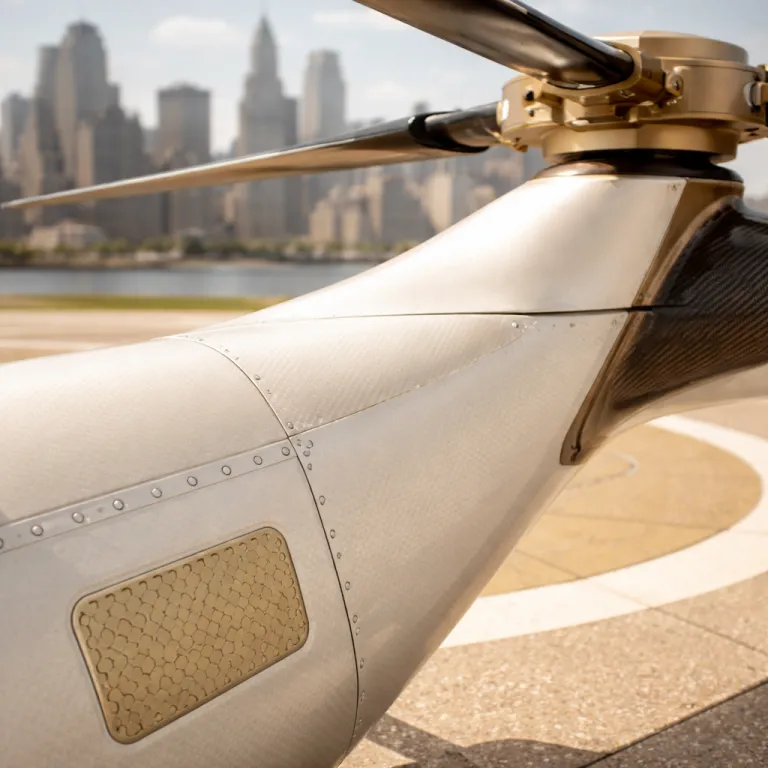
What the Joby Aviation New York eVTOL campaign really proved
The Joby Aviation New York eVTOL campaign finally put hardware over hype. In a week long flight campaign under the FAA’s electric Vertical Lift Integration Pilot Program, often shortened to the eIPP pilot program, a Joby aircraft linked John F. Kennedy International Airport to three Manhattan heliports in minutes rather than an hour or more by road. For private flyers used to Gulfstream or Global cabins, this was the first real proof that electric vertical air mobility can function as a serious feeder layer rather than a marketing render.
Joby Aviation flew its five seat electric air taxi prototype, commonly called the Joby S4 aircraft, from JFK to Downtown Manhattan, West 30th Street, and East 34th Street in under ten minutes per flight. That single electric vertical flight profile, with vertical takeoff and landing eVTOL capability, compressed a typical 60 to 120 minute car transfer into a short hop that felt closer to a helicopter shuttle but with radically lower direct emissions at the point of use. For a business traveler stepping off a long haul at Kennedy International or another international airport, the idea of seamless point to point air mobility suddenly feels less theoretical and more like a near term option.
The Joby Aviation New York eVTOL tests also validated several layers of air infrastructure and air mobility operations in a dense city environment. Each air taxi movement required coordination with the Port Authority of New York and New Jersey, local heliport operators, and the FAA, proving that authorities in New York City can manage electric vertical takeoff and landing eVTOL flights inside one of the world’s most complex air traffic systems. That matters for private jet users who already rely on slot constrained airports such as Teterboro, Westchester County, and JFK, because any future network of air taxis will have to mesh cleanly with existing IFR traffic and heli routes without eroding the reliability they pay for.
Timeline, certification, and how eVTOL links to private jets
For all the excitement around the Joby Aviation New York eVTOL campaign, the calendar still rules the business case. Joby Aviation has reported clearing Stage 3 of the FAA’s five stage type certification process for its Joby aircraft and is progressing through Stage 4, and the company is openly targeting a full type certificate before moving into broader commercial air taxi operations. That makes a soft launch of limited electric air taxi flights between JFK and Manhattan in late next year the optimistic scenario, with more routine air taxis and scheduled flights more realistically following after that.
Production capacity will also shape how quickly Joby Aviation can scale air mobility in and around New York City and the wider New York New Jersey corridor. The existing Marina, California facility is ramping toward roughly two aircraft per month, while a newer roughly 700,000 square foot class plant in Ohio is targeting around four Joby aircraft per month in its early phase, which is modest compared with traditional aviation output but significant for a new electric vertical segment. For a private jet owner or frequent charter client, that means early access to Joby air taxis will likely feel more like a curated pilot program than a mass market shuttle, at least in the first years.
The strategic layer is where this intersects directly with your next Global or Gulfstream flight. Delta Air Lines has positioned itself as a key partner for Joby Aviation, planning to connect premium airline passengers from long haul cabins into Joby air taxi services at JFK and potentially other hubs, while Uber has signalled interest in integrating ground and air mobility booking into a single app based experience. For high net worth flyers who already use Stars Jets or similar brokers, the likely reality is a stitched journey where a Global 8000 or G700 handles the intercontinental leg, a Delta or private shuttle covers a trunk route, and a Joby Aviation New York eVTOL segment quietly handles the last ten kilometres from airport to city rooftop, much like the hybrid electric concepts discussed in Stars Jets’ analysis of hybrid electric tech as the new frontier for luxury jets.
Noise, charging, and what Joby’s New York tests mean for urban infrastructure
The Joby Aviation New York eVTOL flights did not just test aircraft performance; they stress tested city infrastructure and public tolerance. Every vertical takeoff and landing eVTOL movement at the Downtown Manhattan Heliport or West 30th Street pad required coordination with the Port Authority of New York and New Jersey, city agencies, and local communities that already live with helicopter noise. Joby has previously cited target noise levels around 45 dBA during cruise and roughly 65 dBA during takeoff and landing at typical observer distances, and early reports from observers in New York suggest that the Joby aircraft produced a softer, more distributed sound signature than a conventional turbine helicopter, but regulators will want hard data from measured sound exposure levels and flight counts before approving dense networks of air taxis over New York City streets.
Charging is the other hard constraint that private aviation clients rarely see but will feel in scheduling. A Joby Aviation New York eVTOL sortie from JFK to Manhattan and back draws heavily on high capacity batteries, and turning that aircraft around for multiple flights per hour demands megawatt class chargers at both the international airport and the city heliports, which is a very different infrastructure profile from a standard FBO fuel farm. Building that electric air ecosystem at scale in New York and across the wider New York New Jersey region will require close coordination between the Port Authority, city planners, utility companies, and Joby engineers, because grid upgrades and safety standards will dictate how many simultaneous flights the system can support.
For private jet users, the practical question is how this new layer of air mobility will change the ground segment of a trip. If a Joby Aviation New York eVTOL network can reliably move you from a Global 8000 parked at Teterboro or JFK to Midtown in under ten minutes, the value proposition of ultra high speed jets, such as those analysed in Stars Jets’ piece on what Mach 0.95 actually buys on your next transpacific, becomes even sharper because the total door to door time shrinks. In that sense, Joby’s air taxis do not compete with long range private aircraft; they complement them, much like the broader shift toward hybrid and eco friendly jets explored in Stars Jets’ review of the changing landscape of luxury aviation, where the real luxury is not the price tag, but the first hour at altitude.
How Joby’s New York eVTOL fits into the broader private aviation future
The Joby Aviation New York eVTOL tests sit at the intersection of several powerful trends in private aviation. On one side, owners and charter clients are pushing for lower emissions and quieter operations without sacrificing the flexibility of point to point flights, which is why hybrid and electric concepts are gaining traction alongside traditional turbine aircraft. On the other, regulators and airport authorities such as the Port Authority of New York and New Jersey are under pressure to manage noise, air quality, and congestion around major hubs like JFK, LaGuardia, and Newark while still supporting business aviation growth.
In that context, the Joby aircraft offers a new tool rather than a silver bullet. Its electric vertical takeoff and landing eVTOL design makes it ideal for short range hops between an international airport and dense urban cores, but its approximate 150 mile range and five seat cabin mean it will not replace a Global 7500 or Falcon 8X for intercity or transcontinental missions, where traditional jets still dominate. Instead, expect Joby Aviation New York eVTOL services to emerge as a premium alternative to black car transfers and some helicopter shuttles, particularly for time sensitive business travelers who value predictable door to door timing more than the last degree of cabin opulence.
For aspiring owners and aviation enthusiasts, the key takeaway is that air mobility is becoming layered. You might one day hold a fractional share in a long range jet for intercontinental flights, subscribe to a regional turboprop or light jet program for shorter hops, and tap into an electric air taxi network like Joby’s for the final leg into New York City or another dense urban centre, all coordinated through a single digital platform. That is the direction signalled by partnerships between Joby Aviation, Delta, and Uber, and it aligns closely with the broader industry move toward integrated, lower impact mobility where the real advantage is not the price tag, but the first hour at altitude.