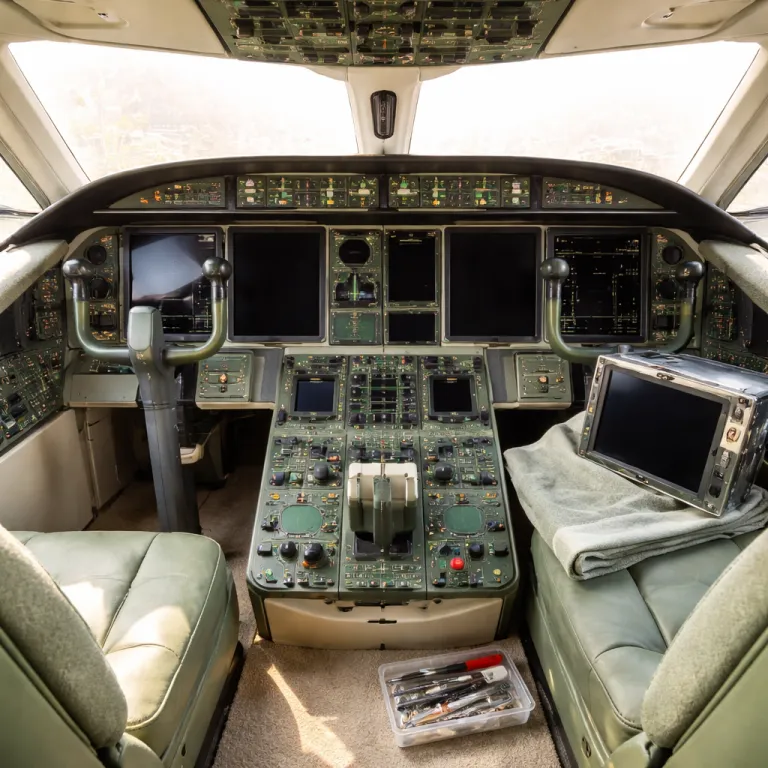
Symmetry flight deck as a new way of thinking about the cockpit
The symmetry flight deck in the Gulfstream G500, G600, G700 and G800 is not just a touch screen cockpit. It is a complete re architecture of how the flight deck presents information to the pilot and flight crew during every phase of flight. For a buyer comparing aircraft, symmetry flight avionics signal how this generation flight technology will support a 25 year ownership horizon rather than feel dated halfway through the airframe’s range potential.
At the core of gulfstream symmetry is the Honeywell Primus Epic based system, heavily customized and deeply integrated with the aircraft systems. Ten touch screen controllers replace the traditional overhead panel, so the crew no longer reaches into a forest of switches but instead taps contextual menus that change as the flight moves from engine start to taxi, takeoff, cruise and approach. This integrated approach to flight management, traffic management and airport moving map functions aims to reduce pilot workload while increasing situational awareness in dense air traffic and at complex airport layouts.
Each touch screen is paired with physical guards and logical lockouts, so an accidental tap will not shut down a critical system in flight. The screens drive synthetic vision and the broader vision system suite, overlaying runway, terrain and air traffic data on large primary displays that sit at eye level on the deck. For an owner, this means the maximum benefit of modern avionics without forcing the pilot to hunt across scattered screen controllers or legacy knobs, which in turn supports better fuel efficiency and safer decision making when the cabin is full and the schedule is tight.
Contextual presentation versus persistent access in symmetry
Traditional glass cockpits, such as the Bombardier Vision system in the Global 7500, favor persistent access to almost every system on fixed panels. The symmetry flight deck goes the other way, using context sensitive touch screen controllers to surface only the controls and data that matter for that exact phase of flight. This design philosophy means the pilot and co pilot see fewer distractions, which directly supports lower pilot workload and higher situational awareness when air traffic and weather start to complicate the plan.
On a symmetry equipped Gulfstream aircraft, the Honeywell Primus Epic core hosts multiple layers of software that manage flight management logic, traffic management tools and airport moving map displays. During taxi, the moving map and airport moving maps expand, highlighting runway incursion zones and expected taxi routes at busy hubs such as London Luton or Teterboro Airport, while less relevant cruise systems retreat into secondary pages. Once airborne, the system shifts again, emphasizing range rings, fuel efficiency predictions and synthetic vision overlays that help the crew judge terrain and air traffic at a glance, which is exactly where a modern vision system should earn its keep. For owners focused on sustainable operations, pairing this avionics intelligence with a realistic view of what actually moves the needle on fuel and SAF costs is essential, and detailed analyses of sustainable fuel economics show why pure marketing claims often fail to match real world fuel efficiency gains.
This contextual model does raise a fair question about maximum access to every switch at all times. Some veteran pilots prefer persistent panels because they can reach for a known switch location without thinking, especially when a system fails in flight. Gulfstream symmetry addresses this by allowing key functions to be pinned and by ensuring that emergency and abnormal checklists bring the right controls to the front of the screen controllers, so the crew does not waste time hunting through menus while the aircraft is moving through critical phases such as departure or approach.
What pilots report after hundreds of hours on symmetry
Pilots who have transitioned from earlier Gulfstream models or from competitors like the Global series often arrive skeptical of a touch screen heavy flight deck. After 500 or more hours on a symmetry flight deck, many report that the integrated layout, large displays and synthetic vision tools make long range sectors less fatiguing and more predictable. They describe a cockpit where the crew can keep their heads up, watching air traffic and weather outside, instead of heads down in dense menus or scattered analog panels.
On a G700 or G600, the combination of synthetic vision, moving map overlays and advanced flight management logic allows the pilot to visualize terrain, traffic and airport layouts in a single glance. The moving maps are not just pretty graphics ; they tie into traffic management and air traffic data feeds, so the system can highlight potential conflicts or runway occupancy while the aircraft is still several nautical miles out. This improves situational awareness during low visibility approaches into airports such as Geneva or Aspen, where terrain, noise abatement and tight procedures leave little margin for error, and where a well briefed flight crew can use every tool the vision system offers to keep the cabin safe and the operation efficient.
Some pilots note that the first 50 to 100 hours on gulfstream symmetry feel like learning a new language. Muscle memory built on overhead panels and rotary knobs does not transfer perfectly to touch screen controllers and contextual menus, especially when the aircraft is moving quickly through busy terminal airspace. Over time, however, they find that the integrated system reduces mental clutter, and that the maximum benefit shows up on demanding multi leg days when the crew must manage fuel, range, airport slots and changing air traffic flows without letting pilot workload spike at the worst possible moment, which is often just before landing when the cabin is already thinking about the next meeting or transfer.
Reliability, redundancy and training implications for owners
Any buyer looking at a symmetry flight deck inevitably asks what happens when a touch screen fails in flight. The answer lies in the layered redundancy of the Honeywell Primus Epic based system, where multiple screen controllers can assume the functions of a failed unit and where hard wired controls still exist for the most critical aircraft systems. In practice, a single failed touch screen usually means a reversionary mode and some menu shuffling, not a loss of control, and the crew will follow clear checklists while the aircraft continues safely toward the planned airport or an alternate.
From a training perspective, symmetry requires a different mindset for both new and experienced pilots. Type rating courses emphasize how the integrated flight management, traffic management and vision system work together, rather than teaching each box in isolation as older generation flight decks often did. This has implications for crew sourcing, because operators must ensure that any new pilot joining the flight crew has not only the legal rating but also enough supervised line flying to be comfortable with contextual menus, synthetic vision cues and the way moving maps interact with airport moving map data in complex air traffic environments.
For an owner or family office, this training delta has cost and scheduling consequences over the full range of the aircraft’s life. You will need to budget for recurrent simulator time that focuses on abnormal procedures in a symmetry environment, not just generic instrument approaches, and you should ask operators how they manage pilot workload and standard operating procedures around touch screen use during turbulence or high workload phases of flight. The upside is that once the crew is fully trained, the system’s efficiency and fuel efficiency tools can help optimize climb profiles, cruise speeds and descent planning, which in turn supports both lower operating costs and a smoother cabin experience that aligns with the refined travel standards seen in carefully designed interiors on other premium jets.
Longevity, resale value and how symmetry shapes fleet strategy
For a prospective owner, the most strategic question about the symmetry flight deck is not whether the touch screens feel futuristic. The real issue is how this integrated avionics system will age over the next two decades compared with more conventional glass cockpits. Gulfstream designed gulfstream symmetry as a software upgradable platform, so new features in flight management, traffic management or vision system processing can be rolled out without tearing apart the physical deck, which is a major advantage when you plan to keep an aircraft through several market cycles.
Resale value follows that logic. An aircraft with symmetry flight avionics is more likely to remain compatible with evolving air traffic and management ATM requirements, such as new performance based navigation procedures or enhanced airport moving map standards at major hubs. Buyers in the pre owned market increasingly look for synthetic vision, advanced moving maps and integrated fuel efficiency tools as baseline expectations, not optional extras, because they know that these systems support both safety and operating cost control, and because they understand that a cockpit stuck on an older generation flight standard will eventually limit where the aircraft can fly.
There is honest pushback from some veteran pilots and technical directors who worry about long term support for complex touch screen hardware. They argue that physical switches age more gracefully and that a failed screen controller could become a supply chain headache late in the aircraft’s life, especially if Honeywell or a key supplier sunsets a component line. That criticism is valid, and any serious buyer should ask detailed questions about spares, upgrade roadmaps and how the operator will manage pilot workload if a screen fails on a dark night over the North Atlantic, but the counterpoint is clear ; a software centric deck can evolve with new navigation, vision and fuel optimization algorithms in a way that fixed hardware panels never could, which is why symmetry equipped Gulfstreams are positioned to age more gracefully than many peers in the same maximum range and cabin size class.
FAQ
How is the symmetry flight deck different from other glass cockpits ?
The symmetry flight deck differs from traditional glass cockpits by using ten touch screen controllers and contextual menus instead of large fixed panels of switches. It runs on a customized Honeywell Primus Epic core that integrates flight management, traffic management, synthetic vision and airport moving map functions into a single system. This design reduces pilot workload and improves situational awareness by showing only the most relevant information for each phase of flight.
Is a touch screen based cockpit safe and reliable in turbulence ?
Symmetry equipped Gulfstream aircraft retain hard wired controls for critical functions and use guarded touch targets to prevent accidental inputs. When turbulence makes touch input difficult, pilots can rely on physical controls and standard operating procedures that limit non essential screen use during rough conditions. The system also includes redundancy, so if one screen controller fails, another can take over its functions while the flight continues safely.
What does symmetry mean for pilot training and crew availability ?
Pilots transitioning to the symmetry flight deck need specific training on contextual menus, synthetic vision cues and the interaction between moving maps and airport data. This usually happens during type rating and recurrent simulator sessions focused on abnormal procedures in a symmetry environment. For owners, it means working with operators who have a stable, well trained flight crew familiar with the system, rather than relying on occasional contract pilots who may not be current on this generation flight technology.
How does the symmetry flight deck affect operating costs and fuel efficiency ?
The integrated avionics suite supports fuel efficiency by optimizing climb, cruise and descent profiles based on real time data. Range rings, fuel predictions and traffic management tools help crews choose routes and speeds that balance time and fuel burn, especially on long range flights. Over the life of the aircraft, these incremental gains can contribute to lower direct operating costs and more predictable scheduling.
Will a symmetry equipped Gulfstream hold its value better on resale ?
Aircraft with the symmetry flight deck are positioned to age well because the avionics are software upgradable and aligned with evolving air traffic and navigation standards. Buyers in the pre owned market increasingly expect synthetic vision, advanced moving maps and integrated flight management tools as standard. While no resale outcome is guaranteed, these features generally make a Gulfstream more attractive compared with similar jets that rely on older generation flight decks.