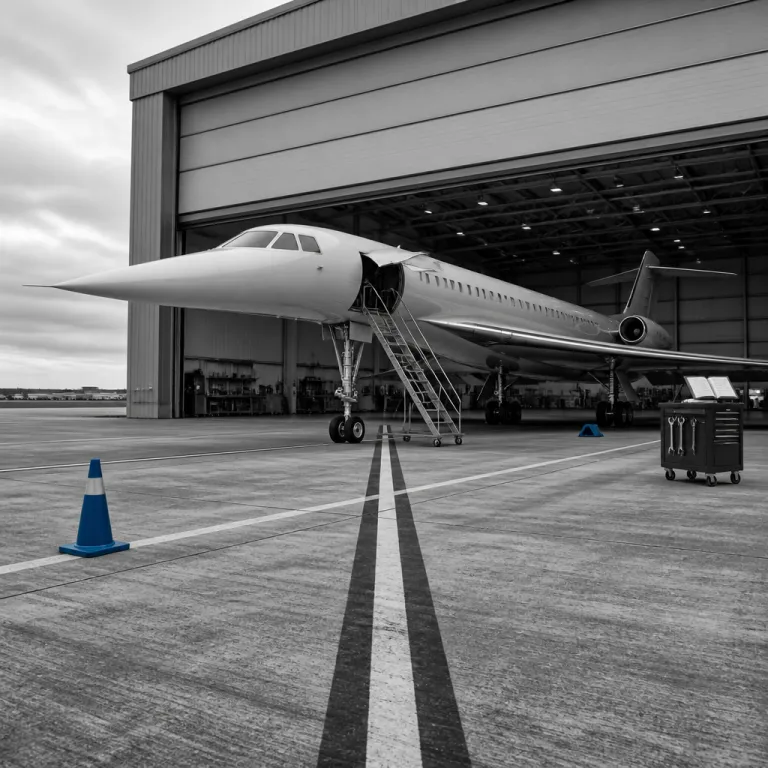
From blanket ban to noise based standard: what the NPRM really does
The FAA supersonic overland flight 2026 notice of proposed rulemaking is the first serious attempt to turn a political ban into a technical standard. For private buyers used to reading between the lines of aviation regulation, the shift from a simple speed cap on any supersonic flight over the United States to a performance based, noise based framework is the real story. The NPRM, published in the Federal Register on March 18, 2026 under Docket No. FAA-2026-6935, proposes that any civil aircraft flying overland supersonic must keep boom overpressure from each sonic boom at or below 0.11 pounds per square foot when reaching surface level, a number that now anchors every serious business case for future supersonic aircraft and is detailed in the Federal Register docket for the rulemaking.
For fifty years, the rule was blunt; any civil supersonic operations that created a sonic boom over land were banned, regardless of aircraft technology or mission profile. The new proposed rule, set out in the “Civil Supersonic Overland Operations; Noise-Based Limits” NPRM and accessible via the FAA’s online docket system at FAA-2026-6935, replaces that with conditions limitations tied directly to the physics of sonic booms and the way boom overpressure propagates to the surface. In practice, the updated supersonic overland framework says that if a supersonic aircraft can shape its shock waves so that the sonic boom reaching surface observers stays under that 0.11 threshold, the flight can be legal as a civil aircraft operation inside the United States, subject to compliance demonstrations and ongoing monitoring.
That is where “boomless cruise” enters the private jet conversation in a meaningful way. Boomless cruise describes a supersonic flight regime where the aircraft flies at a specific Mach number and altitude so that the primary shock waves refract upward and never create a classic sonic boom signature at the ground. Under the proposed overland supersonic rule, boomless cruise is no longer a marketing phrase; it is the only realistic way for civil supersonic aircraft to meet a noise based standard that is designed to protect public expectations of quiet while still allowing overland supersonic operations on carefully planned routes.
Designers like Boom Supersonic with its Overture airliner and Hermeus with its Quarterhorse demonstrator are already tuning wing planforms, fuselage shaping, and engine inlets to manage sonic booms as carefully as fuel burn. When XB-1, Boom’s one third scale demonstrator, went through Mach 1.122 in test flight according to the company’s published data, the focus was not just on speed but on validating computational models of sonic boom propagation and boom overpressure at the surface. For a private buyer looking at future supersonic flights, the key question is whether any of these aircraft certification programs can consistently hold boom signatures below the proposed rule threshold across real weather, real routes, and real operations, not just in ideal test conditions.
The NPRM is explicit that the emerging supersonic overland standard is meant to protect public welfare, not to guarantee any particular manufacturer a market. The agency frames the proposed rule as a response to both an Executive Order on promoting innovation in civil aviation and sustained industry pressure to revisit a ban written before modern computational fluid dynamics and digital flight control technology existed. For private owners, that means the FAA proposes a path, not a promise; civil supersonic operations will still face conditions limitations, including separate rulemakings on takeoff and landing noise that could be more restrictive than the cruise sonic boom standard itself.
There is also a geopolitical layer that matters if your family office is thinking about a global supersonic aircraft fleet. The United States may move first with a noise based, overland supersonic standard, but other civil aviation authorities will set their own thresholds for sonic booms and boom overpressure, and some may keep outright bans on any sonic boom reaching surface communities. A private jet that meets the FAA’s 2026 overland criteria could still be constrained on transatlantic or intra European routes if foreign regulators decide that protecting public expectations of quiet trumps the benefits of faster civil aircraft operations, or if their own NPRMs adopt more conservative limits.
What boomless cruise means for routes, cabins, and real time saved
For a high net worth buyer, the only metric that matters more than range is time, and the FAA supersonic overland flight 2026 proposal finally lets you quantify time saved against regulatory risk. Under the NPRM, a civil supersonic aircraft that can maintain boomless cruise at around Mach 1.7 to Mach 1.9 over land could cut a New York to Los Angeles flight from roughly five hours to under three, while still keeping sonic booms below the boom overpressure limit at the surface. That is the difference between a same day bi coastal board meeting and an overnight stay, and it changes how you think about aircraft operations, crew duty limits, and even which FBO you choose for quick turns when planning overland supersonic segments.
Cabin experience will not feel like Concorde nostalgia with cramped seats and civil aircraft noise levels that rivaled a regional jet. Boom Supersonic is designing Overture with a two by two business class style cabin, and any future private variant or derivative will likely offer a low density layout with lie flat seating, full connectivity, and acoustic treatment tuned for both engine noise and the subtle pressure signatures of shaped sonic booms. If you are used to ultra long range subsonic aircraft like the Gulfstream G700 or Bombardier Global 7500, the tradeoff under the 2026 overland noise regime is clear; you give up some cabin volume and baggage space, but you gain hours on key overland supersonic routes where the proposed rule allows supersonic flights without violating noise based limits.
Route economics will be brutally specific. A New York to London sector already spends most of its time over water, where the FAA’s sonic boom standard at the surface does not apply, so the value of overland supersonic capability is marginal on that mission. By contrast, a Chicago to San Francisco or Dallas to Seattle flight is almost entirely within the United States, and a civil supersonic aircraft that meets the proposed rule could operate those missions at Mach numbers that keep sonic booms within the 0.11 pounds per square foot envelope, turning a four hour block into something closer to two and a half hours and reshaping how you schedule same day trips.
For leisure missions, think about how you currently fly to high demand resort destinations. A subsonic private jet from Teterboro to Cancun already feels efficient, especially if you use a well managed operator that understands seamless luxury travel to Mexico. Under a mature 2026 supersonic overland regime, the overland portion of that route inside the United States could be flown at civil supersonic speeds, while the segment over the Gulf of Mexico would be unconstrained by sonic boom rules, making a fast escape to the beach even faster without changing the ground experience described in guides to flying by private jet to Cancun.
There is a catch that many early headlines gloss over. The current NPRM deals only with cruise phase sonic booms and boom overpressure reaching surface communities, not with takeoff and landing noise around airports, where public sensitivity is already high. Separate rulemakings will define how loud a supersonic aircraft can be on departure and arrival, and those noise based constraints could limit which airports you can use, which FBOs can handle your operations, and whether night curfews apply more strictly to supersonic flights than to conventional civil aircraft.
For charter operators and fractional programs, this creates a two tier network. Some bases and routes will be optimized for overland supersonic operations under the FAA’s 2026 standard, while others will remain subsonic because of local noise rules or runway length. If you are used to the flexibility of sending a midsize jet into shorter fields, as analyzed in depth for aircraft like the Hawker 400XP, you should expect that early supersonic aircraft will demand longer runways, typically 8,000 to 9,000 feet instead of the 5,000 to 6,000 feet common for light jets, along with stricter conditions limitations and more careful scheduling to protect public acceptance of sonic booms and airport noise.
How this reshapes the private supersonic business case and timelines
The FAA supersonic overland flight 2026 NPRM lands in a market where airlines, not private buyers, have placed the headline orders. United Airlines, Japan Airlines, and American Airlines have all signed purchase agreements or options for Boom Supersonic Overture aircraft, betting that a mix of overwater and overland supersonic routes will justify premium fares once civil supersonic operations are legal again. For a family office or corporate flight department, the key question is whether those airline orders de risk the technology enough to justify a private derivative, or whether you wait for a second generation of supersonic aircraft that bakes the proposed rule into its DNA from day one.
Certification timelines remain the hard boundary. The 2026 overland NPRM aims to finalize the cruise sonic boom standard by the middle of the next regulatory cycle, but type certification for any new supersonic aircraft will still require exhaustive proof that sonic booms stay within the boom overpressure envelope across the full range of Mach numbers, altitudes, and atmospheric conditions. Companion rules on takeoff and landing noise, emissions, and even pilot training standards for supersonic flights will add layers of complexity that make an entry into service date around the end of the decade an optimistic scenario, not a guarantee.
For private buyers used to comparing a Global 8000 against a Gulfstream G800 with clear data on range, fuel burn, and hourly operating cost, the emerging supersonic environment introduces new variables. You will need to model not just block time and direct operating cost, but also route eligibility under the proposed rule, airport access under future noise based regulations, and residual value risk if public tolerance for sonic booms shifts after a few high profile incidents. Early industry estimates suggest that supersonic hourly operating costs could run 20 to 50 percent higher than current ultra long range jets, even before factoring in any boom related surcharges, so a well structured analysis, similar in rigor to a detailed private jet performance review, will be essential before committing capital to any civil supersonic platform.
Operationally, crew expertise will matter more than ever. Supersonic flights will require pilots who understand not only high altitude Mach effects but also the regulatory nuances of the FAA’s 2026 conditions limitations, including when a slight change in altitude or speed could push sonic booms above the allowed boom overpressure at the surface. If you are already investing in specialized talent, such as pilots with deep experience on high performance turboprops as outlined in analyses of career opportunities as a PC-12 pilot, expect that supersonic aircraft will demand an even higher level of training and procedural discipline.
The NPRM also underscores the role of policy in shaping private aviation technology. The FAA supersonic overland flight 2026 proposal responds directly to an Executive Order encouraging innovation in civil aviation while instructing regulators to protect public welfare from new forms of aviation noise and risk. That balance means the FAA proposes a framework where civil aircraft can fly overland supersonic only if they meet strict, measurable standards on sonic booms, rather than granting broad waivers that could erode trust if boom overpressure events start reaching surface communities in ways that feel intrusive.
Will this accelerate a true market for private supersonic jets, or merely enable it someday? The honest answer for a sophisticated buyer is that the 2026 NPRM removes the 50 year legal wall but replaces it with a demanding technical gate, one that only a handful of supersonic aircraft programs are currently positioned to approach. For now, the smart money treats civil supersonic capability as a long dated option rather than a near term fleet requirement, and focuses on subsonic jets that already deliver what matters most in private aviation; not the price tag, but the first hour at altitude.