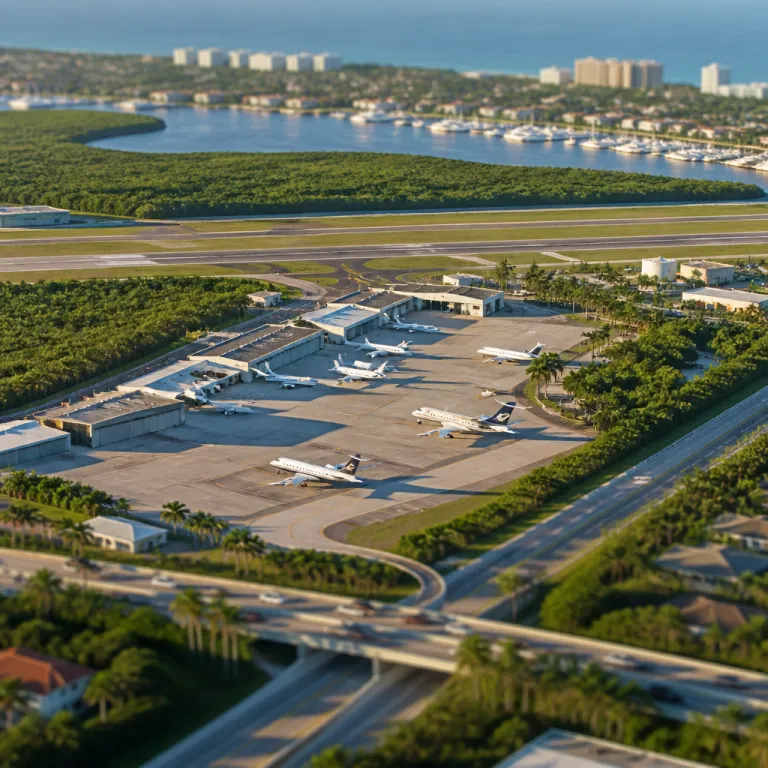

Understanding the FLL code airport for private jet travelers
The FLL code airport refers to Fort Lauderdale–Hollywood International Airport (FLL), a major gateway for private jet travelers heading into South Florida. This international hub sits between the city of Fort Lauderdale and the city of Hollywood, giving direct access to beaches, marinas, cruise terminals, and business districts. For private flyers, the combination of scheduled airlines, fixed-base operators (FBOs), and dedicated business aviation services on the airport FLL campus creates unusual flexibility.
Unlike a small regional field, the international airport with the FLL code offers four main terminals and multiple runways that can handle everything from light air jets to long-range executive aircraft. The two primary runways, 10L/28R and 10R/28L, measure approximately 9,000 feet (2,743 metres) and 8,000 feet (2,438 metres) respectively, according to Federal Aviation Administration data for 2023, giving ample performance margins for large-cabin business jets. These terminals at Fort Lauderdale–Hollywood International are primarily used by airlines such as JetBlue Airways, Spirit Airlines, Southwest Airlines, Silver Airways, and United Airlines, yet private aviation benefits from the same robust infrastructure. Because the airport FLL layout is compact compared with Miami International Airport, taxi times for private jets are often shorter while still preserving access to long runways, precision approaches, and advanced air traffic services.
For travelers comparing airports in South Florida, the FLL code airport stands between the larger Miami hub and smaller regional or executive airport options in Broward County. This position allows private jet users to choose between the main international airport FLL facilities and nearby executive airport fields depending on aircraft size, schedule, and privacy needs. Understanding how Fort Lauderdale–Hollywood International functions within the broader county international network is the first step to planning efficient private jet arrivals and departures.
How Fort Lauderdale Hollywood International competes with Miami for private jets
Fort Lauderdale–Hollywood International Airport competes directly with Miami International for private jet traffic, yet it offers a different balance of convenience and congestion. Many private flyers prefer the FLL code airport because it combines full international airport capabilities with easier access to the city of Fort Lauderdale and the city of Hollywood. In practice, this means shorter ground transfers to beachfront resorts, marinas, and golf course communities compared with some Miami routings, especially during peak winter and spring travel periods.
Commercial airlines dominate the main terminals at Fort Lauderdale–Hollywood International, but their presence indirectly benefits private aviation. JetBlue Airways, Spirit Airlines, Southwest Airlines, Silver Airways, and United Airlines all operate extensive networks from the FLL code airport, which keeps customs, immigration, and air traffic services fully staffed and efficient throughout the day. At the same time, private jet operators use separate executive facilities on the airfield, including major FBO brands such as Signature Flight Support and Sheltair Aviation, avoiding the busiest passenger flows while still leveraging the international airport infrastructure.
When comparing Miami and the FLL code airport, private jet users often weigh runway access, slot availability, and proximity to final destinations in Fort Lauderdale or Hollywood. Miami International Airport offers more long-haul airlines and global connections, but it also faces heavier congestion and longer taxi times for both air and ground movements. For many private jet itineraries focused on South Florida, Fort Lauderdale–Hollywood International provides a more balanced option, and readers interested in how hub-and-spoke private flying strategies work can explore a detailed analysis of split-leg routing at why the smartest operators split trips into two legs.
Executive airport options around FLL for ultra private operations
While the FLL code airport is the primary international gateway for Fort Lauderdale and Hollywood, several executive airport facilities nearby serve ultra-private operations. In Broward County, the best-known executive airport is Fort Lauderdale Executive Airport (FXE), which complements the larger Lauderdale Airport complex at the coast. This executive airport handles a high volume of business jets that prefer to avoid the busier terminals at the main international airport FLL site, and it is home to additional FBOs such as Banyan Air Service that specialize in corporate aviation.
Private jet users often combine the FLL code airport with these regional and executive fields to optimize each leg of a complex itinerary. For example, a long-range jet may arrive at Fort Lauderdale–Hollywood International Airport for customs clearance, then a smaller aircraft based at an executive airport in Broward County may continue to a shorter regional field closer to a remote golf course, private island, or equestrian estate. This multi-leg strategy is increasingly common among high-net-worth travelers, and those interested in similar exclusive access patterns can read about private-jet-only destinations at undiscovered havens accessible only by private jets.
National airport networks in the United States rely on a mix of large international hubs, medium-sized regional airports, and smaller executive fields, and the FLL code airport sits at the intersection of all three categories. Within Broward County, county international planning has deliberately positioned Fort Lauderdale–Hollywood International, Fort Lauderdale Executive, and other regional fields to share traffic and reduce delays. For private jet travelers, this means more choice between the main airport FLL complex and quieter executive airport environments, depending on whether speed, discretion, or direct access to specific destinations in Fort Lauderdale or Hollywood matters most.
Airlines, routes, and how they shape private jet strategy at FLL
The strength of scheduled airlines at the FLL code airport directly influences private jet strategy, even for travelers who never step into the main terminals. JetBlue Airways, Spirit Airlines, Southwest Airlines, Silver Airways, and United Airlines all operate extensive networks from Fort Lauderdale–Hollywood International Airport, connecting South Florida with North America, Latin America, and the Caribbean. These airlines create a dense web of connections that private jet operators can use for positioning flights, crew changes, maintenance logistics, and contingency planning when weather or airspace disruptions occur.
Because the international airport FLL complex hosts such a wide range of airlines, private jet passengers can easily combine commercial and private segments in a single itinerary. A traveler might arrive on JetBlue at Fort Lauderdale–Hollywood International from a northeastern city, then transfer landside to a private terminal for a short hop to a regional field near a secluded golf course or resort. Conversely, a private jet may bring a family into the FLL code airport from a remote island, after which they connect on Southwest Airlines or United Airlines to a domestic city not served by direct private flights, using the main terminals as a convenient bridge.
Spirit Airlines and Silver Airways also play a specific role in this ecosystem, especially for secondary destinations Fort Lauderdale-based travelers often visit in the Caribbean and within Florida. Their presence at the FLL code airport ensures that customs and immigration services remain efficient for both commercial and private air traffic, which is critical during peak months such as April and during major events in South Florida. For private jet users, understanding how these airlines shape traffic flows at the airport FLL site helps in choosing optimal arrival times, selecting between terminals, and coordinating with executive airport facilities nearby.
On the ground at FLL: terminals, transfers, and access to Fort Lauderdale and Hollywood
On the ground, the FLL code airport is defined by its four main terminals, extensive apron space, and direct highway links to both Fort Lauderdale and Hollywood. Each terminal at Fort Lauderdale–Hollywood International serves different airlines and airways, yet private jet passengers usually interact with them only when connecting to or from commercial flights. For most private jet arrivals, dedicated executive facilities on the airfield handle immigration, customs, and ground transfers in a more discreet environment, with private lounges, direct ramp access, and tailored concierge services.
Ground access from the FLL code airport to the city of Fort Lauderdale and the city of Hollywood is one of its strongest advantages over more distant regional airports. The international airport FLL complex sits only a short drive from beachfront hotels, marinas, and several renowned golf course communities, which reduces transfer times for high-value travelers. Broward County has invested heavily in road links and signage around the Lauderdale Airport area, including connections to Interstate 595 and U.S. Route 1, ensuring that both commercial and private passengers can reach their destinations in Fort Lauderdale or Hollywood with minimal delay.
Within the terminals themselves, the presence of major airlines such as JetBlue Airways, Spirit Airlines, Southwest Airlines, Silver Airways, and United Airlines ensures a full range of services for mixed itineraries. Private jet passengers who need to connect to airlines for longer domestic or international legs can move between the executive airport facilities and the main terminals with relative ease using dedicated shuttles or chauffeured vehicles. For those interested in how other major private jet hubs manage similar flows, a detailed look at operations at Teterboro, another key national airport for business aviation, is available through this analysis of private jets at Teterboro Airport.
Why the FLL code airport matters for south Florida’s private jet network
The FLL code airport is more than a convenient gateway; it is a structural pillar of the South Florida private jet network. As an international airport serving both Fort Lauderdale and Hollywood, it anchors a cluster of regional and executive fields across Broward County and neighboring areas. This cluster allows operators to route aircraft efficiently between the airport FLL complex, Fort Lauderdale Executive Airport, and other county international facilities depending on aircraft type, runway requirements, and passenger needs.
For high-net-worth travelers, the combination of the FLL code airport and nearby executive airport options translates into tangible benefits. They gain access to long runways, full-service air traffic control, and customs at the international airport FLL site, while still being able to reposition to quieter regional fields closer to private estates or golf course communities. This flexibility is particularly valuable during peak travel periods such as April and during major events in South Florida, when congestion at Miami International Airport can become a serious constraint and delay-sensitive travelers look for reliable alternatives.
From an industry perspective, the FLL code airport illustrates how a national airport system can integrate commercial airlines, private airways, and executive aviation without sacrificing efficiency. The presence of JetBlue Airways, Spirit Airlines, Southwest Airlines, Silver Airways, and United Airlines at Fort Lauderdale–Hollywood International keeps the field economically robust, while dedicated executive airport facilities ensure that privacy and speed remain intact for business aviation. For travelers seeking information about exclusive airports and private jet access, understanding the role of the FLL code airport within this broader network is essential to planning reliable, comfortable, and time-efficient journeys across South Florida and beyond.
Key figures about FLL and private aviation
- Fort Lauderdale–Hollywood International Airport handled approximately 31 million passengers in 2023, according to Broward County Aviation Department and Federal Aviation Administration data, which supports strong customs and air traffic resources for private jets.
- Runway lengths at the FLL code airport exceed 8,000 feet (approximately 2,400 metres) on the primary strips, allowing safe operations for large-cabin, long-range business jets flying nonstop from many intercontinental destinations.
- Fort Lauderdale Executive Airport, the main executive airport complementing the international airport FLL complex, records tens of thousands of annual business jet movements, making Broward County one of the most active business aviation regions in South Florida.
- Major airlines at Fort Lauderdale–Hollywood International, including JetBlue Airways, Spirit Airlines, Southwest Airlines, Silver Airways, and United Airlines, collectively serve more than one hundred nonstop destinations in normal operating years, which simplifies mixed commercial and private itineraries.
- Driving time from the FLL code airport to central Fort Lauderdale or Hollywood is typically under 20 minutes in normal traffic, significantly shorter than transfers from Miami International Airport to many destinations Fort Lauderdale travelers frequent.
FAQ about the FLL code airport and private jets
What does the FLL airport code stand for ?
The FLL airport code stands for Fort Lauderdale–Hollywood International Airport, the primary international airport serving the cities of Fort Lauderdale and Hollywood in Broward County. It is a major gateway for both commercial airlines and private jets in South Florida. The code FLL appears on tickets, baggage tags, and flight plans for all operations using this field.
Is FLL a good airport for private jets compared with Miami ?
FLL is an excellent airport for private jets when compared with Miami International Airport, especially for travelers whose destinations in Fort Lauderdale or Hollywood are nearby. It offers long runways, full customs services, and dedicated executive facilities with generally shorter taxi and transfer times. Many operators use the FLL code airport as their preferred South Florida base while keeping Miami as a secondary option for specific long-haul or slot-constrained routes.
Are there executive airports near FLL for more privacy ?
Yes, Fort Lauderdale Executive Airport is the main executive airport near the FLL code airport, and it caters almost exclusively to business and private aviation. This field offers quieter operations, specialized services, and quick access to inland business districts and residential communities. Operators often choose between the international airport FLL complex and the executive airport depending on aircraft size, runway performance, and passenger preferences.
Which airlines operate from FLL, and why does that matter to private flyers ?
Major airlines at the FLL code airport include JetBlue Airways, Spirit Airlines, Southwest Airlines, Silver Airways, and United Airlines, along with other domestic and international carriers. Their presence ensures frequent commercial connections, strong staffing for customs and security, and resilient operations that benefit private aviation as well. Private jet travelers often combine flights through these airlines with private segments to reach more remote regional destinations or to connect to cities that would be inefficient to serve by charter alone.
How close is FLL to key resorts and golf courses in south Florida ?
The FLL code airport is very close to many resorts and golf course communities in Fort Lauderdale, Hollywood, and wider Broward County. Typical driving times from Fort Lauderdale–Hollywood International to beachfront hotels or marina districts are often under 20 to 30 minutes. This proximity is a major reason why many private jet travelers choose FLL over more distant regional or national airport options when planning South Florida itineraries.