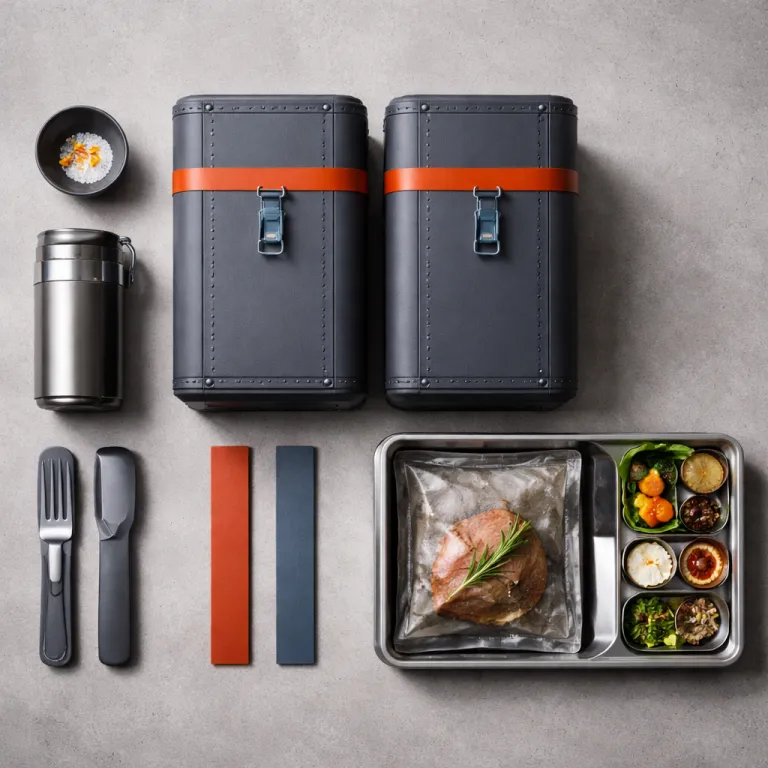
Why private jet catering in Europe starts to fail at altitude
Most clients judge private jet catering in Europe by glossy menu photos. At 6,000 to 8,000 feet of cabin altitude on a private jet, your sense of taste can drop by roughly thirty percent and turn beautifully plated dishes into something strangely flat. The physics of flying quietly rewrite every rule that traditional catering and fine dining on the ground rely on.
On a Gulfstream G650 or Bombardier Global 7500, the pressurisation is kinder than on many smaller jets. Yet even in these long range aircraft, inflight catering must fight dry air, vibration, and limited galley space to keep aviation standards of quality consistent from takeoff to landing. A chef who dazzles in a restaurant in France or Italy can see their signature dish collapse once it has been reheated in a compact galley oven during a night flight.
The problem is rarely the private aviation budget and almost always the process. Many business aviation operators still treat flight catering as an afterthought, delegating orders to a ground handling team that has never tasted the menu at altitude and barely understands aircraft catering constraints. When you arrange private flights for demanding travellers, you need to interrogate not only the catering services list but also how the operator tests menus in real flying conditions.
Cabin altitude and galley design vary dramatically between aircraft types. A Cessna Citation CJ4 or Embraer Phenom 300 used for a short private flight from Lyon Saint Exupéry to Geneva will have far less galley capability than a Dassault Falcon 8X crossing from the south of France to the United Kingdom. That difference shapes what inflight catering can realistically deliver, how many courses fit into the dining experience, and how long hot dishes stay within safe temperature ranges.
For a Paris to New York private flight, you have roughly five and a half hours of usable meal time. That window must cover a full dining experience, coffee service, and any late night snacks, all while the cabin crew manages international paperwork and cockpit calls. When you hear an operator promise restaurant level dining on every flight without mentioning aircraft type or galley limits, you know their aviation catering story is more marketing than reality.
Dishes that travel and the limits of inflight dining experience
Only a narrow band of dishes truly survive the journey from airport kitchen to aircraft cabin. In private jet catering in Europe, the best aviation chefs quietly avoid fragile foams, intricate sugar work, and anything that dies after a second reheating in a small jet oven. They focus instead on textures and sauces that improve with time, because the flying environment always introduces delay.
Slow braised meats, well structured gratins, and carefully blanched vegetables tend to outperform seared fillets or delicate fish on private jets. On a private flight from the south of France to Switzerland, a daube provençale or osso buco will hold flavour and moisture far better than a just seared turbot that was perfect in the restaurant but unforgiving in aircraft catering. The same logic applies to desserts, where baked tarts and mousses travel more reliably than elaborate plated constructions that rely on last second assembly by a stretched cabin crew team.
For short private flights within France, Italy, or the United Kingdom, cold dishes often make more sense than hot ones. High quality charcuterie, composed salads, and room temperature tartes salées keep their structure during taxi delays and unexpected holding patterns that can stretch a ninety minute flight into a two hour exercise. When you brief your catering private order, ask explicitly how each dish behaves if the flight time doubles or the aircraft waits on the ramp at Lyon Saint Exupéry or at a busy London airport.
On longer international sectors, think in phases rather than courses. A smart inflight catering plan for a Geneva to Dubai flight might start with a light cold service after takeoff, move to a single strong main course mid flight, then finish with fruit and cheese before descent. This approach respects the limited galley footprint on many jets while still delivering a coherent dining experience that feels curated rather than improvised.
Luxury travel advisors who manage private aviation trips should push operators for concrete examples. Ask which dishes they refuse to load on certain aircraft, and which inflight catering partners they use for specific routes, then cross check those answers against independent reviews such as detailed operator profiles for informed private jet travellers. When an aviation catering provider can explain why a dish fails at 41,000 feet, you are finally talking to someone who understands the real constraints of flight catering rather than just the brochure version.
Where the best European jet catering really comes from
In private jet catering in Europe, the supply chain is far more concentrated than most passengers realise. A handful of catering services around key hubs quietly set the standard for aviation quality, while dozens of smaller kitchens simply repackage restaurant food for aircraft without adapting it to flying conditions. The difference shows up in everything from food safety to plating to how the cabin smells after the main course.
Top private aviation crews will tell you that the most reliable inflight catering in Switzerland often originates near Geneva, Basel, or Sion LSGS, where specialist aviation catering houses work daily with long range jets. Around the south of France, particularly near Nice and Cannes, a similar cluster of aircraft catering providers has learned to handle peak summer traffic without sacrificing quality or timing. In the United Kingdom, the best jet catering tends to sit close to major business aviation airports rather than in city centre restaurants, because ramp access and last minute changes matter more than postcode prestige.
For flights touching France, the triangle between Lyon Saint Exupéry, Nice, and Paris Le Bourget is especially important. At Lyon Saint Exupéry, some operators still rely on generic airport catering, while others contract dedicated aviation catering teams that understand the quirks of private jets and business aviation schedules. When you hear references to Exupéry LFLL or Saint Exupéry in catering notes, treat them as signals to ask whether the kitchen is airside, how it handles last minute private flights, and whether it can support strict dietary requirements.
Dietary certification is the quiet fault line in many catering private operations. Kosher, halal, and strict vegan menus require certified supply chains, segregated storage, and documented handling procedures that not every airport kitchen in Italy, France, or the United Kingdom can provide reliably. If your client needs these options on a private flight, you must verify not only the label on the box but also the aviation catering provider’s documented process for keeping those meals separate from standard flight catering.
For advisors arranging complex routings, it pays to map catering strengths airport by airport. A private jet routing that includes Sion LSGS, Nice, and Geneva can lean on established aviation catering specialists, while a charter from a smaller regional field may require trucking meals from a larger international airport. When you evaluate tailored private jet charters across less obvious regions, the operator’s ability to coordinate aircraft catering from multiple hubs becomes a key test of their overall competence.
Timing the service window on real European private flights
Service timing is where private jet catering in Europe either feels effortless or obviously improvised. On a six hour international flight, you do not have six full hours for dining, because climb, descent, and crew duties compress the usable window to closer to five and a half. That reality should shape every decision about courses, plating, and how the cabin crew team sequences service.
On a Paris to New York private jet sector, a realistic plan is one substantial meal and one lighter service. The cabin crew will usually aim to start the main dining experience about forty five minutes after takeoff, once the aircraft has levelled off and the galley is safe to work in, then complete dessert and coffee before the halfway point of the flight. A second lighter service, often a snack or breakfast style tray, fits better in the last ninety minutes, when turbulence and descent procedures can disrupt more elaborate plating.
Shorter private flights within Europe demand even more discipline. On a ninety minute hop from the south of France to Switzerland, you may only have forty minutes of stable cruise, which is barely enough for a single hot course and a quick coffee. In that context, cold inflight catering with high quality ingredients often beats an over ambitious hot menu that leaves the cabin cluttered with trays as the aircraft begins its descent into an international airport.
Cabin layout and aircraft type also dictate what is realistic. A large cabin jet with a forward galley and two cabin crew can manage a three course service for eight passengers, while a light jet with a single pilot and one multifunction crew member will struggle to plate more than a main course and dessert. When you plan catering services for private jets, always ask how many crew will be on board and whether they have been trained specifically in aviation catering techniques.
For luxury travel advisors, the most revealing questions are often the simplest. Ask the operator how they handle delays that push a meal into the small hours of the morning, and whether they adjust menus for late night flying when passengers are already tired. The operators who can explain their timing strategy in detail, from first canapé to last espresso, are usually the ones who treat flight catering as part of the overall private aviation experience rather than a line item on a cost sheet.
How to brief catering for private jets like an insider
Getting private jet catering in Europe right starts with a precise brief. The more specific you are about routes, aircraft, and passenger habits, the easier it becomes for the aviation catering team to design menus that work at altitude. Vague requests for something light and healthy usually produce generic trays that disappoint on a long flight.
Begin with the aircraft type, because a Global 6000, Falcon 7X, or Challenger 350 each offers different galley capacity and storage. Then add the exact routing, including whether the private flight departs from a major international airport or a smaller field like Sion LSGS, because that determines which catering services are realistically available. Finally, describe the passengers in concrete terms, including whether they prefer to work, sleep, or hold meetings during private flights, since that shapes when and how the dining experience should unfold.
Next, address dietary requirements and certifications with zero ambiguity. If a passenger needs kosher, halal, or strict vegan options, insist on written confirmation that the aviation catering provider uses certified suppliers and segregated storage, and ask how those meals are labelled and loaded on the aircraft. For allergy management, request ingredient lists in advance and ensure the cabin crew understands which dishes can be safely served during the flight.
Do not neglect beverages, because cabin pressure and dry air blunt both aroma and acidity. Many wines that shine in a restaurant in France or Italy taste muted at altitude, so favour producers with higher acidity and clear fruit rather than subtle, low sulphur styles that can feel flat when flying. For non alcoholic options, specify still and sparkling waters, fresh juices where possible, and at least one caffeine free hot drink for late night sectors.
Finally, use catering as a diagnostic tool for operator quality. Ask who handles their aircraft catering at key airports, how they train crew in plating and food safety, and whether they have a written policy for handling delays and missed meals. In private aviation, the way an operator talks about jet catering often tells you more about their standards than any brochure, because at 41,000 feet, what matters is not the price tag, but the first hour at altitude.
FAQ about private jet catering in Europe
What makes private jet catering different from airline business class meals ?
Private jet catering in Europe is usually prepared by specialist aviation catering kitchens that work to individual passenger briefs rather than standardised menus. The meals must fit the specific galley equipment and storage limits of each aircraft, which can vary widely between light jets and long range jets. Service timing is also more flexible, allowing the cabin crew to pace the dining experience around meetings, sleep, or work.
Which dishes work best for inflight dining on private jets ?
Dishes that reheat well and keep their structure, such as braised meats, gratins, and baked desserts, tend to perform best in the dry cabin air of private flights. Cold options like high quality charcuterie, composed salads, and fruit plates are ideal for shorter sectors within France, Italy, Switzerland, or the United Kingdom. Delicate fish, intricate sugar work, and dishes that rely on last second assembly are more likely to disappoint once the aircraft is at cruising altitude.
How should I handle dietary requirements and allergies on a private flight ?
Always communicate dietary needs in writing when you place the catering order, and specify whether you require certified kosher, halal, or vegan options. Ask the operator which aviation catering provider they use and whether that kitchen has documented procedures for segregated storage and labelling of special meals. For allergies, request full ingredient lists in advance and confirm that the cabin crew understands which dishes are safe for each passenger.
Do all European airports offer the same level of private jet catering quality ?
No, the quality of private jet catering in Europe varies significantly between airports and regions. Major business aviation hubs in the south of France, around Geneva and Basel in Switzerland, and near London in the United Kingdom tend to host the most experienced aviation catering providers. Smaller regional airports may rely on general airport catering, so operators sometimes truck meals from larger international airports to maintain standards.
How far in advance should I order catering for a private jet flight ?
For standard menus on routine routes, ordering twenty four hours in advance is usually sufficient, but more complex requests benefit from forty eight hours of lead time. Special dietary requirements, bespoke wine selections, or elaborate multi course services may require even more notice, especially at smaller airports. When in doubt, place the order early and update passenger numbers closer to departure to give the aviation catering team maximum flexibility.