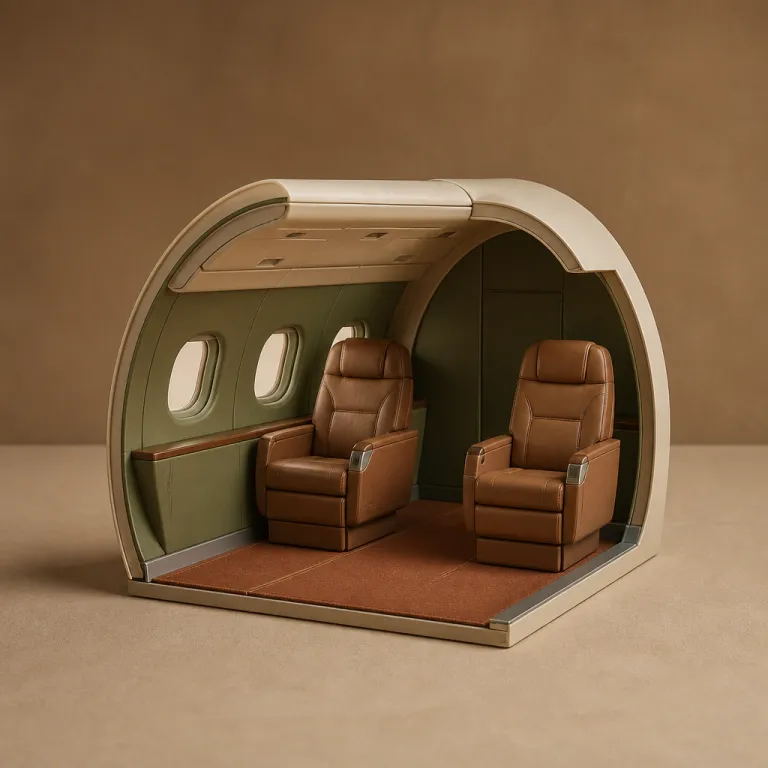
How the Falcon 10X cabin rewrites ultra long range expectations
The Falcon 10X cabin design starts with one blunt fact about space. Dassault Aviation has drawn a 2.03 metre (80 inch) wide cross section, wider than either the Bombardier Global 7500 at about 2.13 metres (99.5 inches) external but roughly 1.88 metres (74 inches) usable cabin width, or the Gulfstream G700 with a published 2.49 metre (99.2 inch) external cross section and about 1.91 metres (75 inches) internal width, and that extra Falcon shoulder room changes how the cabin feels before the jet even leaves the flight deck. Step inside and the first impression is not of a business jet stretched for range, but of a purpose built apartment at 12 000 metres.
On paper, the Falcon 10X cabin volume of roughly 78 cubic metres (2 780 cubic feet), as quoted in Dassault’s preliminary specifications, is only part of the story, because the real gain comes from how many usable inches you have at shoulder level and at floor height in every cabin zone. Where a Global 7500 narrows subtly around the wing root, the Dassault Falcon 10X keeps its cabin walls almost vertical, so a passenger walking from galley to lounge can move in a straight line without the sideways shuffle familiar on older business aviation types. That extra few inches of width, multiplied over several metres of length, lets designers carve out four genuine living areas instead of three compromised ones.
For a traveller planning an ultra long nexus flight such as Paris to Hong Kong, that difference in cabin layout matters more than any brochure claim about high speed cruise. A 7 500 nautical mile long range profile with NBAA IFR reserves, as published by Dassault Aviation in program launch material, is only comfortable if the cabin stays quiet, the pressurisation stays low, and the lighting system stays gentle when your body clock does not. The Falcon 10X cabin design is built around that logic, using advanced systems to keep noise, vibration, and cabin altitude in the background while the aircraft quietly eats distance at high Mach numbers.
Four real living zones in a business jet, not three and a half
Most ultra long range aircraft promise four zones, but walk the floor plan and you often find three proper spaces plus a narrow annex. Dassault looked at how owners actually use a cabin on a 14 hour flight and pushed the Falcon 10X layout so each zone can stand alone, whether you are running a business meeting, eating with family, or sleeping through the last four hours into Hong Kong. The result is a cabin that feels less like a stretched tube and more like a sequence of rooms with doors, privacy, and different moods.
In the forward section, a generous galley and crew rest protect the main cabin from traffic, which is something frequent flyers notice more than any high speed number on a spec sheet. Move aft and the first living zone can be configured as a club seating area with large windows measuring about 0.58 metres (23 inches) high, a figure Dassault has highlighted in early Falcon 10X interior briefings, so natural light stays high even when the sun angle is low. A second zone can hold a conference table that converts to dining, while a third becomes a cinema lounge or quiet work area, depending on how the built business interior is specified.
The signature move in the Falcon 10X cabin design is the optional aft suite, which can include a true queen size bed and a private shower with enough cabin volume to stand upright without contortions. That is where Dassault’s decade of widebody experiments shows, because the company has watched how owners migrated from smaller business aircraft into larger business aviation types and demanded residential comfort. If you want to compare this philosophy with a different approach to interior comfort, look at how a super fast Citation X handles its cabin in a detailed review of private jet interior design, which shows how speed without space can feel like a compromise on flights beyond eight hours.
Ride quality, wings, and why Dassault’s military DNA matters inside the cabin
From the outside, the Falcon 10X looks like another clean wing business jet with two engines and a tall T tail. Inside the cabin, though, you feel the way Dassault Aviation has translated its Rafale fighter experience into a civil fly by wire system that keeps the ride unusually smooth in chop. The advanced flight control laws work with the wing design to dampen turbulence, which means coffee stays in the cup and laptop screens stay readable when the air turns rough.
The Falcon 10X uses Rolls Royce Pearl 10X engines mounted aft, a configuration confirmed in Dassault and Rolls Royce joint program announcements, which keeps the noisiest machinery away from the quietest cabin zones. That engine placement, combined with careful tuning of the environmental control system, helps maintain a target cabin altitude of around 3 000 feet at 41 000 feet cruise and cabin noise levels in the low 50 dB range, according to Dassault’s preliminary data and early marketing targets. For passengers, the technical details of the flight deck and control system fade into the background, but the absence of fatigue after a long range sector is a direct result of those engineering choices.
On a practical level, the combination of wing aerodynamics, engine efficiency, and fuel weight management lets the aircraft carry full passengers, luggage, and NBAA IFR reserves on ultra long missions without turning the cabin into a science experiment in fuel saving. If you are used to helicopters like the Sikorsky S 92 VVIP, where vibration management is a constant battle, the stillness of a modern Dassault Falcon at cruise feels almost uncanny. That is why enthusiasts who care about aviation as an experience, not just a way to reach Hong Kong or New York, pay close attention to how each new Falcon model refines the balance between speed, range, and cabin comfort.
Materials, sustainability, and the quiet luxury of the Falcon 10X interior
Step past the entry door and the Falcon 10X cabin design reads as understated rather than flashy, which is a deliberate choice by Dassault. The company has watched business aviation tastes shift from glossy veneers toward tactile fabrics, natural finishes, and lighting systems that support circadian rhythms on ultra long flights. In practice, that means wide planks underfoot, muted textiles at eye level, and a lighting system that can mimic sunrise over Hong Kong even when you are still three hours out over the Arctic.
Behind the scenes, Dassault Aviation is working to integrate more sustainable materials and processes into the aircraft interior program, from low emission adhesives to recycled or responsibly sourced woods and leathers, as outlined in recent Dassault environmental and Falcon program briefings. None of this changes the basic physics of fuel weight or the need to carry IFR reserves under NBAA IFR rules, but it does signal a shift in how a purpose built business jet can reduce its footprint without sacrificing range or speed. Owners who care about the real impact of sustainable aviation fuel and other measures can find a clear breakdown of what actually moves the needle in an analysis of why some SAF math fails for many jet owners.
Cabin systems are where the advanced technology becomes tangible, because passengers interact with them every minute of the flight. Touchscreen panels manage everything from temperature zones to window shades, while a central system monitors power use so the aircraft can balance comfort against available electrical capacity on ultra long sectors. The goal is not to turn the cabin into a gadget showroom, but to make the technology fade into the background so the Falcon will feel like a calm, low noise apartment at 41 000 feet, whether you are crossing oceans or hopping between regional business hubs.
Why enthusiasts and future owners should track the Falcon 10X now
For an aviation enthusiast or aspiring owner, the Falcon 10X cabin design is a case study in how a manufacturer learns from a decade of experiments before committing to a flagship. Dassault has watched rivals push high speed numbers and headline range figures, then asked a quieter question about what a human body needs after 15 hours in a pressurised tube. The answer is not just more feet and inches of space, but a cabin that stays consistently comfortable from low altitude climb to high cruise and back down again.
On the technical side, the aircraft’s 7 500 nautical mile long range capability, Rolls Royce Pearl engines, and advanced flight deck systems will keep analysts busy, because they show how business aviation is converging on a new standard for ultra long missions. Yet for someone planning to use a business jet as a daily tool, the more relevant metrics are cabin volume, layout flexibility, and how the system handles real world constraints like fuel weight and variable winds. A Falcon will always be judged on its wing design and handling, but this generation of Dassault Falcon models is equally defined by what happens behind the cockpit door.
There is also a strategic angle for early buyers, who will position themselves against owners of Global 7500 and G700 aircraft already in service on routes such as Los Angeles to Hong Kong or London to Singapore. Those who secure early delivery slots effectively buy a moving lounge that reflects the latest thinking on low noise, high comfort, and purpose built interiors, rather than a cabin frozen in an earlier design cycle. For many, the real luxury in business aviation is not the price tag, but the first quiet hour at altitude when the door closes, the engines settle, and the cabin feels like it was designed around the way you actually live and work.
FAQ
How does the Falcon 10X cabin compare in width to its rivals?
The Falcon 10X cabin is 2.03 metres (80 inches) wide, which makes it wider than the usable cabin widths of both the Bombardier Global 7500 and the Gulfstream G700 and gives designers more floor and shoulder space in every zone, based on figures published in Dassault and rival manufacturer spec sheets. That extra width allows four genuine living areas rather than three plus a compromised section. For passengers, the result is easier movement through the cabin and more flexible layouts for work, dining, and rest.
What makes the Falcon 10X suitable for ultra long range flights?
The aircraft combines a 7 500 nautical mile range, based on Dassault Aviation figures using NBAA IFR reserves, with a cabin designed specifically for missions lasting 12 to 15 hours. Low cabin altitude, careful noise insulation, and a four zone layout help reduce fatigue on sectors that require significant fuel weight. The Rolls Royce Pearl engines and efficient wing also support high cruise speeds without sacrificing comfort.
How many passengers can the Falcon 10X cabin comfortably accommodate?
Typical layouts for the Falcon 10X cabin are expected to seat around 12 to 16 passengers in full comfort, depending on how many divans, club seats, and dedicated sleeping areas an owner specifies. Because of the generous cabin volume and width, several passengers can sleep flat while others work or dine in separate zones. That flexibility is a key advantage over narrower business jets in the same range class.
What is special about the Falcon 10X flight deck and systems?
The Falcon 10X flight deck uses advanced fly by wire controls derived from Dassault’s military programs, tuned for smooth handling and ride comfort in civil aviation. Integrated avionics systems manage navigation, performance, and safety functions while also supporting efficient fuel and range planning. For passengers, the benefit shows up as smoother flights, better on time performance, and fewer disruptions from turbulence.
Why should an enthusiast follow the Falcon 10X program before certification?
Following the Falcon 10X program early gives enthusiasts insight into how Dassault Aviation is redefining the balance between speed, range, and cabin comfort in business aviation. Design choices made now, from cabin layout to systems architecture, will influence competitors and future models across the ultra long range segment. Watching this aircraft evolve is a way to understand where top tier business jets are heading over the next decade.