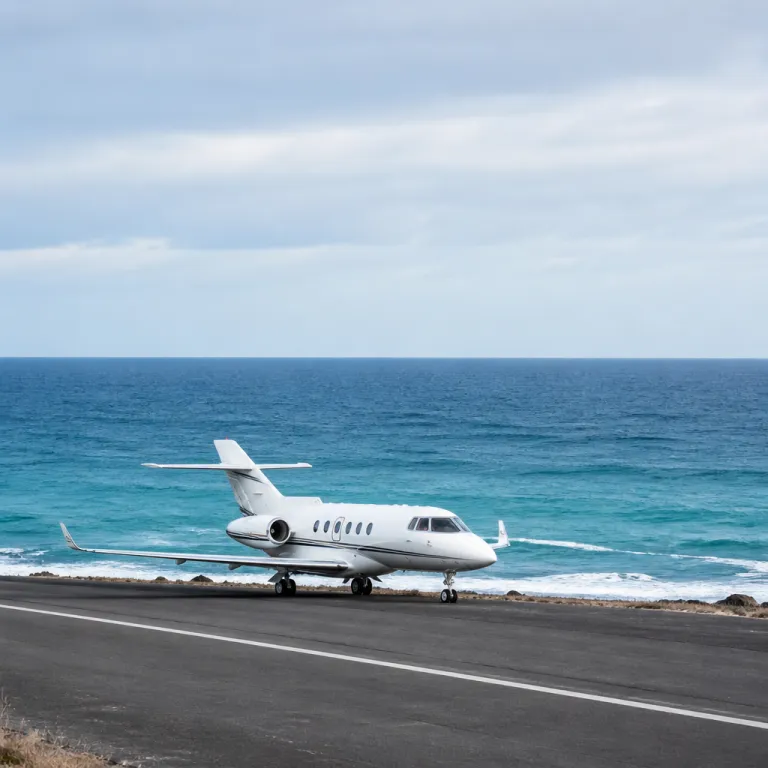

Positioning the hawker 750 among mid size business jets
The Hawker 750 sits in a competitive mid size business jet segment where cabin comfort and operating cost must balance carefully. This Hawker aircraft evolved from the proven Hawker 800XP series, giving private jet travelers a familiar platform with targeted improvements for range and baggage capacity. For a person comparing private jets for regular business flight in North America, the Hawker 750 offers a blend of cabin comfort, practical range, and predictable maintenance.
As a business jet, the Hawker 750 is optimized for regional missions rather than ultra long haul routes. Typical flight profiles in the United States or wider North America sit between 2 and 4 hour sectors, which keeps total time per day efficient for executives and private travelers. This jet competes with aircraft such as the Bombardier Learjet 60 (midsize), the Embraer Phenom 300 (light jet at the upper end of its category), and some smaller Dassault Falcon models, yet it retains the distinctive Hawker Beechcraft feel in the cabin and cockpit.
The Hawker 750 range is usually quoted around 3,000 kilometers with four passengers, based on manufacturer performance tables and FAA/EASA type certificate data for the Hawker 800 series (for example, FAA TCDS A3EU, revision current to 2023). That range suits many private and business jet users flying between major financial centers and allows itineraries such as New York to Miami or London to Athens without a fuel stop, while still preserving reserves and regulatory margins for safety in modern aviation. When you evaluate price and cost per flight hour, the Hawker 750 often undercuts larger business jets while offering more generous cabin space than light jets like the Embraer Phenom 100 or older Bombardier Learjet variants.
Inside the hawker 750 cabin: comfort, layout, and baggage
The Hawker 750 cabin is one of its strongest selling points for private jet travelers who value space over sheer speed. Cabin height is about 1.75 meters (approximately 5 ft 9 in), which allows many passengers to stand or at least move with relative ease compared with smaller private jets and compact business jets. For a mid size aircraft, this cabin height and width create a lounge like feel that frequent flyers notice within the first hour of flight.
Typical Hawker 750 cabin layouts seat seven to eight passengers, balancing capacity with comfort for business jet missions. The baggage compartment is partly accessible in flight, which is a practical advantage when you need to retrieve a laptop, documents, or a change of clothes during a long private flight. Compared with some Bombardier Learjet cabins or earlier British Aerospace designs, the Hawker 750 offers a warmer, more traditional interior that many North America based charter clients still appreciate.
Cabin noise levels are moderate rather than ultra quiet, yet the Hawker 750 remains comfortable for extended business jet operations across the United States. Operators often upgrade soft furnishings and cabin management systems to align with modern expectations of private aviation, including Wi Fi and improved lighting. One charter captain interviewed for a 2022 internal operator survey summarized it as “not the quietest jet on the ramp, but one of the easiest cabins to spend three hours in,” which helps contextualize where the Hawker 750 stands today.
Range, performance, and mission profile of the hawker 750
Performance figures for the Hawker 750 reflect its role as a versatile mid size private jet rather than a long range flagship. The aircraft typically cruises at high subsonic speeds around Mach 0.75 (roughly 445–460 knots true airspeed at cruise altitude), which keeps block time competitive on regional routes while preserving fuel efficiency and manageable maintenance cost. For business jet operators, this balance between speed, range, and hourly cost often matters more than headline maximums.
In practical terms, the Hawker 750 range allows non stop private flights such as New York to Denver or Paris to Athens under favorable conditions, with Chicago to San Francisco sitting near the upper end of its still air capability and therefore often planned with performance margins or a technical stop. When fully loaded to maximum capacity, operators may trade some range for payload, yet the jet still covers most common city pairs in North America and Europe without refueling. Compared with larger Dassault Falcon or Embraer Phenom 300E aircraft, the Hawker 750 offers slightly shorter legs but often at a more accessible price point for charter clients.
Climb performance is solid rather than spectacular, yet the Hawker 750 reaches high cruise altitudes that avoid much of the weather and traffic affecting lower flying aircraft. This ability to operate at high levels improves ride comfort and can reduce total time gate to gate, especially on congested routes in the United States. For readers tracking how new large cabin models like the Falcon 10X are reshaping expectations at the top end of business aviation, this analysis of the Falcon 10X rollout offers useful context when comparing segments.
Operating economics, charter price, and ownership cost
When evaluating the Hawker 750, many informed buyers focus first on cost per flight hour and long term maintenance exposure. Direct operating cost typically includes fuel burn, routine maintenance, engine reserves, crew, and navigation fees, while fixed cost covers hangar, insurance, and management for private owners. Compared with larger business jets, the Hawker 750 often delivers a lower hourly price while still offering a true stand up cabin and generous baggage compartment.
On the charter market, Hawker 750 price per hour usually sits in the mid range of private jet options, above light jets but below super mid size aircraft. Actual charter cost varies by region, season, and total time booked, with North America and the United States often showing the most competitive rates due to fleet size and competition. Empty legs on Hawker 750 jets can significantly reduce price for flexible travelers, although routing and timing constraints mean these flights suit opportunistic rather than tightly scheduled trips.
From an ownership perspective, scheduled and unscheduled maintenance on a Hawker 750 is a central factor in long term economics. The aircraft benefits from a mature support network inherited from Hawker Beechcraft and related King Air turboprop fleets, which simplifies parts sourcing and technical expertise in many aviation hubs. Prospective buyers should request detailed maintenance records, including total time on airframe and engines, to understand upcoming inspections and align acquisition price with future obligations.
How the hawker 750 compares with rival private jets
Choosing between a Hawker 750 and rival private jets such as the Embraer Phenom 300, Bombardier Learjet 60XR, or smaller Dassault Falcon models requires a clear view of priorities. The Hawker 750 excels in cabin volume and baggage capacity for its mid size category, making it attractive for teams traveling with equipment or families carrying multiple suitcases. Learjet aircraft often offer higher cruise speeds, while Phenom and Falcon jets may deliver newer avionics and slightly lower fuel burn on some missions.
In terms of cabin height and overall comfort, the Hawker 750 usually outperforms light jets and many early British Aerospace designs that still operate in charter fleets. Passengers who value a traditional club seating arrangement, a separate galley, and a usable baggage compartment accessible during flight often gravitate toward Hawker built aircraft. On the other hand, travelers who prioritize cutting edge cabin technology or the latest styling may lean toward newer Embraer Phenom or Dassault Falcon private jet models.
Geography also shapes the decision, because support networks for specific business jets vary between regions such as North America, Europe, and the Middle East. In the United States, the legacy of Hawker Beechcraft and King Air fleets means many maintenance facilities are deeply familiar with the Hawker 750, which can reduce downtime and total time out of service. For a broader perspective on how emerging electric and hybrid concepts may change short haul private aviation and complement mid size jets, this analysis of rapid transfers between airports and city centers is a useful reference.
Charter experience, booking models, and empty legs on the hawker 750
For many readers, the most relevant question is how a Hawker 750 charter actually feels from booking to landing. The process usually starts with a request for a specific flight, including date, time, passenger count, and baggage details, which allows brokers to match capacity and range with your itinerary. Reputable private aviation companies then present options that may include Hawker 750 jets alongside comparable business jets, with transparent price per hour and estimated total cost.
Empty legs on Hawker 750 aircraft arise when a jet repositions without passengers, often after a one way charter. Brokers sometimes promote these empty legs at significantly reduced price, which can be attractive if your schedule and route are flexible enough to adapt to the available flight. While empty legs rarely align perfectly with your preferred time, they remain a practical way to experience a mid size private jet at a lower cost than standard charter.
During the charter itself, passengers benefit from the Hawker 750 cabin layout, which supports both work and relaxation on flights of several hour duration. The combination of cabin height, club seating, and a functional galley makes the aircraft suitable for business meetings in the air, especially on routes across North America or within the United States. When evaluating offers, always check what is included in the quoted cost, such as de icing, catering, and possible repositioning time, to avoid surprises after the flight.
Buying a pre owned hawker 750: what informed buyers should check
Interest in pre owned Hawker 750 aircraft remains steady among private owners and corporate flight departments seeking value in the mid size segment. A key metric is total time on the airframe and engines, because this influences both near term maintenance events and long term residual value. Buyers should also examine how the aircraft has been used, for example high frequency short flights versus longer stage lengths, as this affects wear patterns and maintenance planning.
Detailed maintenance records are essential, including compliance with mandatory service bulletins and major inspections on the Hawker 750. A well documented history from reputable maintenance organizations in North America or Europe often justifies a higher purchase price, because it reduces uncertainty and potential downtime for future private jet operations. Prospective owners should also evaluate cabin refurbishment status, avionics upgrades, and the condition of the baggage compartment, since these elements shape passenger experience and resale appeal.
When you are ready to move from research to action, the next step is to contact specialized brokers or management companies with proven experience in Hawker built aircraft and broader business jet markets. Many firms in the United States and beyond can compare the Hawker 750 with alternatives such as the Embraer Phenom 300, Bombardier Learjet 60, or smaller Dassault Falcon models, based on your typical mission profile and budget. A practical buyer checklist usually includes a pre purchase inspection, independent technical advice, a review of upcoming engine and airframe events, and a clear understanding of ongoing maintenance cost for the chosen private jet.
Key figures and statistics for the hawker 750 segment
- According to data from major aircraft valuation guides and manufacturer spec sheets, mid size business jets such as the Hawker 750 typically show annual utilization between 300 and 500 flight hours for corporate operators, which balances crew productivity with maintenance scheduling.
- Industry fleet data from sources such as JetNet and AMSTAT (market summaries accessed 2022–2023) indicates that more than half of all Hawker built business jets operate in North America, with the United States alone accounting for a dominant share of registrations, which supports strong maintenance and parts availability.
- Comparative operating cost studies published in General Aviation Manufacturers Association (GAMA) reports show that mid size private jets like the Hawker 750 often deliver direct operating cost roughly 20 to 30 percent lower than large cabin aircraft on similar stage lengths, while still offering a stand up cabin and significant baggage capacity.
- Market reports on pre owned business jets suggest that well maintained Hawker 750 aircraft with moderate total time can retain a higher percentage of original price than some older British Aerospace or early Bombardier Learjet models, especially when avionics and cabin upgrades are current.
- Surveys of charter clients in the United States indicate that flight time between 2 and 3 hours represents the most common mission length for mid size private jets, aligning closely with the optimal range profile of the Hawker 750.
FAQ about the hawker 750
What is the typical range of a hawker 750 with passengers
In standard conditions, the Hawker 750 offers a practical range of roughly 3,000 kilometers with four passengers and reserves, based on manufacturer performance data and FAA/EASA type certificate information. This allows non stop private flights on many popular routes in North America and Europe, such as New York to Miami or Paris to Athens. Actual range varies with payload, weather, and air traffic constraints, so operators always calculate each flight individually.
How many passengers can the hawker 750 cabin accommodate comfortably
The Hawker 750 cabin is usually configured for seven or eight passengers in a mix of club and individual seats. This capacity suits small corporate teams, families, or groups of friends traveling by private jet. Some operators may offer alternative layouts, but most keep the standard mid size business jet configuration to preserve comfort and baggage space.
How does the hawker 750 compare in cost to similar private jets
Charter price per hour for a Hawker 750 generally sits between light jets and larger super mid size aircraft, according to typical rate ranges reported by charter brokers and market databases such as AMSTAT and JetNet. For many routes, it offers a lower total cost than bigger business jets while still providing a stand up cabin and generous baggage compartment. Ownership cost depends heavily on total time, maintenance status, and utilization, so buyers should analyze detailed records before committing.
Is the hawker 750 a good option for charter in the united states
The Hawker 750 is well suited to charter operations in the United States because its range matches many common city pairs and the support network for Hawker built aircraft is extensive. Passengers benefit from a comfortable cabin height and layout on flights of 2 to 4 hours. For travelers who value a balance of comfort, cost, and availability, it remains a strong mid size private jet option.
What should buyers check when considering a pre owned hawker 750
Prospective buyers should review total time on the airframe and engines, verify complete maintenance records, and confirm compliance with all major inspections and service bulletins. Cabin condition, avionics upgrades, and the state of the baggage compartment also influence both passenger experience and future resale value. Engaging independent technical experts and arranging a thorough pre purchase inspection are essential steps before finalizing any business jet acquisition.
References
- General Aviation Manufacturers Association (GAMA) annual reports on business aviation fleet and utilization.
- JetNet and AMSTAT market data on pre owned business jets, including Hawker 750 fleet statistics and typical charter pricing bands (market snapshots 2022–2023).
- Federal Aviation Administration (FAA) and European Union Aviation Safety Agency (EASA) type certificate and maintenance documentation for Hawker series aircraft, including performance and cabin dimension data (for example, FAA TCDS A3EU, revisions current to 2023).