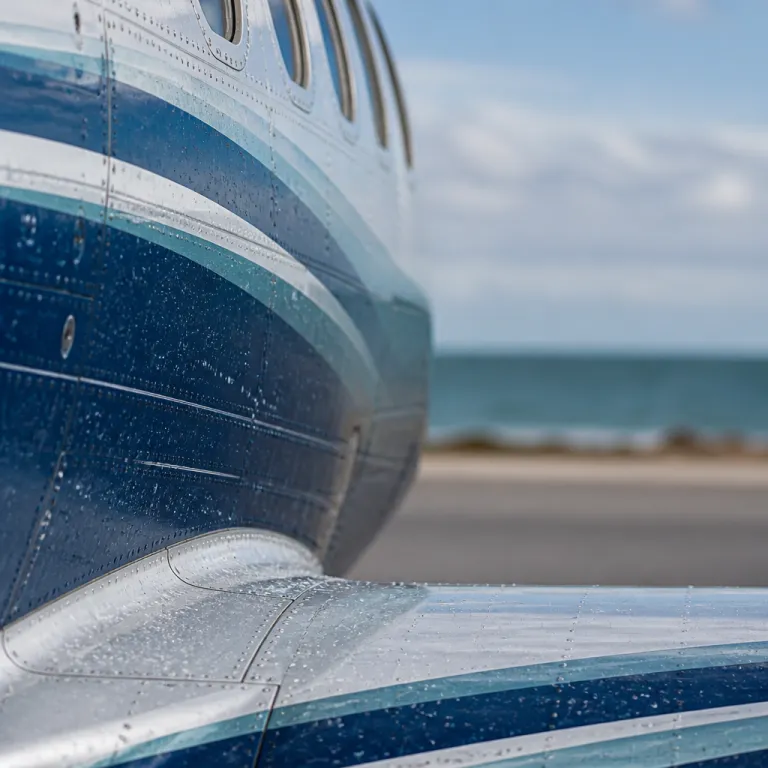

How the hawker beechcraft 400XP became a historic light jet
The Hawker Beechcraft 400XP sits at a crossroads between eras in business aircraft design. This light jet began life as a Mitsubishi aircraft project, then evolved through Beech, Beechjet and finally Hawker branding under a major aircraft company. Its story explains why the 400XP still attracts informed passengers and charter clients who value proven engineering.
Mitsubishi launched the original Diamond and later the Mitsubishi Diamond II as compact business aircraft with a distinctive swept wing and supercritical airfoil. When Beech acquired the Mitsubishi Diamond program, the design was reworked into the Beechjet 400, then refined again as the Hawker Beechcraft 400XP with upgraded avionics, a reconfigured cabin and higher maximum takeoff performance. This lineage links Japanese Mitsubishi aircraft engineering, American Beech craftsmanship and Hawker’s business jet heritage in a single model.
For travelers comparing historic light jets, the Hawker Beechcraft 400XP often appears beside the Dassault Falcon 10 and early Embraer Phenom models. The French Dassault aircraft family focused on long range and high speed, while the compact Falcon variants targeted a different niche than the 400XP. By contrast, the Hawker 400XP prioritized short airfield capability, efficient fuel consumption and a flat floor cabin that feels larger than its external weight in pounds might suggest.
Textron Aviation later inherited the Hawker Beechcraft and Beech product lines, which kept support for the 400XP and related King Air turboprops available worldwide. That continuity matters when you evaluate a historic jet model for charter or potential purchase. A light jet with strong parts support and a stable aircraft company behind it usually delivers more reliable flight hours per year and better long term value.
The 400XP’s evolution also paved the way for the Hawker 400XPR upgrade program, which replaces original Pratt & Whitney JT15D engines with modern Williams International FJ44 powerplants on some aircraft. These Hawker 400XPR conversions improve cruise speed, climb and fuel consumption while preserving the familiar cabin layout. For many operators, that combination of classic airframe and modern engines created a bridge between older Hawker jets and newer designs from Embraer, Dassault and other manufacturers.
Design, performance and range of the hawker beechcraft 400XP
From a performance standpoint, the Hawker Beechcraft 400XP is a light jet optimized for regional business travel. Typical high speed cruise figures sit around Mach 0.76, or roughly 450 to 480 mph, placing the aircraft comfortably within the competitive set of light jets from Cessna and Embraer. That performance allows non stop flight sectors such as Paris to Athens or New York to Miami under favorable air traffic and wind conditions.
The 400XP’s range varies with passengers, baggage and fuel reserves, but many operators plan around roughly 2 000 kilometers with a full business load. When the aircraft flies with fewer passengers and lighter baggage, the practical range extends, especially on cooler days with lower air density. This flexibility helps charter brokers match the model to missions that would be inefficient for larger Dassault Falcon or midsize Hawker jets.
On the weight side, the Hawker Beechcraft 400XP has a typical maximum takeoff weight just under 7 400 kilograms, which translates to roughly 16 300 to 16 500 pounds. That maximum takeoff figure reflects the structural limits of the airframe, the strength of the landing gear and the thrust available from the Pratt & Whitney engines originally fitted. Pilots and dispatchers calculate takeoff weight carefully for each flight, balancing fuel, passengers and baggage against runway length and air temperature.
Fuel consumption for the 400XP sits in the expected band for light jets of its generation, usually around 900 to 1 000 kilograms of jet fuel per hour at cruise. When you spread that burn across six or seven passengers, the per seat fuel consumption compares favorably with larger business aircraft on short sectors. Operators who track hours per year on each jet often find that the 400XP’s efficiency makes it attractive for frequent regional trips where a bigger Dassault Falcon or Embraer Phenom would be underutilized.
For travelers comparing regional options, it helps to contrast the 400XP with aircraft such as the ERJ 135 regional jet, which is covered in detail in this regional jet guide for informed private aviation travelers. The ERJ 135 is a larger airliner derived aircraft with more seats but higher operating costs and different airport requirements. By contrast, the Hawker Beechcraft 400XP offers private jet intimacy, a dedicated cabin and flexible charter deployment while still covering similar stage lengths for small executive groups.
Cabin experience, comfort and practical layout
Inside the Hawker Beechcraft 400XP, the cabin layout reflects its origins as a compact business aircraft rather than a converted airliner. The cabin cross section is relatively wide for a light jet, with a flat floor that helps passengers move easily between seats. Many travelers comment that the interior feels closer to some midsize jets than the exterior dimensions and weight in pounds might suggest.
Typical seating in the 400XP includes a four place club arrangement plus additional forward facing seats, giving space for seven or eight passengers depending on configuration. An enclosed lavatory at the rear of the cabin provides privacy, which is not always guaranteed in older light jets or very small single engine aircraft. For business travelers, that enclosed lavatory and the ability to stand slightly in the aisle during flight can make a two or three hour sector far more comfortable.
The cabin of the Hawker Beechcraft 400XP also benefits from large windows that admit generous natural light, which reduces fatigue on longer flights. Noise levels are moderate for a light jet of this era, though not as quiet as newer Embraer Phenom or latest generation Dassault Falcon cabins. Many operators have upgraded interiors with modern LED lighting, refreshed leather and improved soundproofing to keep the model competitive in today’s charter market.
Compared with turboprops such as the King Air series from Beech, the 400XP offers a smoother ride at higher cruise altitudes where the air is thinner and weather often calmer. Passengers who are sensitive to turbulence often prefer jets over turboprops, even when the King Air cabin is similarly sized. The Hawker Beechcraft 400XP strikes a balance between compact dimensions, a functional enclosed lavatory and a cabin that still feels genuinely premium.
For travelers considering very small aircraft, it is worth reading guidance on what to know about single seat airplanes before deciding how much cabin space they really need. Single seat or very small two seat aircraft can be efficient for pilot owners, but they lack the multi passenger flexibility and comfort of a light jet like the 400XP. When you factor in luggage, business equipment and the desire for a quiet working environment in the air, the Hawker Beechcraft 400XP’s cabin often emerges as a practical minimum size for serious corporate travel.
From Mitsubishi Diamond to Hawker XPR: upgrades and derivatives
The Hawker Beechcraft 400XP did not appear in isolation; it is part of a family that began with the Mitsubishi Diamond and evolved through several aircraft company transitions. Mitsubishi Aircraft engineered the original Diamond as a compact business jet with advanced aerodynamics for its time. When Beech acquired the program, the design became the Beechjet 400 and later the Hawker 400XP, each step adding refinements in structure, systems and cabin comfort.
Beechjet variants introduced structural improvements and avionics upgrades that prepared the airframe for higher takeoff weight and better performance. The Hawker Beechcraft era focused on business aviation branding, aligning the 400XP with larger Hawker jets and the King Air turboprop family. This strategy allowed charter operators to offer a coherent fleet where passengers could choose between light jets, turboprops and midsize aircraft under a single recognizable brand.
Later, Nextant Aerospace launched a comprehensive remanufacturing program that transformed older Beechjet and Hawker 400XP airframes into Nextant 400XT and 400XTi aircraft. These Nextant Aerospace conversions replace original Pratt & Whitney JT15D engines with modern Williams International FJ44 engines, install new avionics suites and refresh cabins. The result is a jet with lower fuel consumption, improved cruise speed and extended range, while retaining the proven Mitsubishi Diamond derived structure.
In parallel, the Hawker 400XPR upgrade package offered by Textron Aviation provides another path for owners who want to modernize their 400XP fleets. Hawker 400XPR upgrades typically include new Williams engines, aerodynamic enhancements and updated interiors, which together improve climb performance, reduce fuel burn and extend practical range. For operators flying several hundred hours per year, these upgrades can significantly reduce direct operating costs while keeping passengers in a familiar cabin environment.
This evolutionary path contrasts with the approach taken by Dassault and Embraer, which often introduce entirely new Falcon or Phenom models rather than deeply remanufacturing existing airframes. Both strategies have merit; a clean sheet Dassault Falcon design can integrate the latest materials and systems, while a Nextant or Hawker 400XPR program leverages existing aircraft to deliver near new performance at a lower acquisition cost. For informed buyers, understanding how the Hawker Beechcraft 400XP connects to Mitsubishi Diamond roots and modern XPR upgrades is essential to evaluating long term value.
How the 400XP compares with other light jets and small Falcons
When you compare the Hawker Beechcraft 400XP with other light jets, several themes emerge around performance, comfort and operating economics. Against early Embraer Phenom models, the 400XP usually offers a slightly smaller cabin but a flatter floor and a different seating geometry. The Phenom family benefits from newer avionics and lower fuel consumption, while the Hawker’s proven airframe and broad support network remain strong advantages.
Compared with small Dassault Falcon aircraft such as the Falcon 10 or Falcon 20, the 400XP occupies a different niche in the business aviation ecosystem. Dassault Falcon models emphasize long range, high speed and sophisticated aerodynamics, often at higher acquisition and operating costs than a light jet like the 400XP. For regional missions under 2 000 kilometers with six passengers, the Hawker Beechcraft 400XP can be more efficient in both fuel and time on the ground.
Against turboprops such as the King Air 200 or King Air 350, the 400XP trades some short field capability for higher cruise altitude and faster speed. King Air aircraft excel on very short runways and unpaved strips, while the Hawker 400XP prefers paved runways of moderate length but rewards passengers with a smoother ride in thinner air. Many operators keep both King Air turboprops and Hawker jets in their fleets to match aircraft to each specific mission profile.
Historic jets from Mitsubishi, Beech and Hawker also compete with newer regional aircraft and advanced air mobility concepts. For example, recent analysis of urban air mobility highlights how seven minute transfers from major airports to city centers could reshape private aviation, as explored in this article on what seven minutes from JFK to Midtown changes for private aviation. While such electric air taxi services will not replace a Hawker Beechcraft 400XP for intercity travel, they may complement light jets by handling the last few kilometers of a journey.
For charter clients, the choice between a Hawker Beechcraft 400XP, a small Dassault Falcon or an Embraer Phenom often comes down to mission length, runway constraints and cabin preferences. If you need an enclosed lavatory, a flat floor and proven reliability at a competitive hourly rate, the 400XP remains compelling. When longer range, ultra quiet cabins or cutting edge avionics matter more, a newer Falcon or Phenom model may justify the higher charter price.
Operating economics, maintenance and what informed travelers should ask
From an operator’s perspective, the Hawker Beechcraft 400XP offers a balanced economic profile for regional business aviation. Direct operating costs include fuel consumption, maintenance reserves, crew expenses and navigation charges, all influenced by how many hours per year the aircraft flies. When a 400XP logs between 400 and 600 hours per year, fixed costs such as hangar fees and insurance spread efficiently across many flight hours.
Maintenance on the 400XP benefits from decades of accumulated experience across Mitsubishi, Beech, Beechjet and Hawker fleets. Textron Aviation and independent maintenance organizations hold extensive data on typical component lifetimes, inspection intervals and upgrade options. This depth of knowledge helps predict when major items such as landing gear overhauls or engine hot section inspections will fall due, which in turn affects charter pricing and aircraft availability.
Engine choice plays a major role in both performance and economics for this aircraft family. Original Hawker Beechcraft 400XP jets with Pratt & Whitney JT15D engines deliver reliable thrust but higher fuel burn than later Williams engines equipped Hawker 400XPR or Nextant Aerospace variants. For operators flying intensive schedules, the lower fuel consumption and extended maintenance intervals of Williams engines can offset the initial upgrade cost over several years.
In terms of payload, the 400XP’s maximum takeoff weight and typical empty weight leave a useful load that comfortably accommodates six or seven passengers with baggage and full fuel on many missions. When a flight requires very long range within the aircraft’s envelope, crews may limit passengers or baggage to keep takeoff weight within performance limits for shorter runways or high temperature airfields. Understanding this trade off helps travelers appreciate why a charter operator might suggest a different model for particularly demanding routes.
Informed travelers booking a Hawker Beechcraft 400XP charter should ask about recent maintenance events, cabin refurbishment dates and whether the aircraft is a standard 400XP, a Nextant conversion or a Hawker 400XPR upgrade. Each variant offers slightly different cruise speed, range and cabin features, though all retain the core strengths of the original Mitsubishi Diamond derived design. By engaging with these details, passengers can align their expectations with the specific aircraft they will board and ensure that comfort, performance and safety meet their priorities.
Key figures and technical snapshot of the hawker beechcraft 400XP
Technical data for the Hawker Beechcraft 400XP helps contextualize its place among historic light jets. Typical maximum takeoff weight sits just under 7 400 kilograms, or about 16 300 to 16 500 pounds, depending on specific configuration and optional equipment. This maximum takeoff figure supports a practical balance between fuel, passengers and baggage for regional business missions.
Normal cruise speed for the 400XP is around 740 to 780 kilometers per hour, which corresponds to roughly 460 to 485 mph at typical cruise altitudes. That performance allows the aircraft to cover common European or North American business routes in one to three hours of flight time. When compared with turboprops such as the King Air, the Hawker’s higher cruise speed reduces total journey time, especially on sectors above 800 kilometers.
Cabin dimensions vary slightly by interior layout, but the 400XP generally offers a cabin length of about 4.7 meters, a width close to 1.5 meters and a height around 1.45 meters. This space supports seating for seven or eight passengers, an enclosed lavatory and a small refreshment center. While not as spacious as larger Dassault Falcon or midsize Hawker cabins, the 400XP’s flat floor and generous windows make efficient use of every centimeter.
Typical fuel consumption at cruise sits near 900 to 1 000 kilograms of jet fuel per hour for standard Pratt & Whitney powered aircraft. Hawker 400XPR and Nextant Aerospace variants with Williams engines can reduce that burn by a noticeable margin, improving both range and operating economics. Over several hundred hours per year, such improvements translate into significant cost savings and lower environmental impact per passenger kilometer.
In the broader context of business aviation, the Hawker Beechcraft 400XP remains a relevant option for charter, corporate and private owners who value proven engineering, a comfortable cabin and manageable operating costs. While newer Embraer Phenom and Dassault Falcon models offer advanced technology and longer range, the 400XP’s blend of Mitsubishi Diamond heritage, Beech craftsmanship and Hawker branding continues to appeal to informed travelers. For many regional missions, this historic light jet still represents a rational, elegant way to move quickly through the air.
Key statistics about the hawker beechcraft 400XP and comparable jets
- Typical maximum takeoff weight for the Hawker Beechcraft 400XP is about 7 394 kilograms, or 16 300 to 16 500 pounds, placing it firmly in the light jet category according to manufacturer data from Textron Aviation and FAA type certificate records.
- Standard seating capacity for the 400XP is seven to eight passengers, which aligns with most light jets and offers roughly half the seats of small regional jets such as the ERJ 135, based on typical interior layouts published in OEM cabin guides.
- Typical high speed cruise for the 400XP is around Mach 0.76, equivalent to approximately 450 to 480 miles per hour, comparable to many Cessna Citation and early Embraer Phenom models in manufacturer performance tables.
- Practical range for the Hawker 400XP is often quoted near 2 000 to 2 200 kilometers with four passengers and standard reserves, which comfortably covers routes such as London to Rome or Chicago to New York in Textron and operator planning documents.
- Nextant Aerospace reports that its remanufactured 400XTi variant can reduce fuel consumption by up to 20 percent compared with original Beechjet 400 aircraft, illustrating the impact of modern engines and aerodynamic refinements on historic airframes in published Nextant performance summaries.
FAQ about the hawker beechcraft 400XP
How many passengers can the hawker beechcraft 400XP carry comfortably ?
The Hawker Beechcraft 400XP typically seats seven or eight passengers in a mix of club and forward facing seats. Most operators recommend six or seven passengers for maximum comfort and baggage flexibility. This capacity suits executive teams, families or small groups traveling on regional business routes.
Does the hawker beechcraft 400XP have an enclosed lavatory ?
Yes, the 400XP is equipped with an enclosed lavatory located at the rear of the cabin. This feature distinguishes it from some very small light jets and older designs with only a curtained toilet. For flights of two to three hours, an enclosed lavatory significantly improves passenger comfort and privacy.
What is the typical range of the hawker beechcraft 400XP ?
In standard conditions with four passengers and required fuel reserves, the Hawker Beechcraft 400XP offers a practical range of around 2 000 to 2 200 kilometers. Heavier passenger loads, strong headwinds or hot and high airports can reduce this figure. Charter operators plan each mission carefully to ensure adequate reserves and performance margins.
How does the 400XP compare with turboprops like the King Air ?
Compared with King Air turboprops, the 400XP flies higher and faster, reducing travel time on routes above roughly 800 kilometers. King Air aircraft can use shorter or unpaved runways and often have slightly larger cabins in some variants. The choice between a King Air and a 400XP usually depends on runway length, weather, budget and passenger preference for jet versus turboprop flight.
Are upgraded versions like the Hawker XPR or Nextant 400XTi worth considering ?
Upgraded Hawker 400XPR and Nextant 400XTi versions offer modern Williams engines, new avionics and refreshed cabins, which improve speed, range and fuel efficiency. For operators flying several hundred hours per year, these improvements can lower operating costs and enhance reliability. Travelers booking charter flights may notice smoother performance and more contemporary interiors on these upgraded aircraft compared with older 400XP examples.