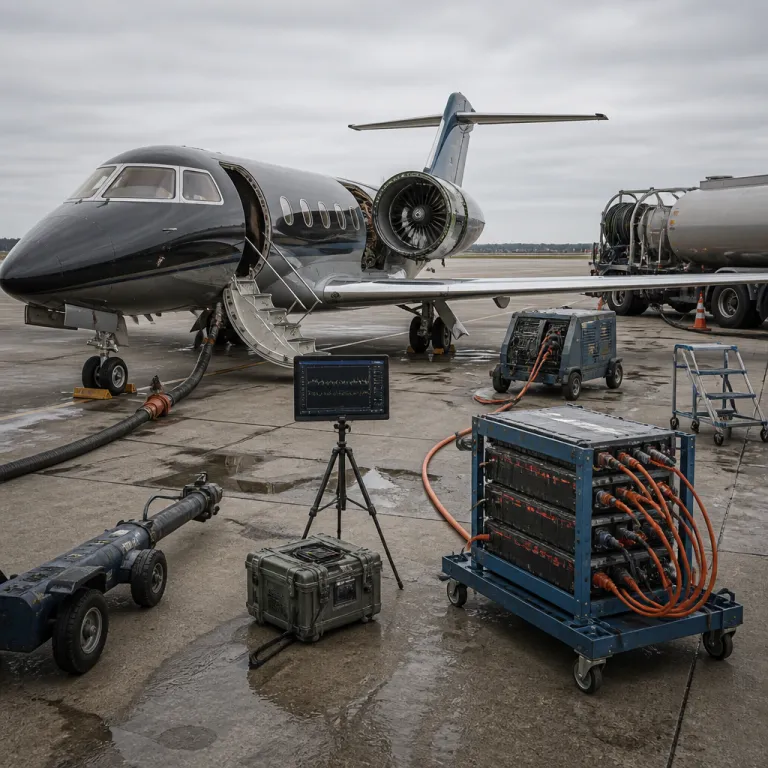
The hard physics behind electric aircraft range limitations
Private flyers hear constant promises about electric aviation, yet the real constraint is brutally simple. Energy density, the amount of usable energy stored per kilogram, makes the difference between a sleek long range aircraft and a short hop electric plane that barely clears 150 nautical miles. If you care about where a powered aircraft can actually take you, you need to start with the numbers, not the marketing renders.
Jet fuel contains roughly 11 900 watt hours of chemical energy per kilogram based on its lower heating value,1 while today’s best lithium ion cells used in electric aircraft sit closer to 250 to 300 watt hours per kilogram at the cell level and less at the full pack level.2 That means the specific energy of conventional fuel is on the order of thirty to forty times higher than the battery powered alternative on a pure mass basis, although the comparison narrows somewhat once you account for thermal-to-shaft and propulsive efficiency. Even when you factor in that a turbine motor wastes more energy as heat than an efficient electric motor, and that battery packs lose some capacity to cooling, structure, and power electronics, the fuel still wins decisively on both range and payload for any flight beyond about 300 nautical miles.
Think about what that means for a real aircraft rather than a lab diagram. A light jet like an Embraer Phenom 100, burning Jet A fuel in two turbofan engines, can cover roughly 1 000 to 1 200 nautical miles with four passengers and bags while keeping reserves, according to published performance data. An equivalent electric plane with current batteries and the same cabin volume would need to devote most of its maximum takeoff weight to energy storage, leaving little margin for passengers, luggage, or the redundant system architecture that private aviation safety standards demand.
Electric motors are wonderfully compact, and electric power delivery is smooth, quiet, and mechanically simple. Yet the batteries that feed those electric motors are heavy, slow to recharge, and unforgiving when you miscalculate energy reserves during flights in poor weather. For a general aviation pilot hopping between nearby airfields, that trade off might be acceptable, but for a private jet owner who expects Paris to Mykonos or New York to Palm Beach in one flight, the mass of lithium ion cells becomes the enemy of range.
Engineers talk about power density and energy density as if they were abstract metrics, but they translate directly into how far your aircraft will go and how fast it climbs. High power density lets an electric motor deliver strong thrust for takeoff and short haul segments, while high energy density determines whether the same powered aircraft can stretch to 500 or 1 000 nautical miles without a charging stop. A simple comparison illustrates the 300 nautical mile wall: assume a small electric aircraft needs around 200 kilowatt hours of usable energy to fly 300 nautical miles at typical cruise power, which works out to roughly 0.65 kilowatt hours per nautical mile or about 130 kilowatt hours per cruise hour at 230 knots. With pack level energy density near 250 watt hours per kilogram, that implies roughly 800 kilograms of batteries, a huge share of the allowable takeoff weight once you add passengers, structure, and safety margins.
The Velis Electro is a certified electric aircraft used mainly for circuit training, and its battery powered system offers around 50 minutes of usable flight time plus reserves under typical training profiles.3 That is suitable for pattern work and short flights under tight supervision, yet it illustrates the core of electric aircraft range limitations for serious private travel. Scale that same electric power architecture up to a ten seat cabin, and the battery mass balloons so quickly that the aircraft becomes a flying battery with a token cabin attached.
Some enthusiasts argue that future lithium chemistries or solid state ion batteries will close the gap with fuel, but the physics is less forgiving than the hype. Even optimistic projections for semi solid lithium ion packs suggest perhaps a doubling of energy density to around 400 to 500 watt hours per kilogram,2 not the tenfold leap that would be required to rival Jet A for long range flights once you include realistic conversion efficiencies. When you run the numbers honestly, battery powered aircraft remain range constrained tools for specific missions, not universal replacements for turbine powered jets beyond 300 nautical miles.
Regulators and engineers at agencies like NASA understand this distinction clearly, which is why so much electric aviation research focuses on short haul, regional, or urban segments. NASA demonstration projects with electric motors and hybrid electric concepts aim to reduce fuel burn on specific phases of flight rather than eliminate fuel entirely on long legs. The honest energy equation suggests that turbines and sustainable fuel will dominate private aviation for serious distance, while electric planes carve out niches closer to home base.
Where pure electric power actually works in private aviation
Range limitations do not make electric aircraft irrelevant, they simply define their natural habitat. The sweet spot for pure electric aviation is short haul flying under about 150 nautical miles, where battery weight is manageable and charging logistics can be tightly controlled. For a private flyer, that means airport transfers, city pair hops, and training flights rather than cross continent missions.
The Joby S4 eVTOL, for example, targets urban and regional flights with a cruise speed around 320 kilometres per hour and a design range near 150 miles per charge based on company specifications.4 That aircraft uses multiple electric motors to provide vertical lift and forward thrust, trading the flexibility of helicopter style operations for the constraints of battery powered endurance. In practice, operators will schedule S4 flights well under the theoretical maximum range to preserve reserves, manage battery health, and keep turnaround times predictable at vertiports with limited charging capacity.
For a private jet user, the most realistic role for an electric plane in the near term is as a feeder aircraft to larger turbine jets. You might use an electric aviation shuttle from downtown to the main airport, then board a Phenom 300 or a midsize jet for the 1 500 nautical mile sector that batteries cannot yet handle. If you are comparing options for that second leg, a detailed guide to choosing the right midsize private jet for your travel needs will still focus on turbine powered aircraft, because electric planes simply cannot offer that range today.
General aviation training is another area where electric aircraft range limitations are less of a problem. Student pilots typically fly short lessons with frequent landings, and an electric motor with high power density is ideal for repeated climbs and descents around the circuit. Here, the limited energy storage of lithium ion batteries becomes a scheduling issue rather than a safety constraint, as long as the flight school designs its system around reliable charging between flights.
Urban air mobility concepts lean heavily on electric power because noise and local emissions matter more than raw range. A battery powered eVTOL with multiple electric motors can operate from rooftop pads or compact heliports, offering quiet flights over congested roads where a conventional fuel burning helicopter would face community resistance. The trade off is that these powered aircraft will be range limited tools for specific corridors, not general purpose replacements for your long range jet.
Charging infrastructure is the other half of the electric aircraft range limitations story. Fast charging high capacity batteries generates heat, stresses the cells, and demands serious grid power at each pad or stand, which means airports and FBOs must invest in heavy duty electrical system upgrades. For private owners, that raises questions about whether to rely on public charging, install dedicated energy storage on site, or accept slower charging cycles that keep the battery healthy but reduce aircraft utilisation.
Short haul electric flights also face operational constraints that turbine aircraft largely avoid. Weather diversions, headwinds, and holding patterns all eat into the narrow energy margins of a battery powered system, while a fuel burning plane can usually absorb such delays with modest impact on reserves. When you are flying a range limited electric plane, every extra minute in the air is a direct subtraction from your remaining energy density budget.
For the aspiring owner who loves the idea of electric aviation but needs real range, a pragmatic path is to treat electric planes as complementary tools rather than replacements. Use them where their strengths shine, such as quiet hops from a city heliport to a coastal resort airfield, and keep a turbine aircraft for the 300 to 1 500 nautical mile missions that define serious private travel. That is why many seasoned flyers still look at refined entry level jets like the Phenom 100 as a practical gateway to private aviation, while watching electric aircraft developments with cautious interest rather than blind faith.
Hybrid electric promises, certification realities, and the 300 nautical mile wall
Hybrid electric propulsion sounds like the perfect compromise for private aviation, yet the reality is more complicated. In theory, a hybrid aircraft uses a combustion engine and an electric motor together, allowing designers to downsize the turbine, recover energy during descent, and optimise power delivery across each phase of flight. On paper, that should reduce fuel burn and emissions while sidestepping the harshest electric aircraft range limitations.
In practice, hybrid electric systems add weight, complexity, and certification headaches to an already demanding aircraft design process. Regulators must be satisfied that every powered component, from the battery pack to the electric motors and the control electronics, meets stringent safety and redundancy standards. When you combine a conventional fuel system with high voltage electric power, you multiply the number of failure modes that engineers must analyse, test, and document before a single commercial flight can take place.
Manufacturers exploring hybrid electric aircraft for private use often target the 300 to 600 nautical mile band, where pure battery powered planes cannot reach but full turbines feel wasteful on short sectors. The idea is to use electric power for takeoff and climb, then let a smaller combustion engine cruise efficiently while topping up the batteries. Yet the energy density of current lithium ion batteries is so low that the mass penalty often erases the theoretical fuel savings, especially once you add the structural reinforcements and cooling system required for safe operation.
Certification authorities have decades of experience with turbine engines and conventional fuel systems, but far less with high voltage electric aviation architectures. That asymmetry makes it easier to approve a clean sheet turbine aircraft burning sustainable aviation fuel than a hybrid electric design that blends multiple energy sources. For owners who care about both sustainability and reliability, the path of least resistance today is often a modern turbine jet operated on a high blend of sustainable fuel rather than a first generation hybrid.
Industry coverage in outlets such as Aviation Week reflects this cautious stance, highlighting hybrid electric demonstrators while noting that none are close to full certification for private operations. Investors and manufacturers are still wrestling with the honest energy equation, asking whether the added weight of batteries and electric motors justifies the incremental fuel savings on typical business aviation flights. When you run realistic mission profiles, the 300 nautical mile threshold keeps reappearing as the point beyond which turbines remain decisively superior.
Some hybrid concepts aim at general aviation rather than high end jets, proposing four to six seat aircraft with battery assisted climb and fuel based cruise. These designs hope to exploit the high power density of electric motors during takeoff while relying on the specific energy of fuel for range, yet they still face the same structural trade offs. Every kilogram of battery you add to support electric power is a kilogram you cannot allocate to passengers, luggage, or extra fuel for longer flights.
For private flyers tracking the sustainability landscape, the more immediate shift is in how turbines are fuelled rather than how they are powered. Sustainable aviation fuel can cut lifecycle carbon emissions by up to 80 percent compared with conventional Jet A,5 and it works in existing engines with minimal modification. That is why many serious discussions about eco friendly jets focus on fuel supply chains and fleet renewal rather than radical hybrid electric architectures that may take another decade to mature.
If you want a deeper dive into how hybrid and eco friendly jets fit into the broader luxury aviation landscape, a detailed analysis of hybrid and eco friendly jets in private aviation will give you a clearer sense of timelines and trade offs. The key point is that electric aircraft range limitations are not going away, even as batteries improve and hybrid systems evolve. For any mission beyond 300 nautical miles, turbines burning sustainable fuel will remain the backbone of serious private aviation for a long time.
Smart bets for aspiring owners: turbines, SAF, and realistic electric timelines
For an aviation enthusiast or aspiring owner, the question is not whether electric aircraft are exciting, but where to place your long term bets. Private aviation already faces scrutiny for its carbon footprint, with business jets contributing millions of tonnes of emissions each year, so the pressure to decarbonise is real.6 Yet the honest energy equation says that battery electric aircraft will not replace turbine powered jets beyond 300 nautical miles, no matter how much you want the physics to bend.
If you are planning your first aircraft acquisition, the most rational move is to focus on efficient turbines that can run on high blends of sustainable aviation fuel. A light jet or small midsize aircraft optimised for typical 500 to 1 500 nautical mile flights will deliver far more practical value than any experimental electric plane for at least the next decade. You can still align with sustainability goals by choosing newer airframes with efficient engines, flying direct routings, and working with operators who prioritise sustainable fuel sourcing.
Battery technology will improve, but the slope of that improvement matters. Semi solid lithium ion batteries may reach commercial aviation in the next product cycles, offering perhaps 400 to 500 watt hours per kilogram instead of the 250 to 300 we see today at the cell level.2 That would ease some electric aircraft range limitations for short haul flights and eVTOL services, yet it still leaves a vast gap between batteries and fuel for serious private jet missions.
Investors who understand this dynamic are spreading their bets across multiple propulsion pathways. Capital is flowing into sustainable aviation fuel production, electric aviation startups focused on urban and regional flights, and incremental efficiency gains in turbine engines rather than a single moonshot technology. For a private flyer, that diversified approach translates into a mixed fleet future, where electric planes handle short hops and turbines burning sustainable fuel cover the long legs.
When you evaluate membership programmes, fractional shares, or outright ownership, pay attention to how each option aligns with this energy reality. A programme that offers access to a modern, fuel efficient fleet with clear sustainable aviation fuel policies may do more for your carbon footprint than a token electric aircraft that rarely flies. If you are stepping up from charter to ownership, guides to refined entry level jets as a gateway to private aviation can help you understand where turbines still dominate on cost, comfort, and range.
Electric aircraft range limitations also shape the ground side of your experience. Airports and FBOs will need to invest in high capacity charging, on site energy storage, and grid upgrades to support meaningful electric aviation operations, and those costs will eventually flow into handling fees. By contrast, sustainable fuel can often be blended into existing fuel farms with less disruption, making it a more scalable near term solution for decarbonising private flights.
For the enthusiast tracking technology milestones, focus on three metrics rather than the latest renderings. Watch the certified energy density of aviation grade batteries, the real world cycle life under fast charging, and the pace at which regulators approve new electric and hybrid aircraft types. Until those numbers shift dramatically, turbines will remain the only realistic choice for private flights beyond 300 nautical miles, no matter how elegant the electric prototypes look on the ramp.
In the end, the luxury of private aviation has always been about time, reach, and control rather than novelty for its own sake. Electric planes will add new options at the short end of the range spectrum, and they will do so quietly, cleanly, and efficiently where the physics allows. For everything else, the honest energy equation still favours a well managed turbine, a reliable fuel supply, and a cabin that feels like a sanctuary from the moment you close the door to the first hour at altitude.
Key figures on energy, range, and sustainable private aviation
- Jet fuel offers around 11 900 watt hours of energy per kilogram based on its lower heating value,1 while current lithium ion aviation batteries typically provide about 250 to 300 watt hours per kilogram at the cell level and less at the pack level,2 meaning fuel delivers roughly thirty to forty times more energy per unit mass for long range flights before efficiency adjustments.
- The Pipistrel Velis Electro, one of the first certified electric training aircraft, has a typical endurance of about 50 minutes plus reserves under standard training conditions,3 which makes it suitable for circuit training but not for multi hour private jet style missions.
- Joby Aviation’s S4 eVTOL targets a range of approximately 150 miles per charge with a cruise speed near 320 kilometres per hour according to company targets,4 positioning it for urban and regional hops rather than cross country private aviation routes.
- Sustainable aviation fuel can reduce lifecycle carbon emissions by up to 80 percent compared with conventional Jet A in published lifecycle analyses,5 and it can be used in existing turbine engines without major modifications, making it a practical decarbonisation tool for flights beyond 300 nautical miles.
- Private aviation is estimated to generate more than 15 million tonnes of carbon dioxide emissions annually worldwide in recent industry studies,6 a relatively small share of global aviation emissions but a highly visible one due to the high emissions per passenger on many business jet flights.
- Even optimistic projections for next generation semi solid lithium ion batteries suggest potential energy densities in the range of 400 to 500 watt hours per kilogram,2 which would improve electric aircraft range but still leave a large gap compared with the specific energy of jet fuel.