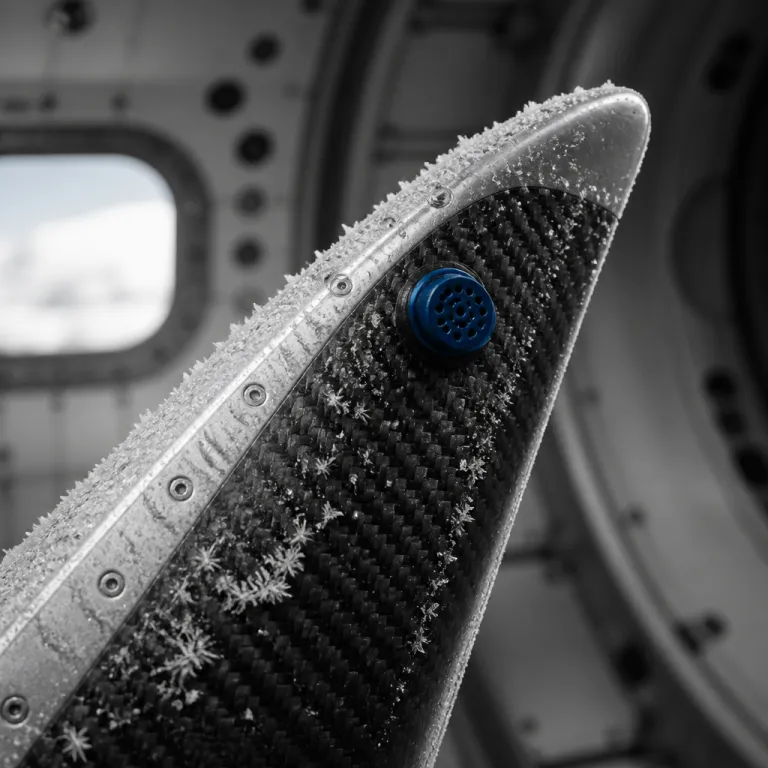
Why 100 percent SAF business jet contrails suddenly matter to owners
The recent Gulfstream G800 campaign with Pearl 700 engines pushed sustainable aviation from marketing slogan to measurable physics at 50 000 feet. For the first time on a long range business jet, engineers compared 100 percent SAF business jet contrails against those from conventional jet fuel and low sulfur aviation fuels under controlled formation flight. For a high net worth buyer weighing a new jet, this is where climate impact stops being abstract and starts living in your operating profile.
The test matrix used three fuels in sequence : standard Jet A, low sulfur Jet A, and neat HEFA SPK, a hydroprocessed esters and fatty acids synthetic paraffinic kerosene that qualifies as sustainable aviation fuel. The lead G800 burned each fuel while a modified G700 flew behind, sampling nvPM (non volatile particulate matter) emissions, soot mass, particle number and contrail ice properties with research probes originally developed for Deutsches Zentrum für Luft und Raumfahrt. Those instruments, based at the DLR site in Raumfahrt Oberpfaffenhofen, have been used for decades to study Schumann layer interactions, contrail cirrus formation and climate forcing from commercial aviation.
Why does this matter to a private owner who flies 400 to 600 hours per year ? Because contrails, not CO2 alone, dominate short term climate forcing on typical business jet flight distances between 1 500 and 7 000 kilometers. When exhaust soot seeds ice crystals in cold, moist air, each ice particle can grow into contrail ice that spreads into thin contrail cirrus, trapping outgoing longwave radiation. The G800 tests showed that when soot and nvPM emissions fall on 100 percent SAF, the number of ice crystals and the brightness of the contrail visibly change, which directly links your fuel choice to real climate impact beyond the carbon ledger.
Inside the G800 and G700 formation flights : what the data shows
Across multiple sorties, the G800 climbed to cruise altitudes up to 50 000 feet while the G700 tucked in behind at distances between roughly 100 and 500 meters, flying in and out of the wake to sample fresh contrails. Each flight leg repeated the same profile with different fuels so that engineers could build a clean data table comparing nvPM emissions, soot mass, particle number and contrail ice properties for Jet A, low sulfur Jet A and neat HEFA SPK. For an owner used to reading spec sheets on range and climb rate, this was the equivalent of a performance chart for climate.
Preliminary analysis from the Rolls Royce and Gulfstream équipe points in one direction : 100 percent SAF business jet contrails carry significantly fewer soot particles, which means fewer ice crystals and dimmer contrail cirrus in the same atmospheric conditions. Instruments from DLR’s Institut für Physik der Atmosphäre, part of the Deutsches Zentrum für Luft und Raumfahrt, measured contrail ice particle size distributions and showed a clear shift when the jet burned HEFA SPK instead of conventional jet fuel. That aligns with earlier work by researchers such as Ulrich Schumann and Christiane Voigt, whose studies on aviation fuels and contrail ice microphysics have long suggested that cleaner combustion reduces climate forcing from non CO2 effects.
For context, think about a typical New York to Los Angeles flight distance of around 4 000 kilometers in a large cabin jet, compared with a shorter hop in a midsize platform like a Learjet 55. On both missions, the engines spend hours in the temperature and humidity bands where contrails form, but the longer cruise segment multiplies the time your exhaust can generate ice crystals and persistent contrail cirrus. The G800 campaign effectively turned that cruise phase into a controlled laboratory, showing that when sustainable aviation fuel cuts soot and nvPM emissions, the resulting contrail ice structure changes in ways that matter for climate impact, even though the aircraft’s thrust and climb performance remain within the same envelope.
What this means for your next jet, from fuel choices to future specs
For a buyer looking at a new Gulfstream G800, Bombardier Global 7500 or Dassault Falcon 10X, the headline is simple : every in production Rolls Royce business aviation engine is already certified to run on 100 percent SAF, even if the airport cannot yet supply neat HEFA SPK at scale. Lifecycle analyses suggest that sustainable aviation fuels can cut net CO2 emissions by up to roughly 80 percent compared with fossil jet fuel, and the G800 tests now add evidence that 100 percent SAF business jet contrails may also reduce non CO2 climate forcing by lowering soot driven ice particle formation. The catch is availability, not technology, which means your climate impact will be decided as much by your fuel contract and home FBO as by your choice of airframe.
In practical terms, you cannot simply call any FBO and request 100 percent SAF for tomorrow’s transatlantic flight, because most locations blend sustainable aviation fuel at 30 to 50 percent with conventional Jet A. Supply is concentrated at major hubs like Van Nuys, Teterboro, Farnborough and a handful of European airports where partnerships with producers such as Neste and World Fuel Services are strongest. If you base your jet at a smaller field, you may need to tanker fuel from a SAF equipped hub or structure a long term offtake agreement, the same way you would negotiate hangar space or maintenance slots for a high utilization aircraft like a Phenom 300EV, whose updated performance and payload profile is analyzed in detail in this Stars Jets briefing on the world’s best selling light jet.
Looking ahead, expect performance specs to start listing not just range and time to climb, but also certified SAF blend levels and measured nvPM emissions under standard test points. Owners already ask whether a G800’s 8 000 nautical mile range, explored in depth in this Stars Jets analysis of nonstop mission profiles, can be flown on high blend sustainable aviation fuel without payload penalties, and the answer from the July test campaign is encouraging. The aircraft met its cruise targets on neat HEFA SPK, while the contrail data and figure sets being processed by DLR and NASA should eventually translate into clearer guidance on optimal altitudes and routing to minimize contrail cirrus, giving you another lever beyond simply paying more for cleaner fuel when you plan each long range flight.