From auto pilot to autonomous flight: where AI already earns its keep
The phrase ai autonomous private jet sounds futuristic, yet the building blocks are already in your hangar. On a Gulfstream G700 or G800, the Symmetry Flight Deck with active control sidesticks quietly shifts work from human pilots to software, and that shift is where your operating economics begin to change. Think of it less as a robot captain and more as an extra brain that never gets tired.
Today artificial intelligence in business aviation aircraft lives in specific, tightly defined roles, not in some free roaming system that can perform tasks without oversight. AI enhanced flight planning engines ingest weather, traffic, runway performance data, and your preferred departure time to propose routes that trim minutes and fuel burn from every flight. Over a year of typical owner usage, that kind of optimisation can offset a meaningful share of your variable costs, especially on long legs such as Teterboro to Van Nuys or Farnborough to Dubai.
On the maintenance side, predictive algorithms already monitor avionics, engines, and flight controls to flag anomalies before they become AOG events. For a high utilisation private jet, avoiding even one unscheduled diversion or overnight delay at the wrong location can protect six figures of opportunity cost, not to mention reputational damage when a board meeting or investor roadshow is missed. This is where the real value of an AI enabled, increasingly autonomous business jet begins to show up in your menu log of annual expenses.
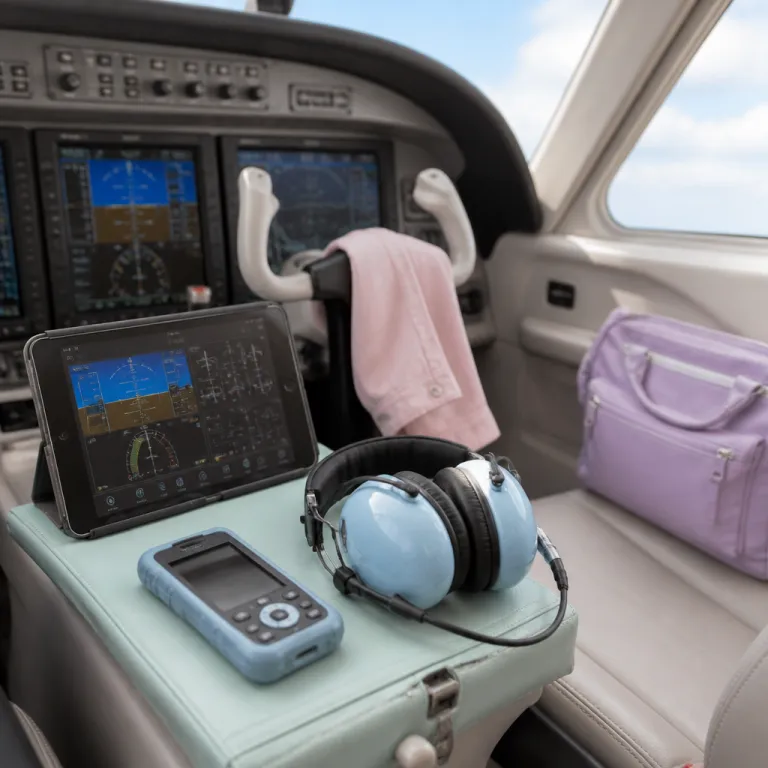
Cabin and cockpit technology now blend in ways that matter to owners who care about both comfort and control. On a Bombardier Global 7500, for example, the avionics display can show a real time view of turbulence predictions, while the cabin management system lets you click to expand detailed flight information without bothering the pilot. That same data backbone is what will eventually support more autonomous flight modes, because the aircraft already knows its precise location, fuel state, and performance margins at every phase of flight.
Think of your current auto pilot as the pre autonomous layer, and your pilots as the thread starter in every safety chain. They program the system, monitor the messages, and intervene when the technology behaves in ways that do not match the brief. AI simply adds another layer of cross checking, comparing expected behaviour with real sensor data in real time and surfacing only the anomalies that matter.
Owners sometimes ask whether this is exactly problem solving or just gadgetry. The answer lies in how these systems change the rhythm of a flight, especially in busy terminal areas where workload spikes. When the aircraft can handle routine tasks such as lateral navigation, climb profiles, and speed management, the pilot is free to think strategically about weather, alternates, and passenger needs instead of heads down button pushing.
Regulators have been cautious, but the direction of travel is clear in both Europe and the United States. Certification pathways for more advanced automation in aviation aircraft focus first on decision support, then on supervised autonomous flight segments such as gate to runway taxi or cruise level optimisation. For an owner, that staged approach means you will see incremental gains in reliability and cost efficiency long before anyone offers you a fully crewless ai autonomous private jet.
In the cabin, the experience already feels quietly autonomous to many frequent flyers. You tap a tablet to adjust lighting, check the remaining flight time, or view the aircraft’s exact location over a satellite map, and the system responds instantly. Behind that simple click to expand interface sits a complex network of sensors and software that is steadily learning from every leg you fly.
The single pilot question: crew costs, regulation, and your risk appetite
The most contentious economic shift tied to next generation autonomous private jet technology is the move toward single pilot operations. For a typical midsize or super midsize private jet, pilot and copilot compensation, benefits, and training represent roughly 15 to 25 percent of direct operating costs. If automation and artificial intelligence can safely support one pilot instead of two on certain missions, the impact on your annual budget is immediate and measurable.
Regulators are already studying how far they can stretch existing rules without compromising safety. Under business aviation regulations, some aircraft such as the Pilatus PC 24 and certain Cessna Citation models are certified for single pilot use, but charter operators and insurers often still require two pilots for commercial flights. The next step is not a jump to fully autonomous flight, but a carefully bounded regime where advanced flight controls and monitoring systems allow a single pilot to manage the workload on defined routes and in defined weather conditions.
From an owner’s perspective, the regulatory path matters less than the combined stance of insurers and your own family office risk committee. Even if the aviation authority signs off on a single pilot AI assisted flight deck configuration, underwriters may price the policy as if you still had two humans on the flight deck. In that scenario, the theoretical crew savings evaporate, and you are left paying for technology that does not yet reduce your premiums.
Insurance actuaries care about data, not marketing messages about futuristic cockpits. They will want to see millions of flight hours with AI supported systems handling real world edge cases before they adjust their models, and that takes time. Until then, expect them to treat autonomous flight features as safety enhancements that reduce incident frequency rather than as a green light to cut crew numbers across your fleet.
There is also the human factor, which no amount of artificial intelligence can fully erase. A single pilot in a high performance aviation aircraft such as a Challenger 350 or a Gulfstream G280 carries a different cognitive load than a two pilot crew, even with the most advanced auto pilot and flight management system. AI can perform tasks such as continuous systems monitoring and predictive rerouting, but it cannot yet shoulder the moral weight of a tough go no go decision in marginal conditions.
For owners who want to understand how deeply automation already shapes the cockpit, it is worth studying the modern business jet flight deck in detail. A good starting point is a technical breakdown of contemporary flight controls, such as an analysis of the Learjet 55 systems in this guide on understanding the flight controls of the Learjet 55. Once you see how much of the workload is already handled by digital systems, the idea of an intelligent, semi autonomous private jet feels less like science fiction and more like an incremental evolution.
Regulatory bodies are also exploring how to log register and audit the performance of AI systems in the same way they track pilot training and currency. That means every anomaly, every alert, and every intervention will generate digital messages that can be reviewed later, much like a cockpit voice recorder transcript. For owners, this level of transparency can be reassuring, because it turns vague promises about safety into a concrete menu log of events and responses.
In practice, the first wave of single pilot operations supported by AI will likely appear on simpler aircraft and shorter routes. Think of turboprops and light jets flying regional sectors, where the operational profile is more predictable and the regulatory hurdles are lower. Your large cabin intercontinental private jet will probably remain a two pilot domain for longer, even as its systems quietly become more autonomous with every software update.
How AI reshapes the operating cost stack: beyond crew salaries
When owners ask how an ai autonomous private jet will change their economics, they usually start with crew headcount. That is understandable, because pilot salaries, benefits, and training cycles are visible line items that feel negotiable, while software and avionics upgrades feel abstract. The reality is that AI and autonomous flight systems touch almost every layer of your cost structure, often in ways that are less obvious but more durable.
Start with fuel, which remains the largest variable cost on any long range mission. AI enhanced route optimisation can shave a few percent off burn by choosing altitudes, speeds, and tracks that balance winds, traffic, and airspace constraints more intelligently than a human working alone. Over hundreds of hours per year, those small percentage gains compound into a meaningful reduction in total spend, especially if you operate a large cabin aircraft such as a Global 6500 or Falcon 8X.
Maintenance is the next frontier where artificial intelligence quietly earns its keep. Predictive health monitoring systems already track engine vibration, temperature margins, and component wear in real time, sending messages to maintenance teams long before a part fails. For an owner, that means fewer surprises, better scheduling of downtime, and the ability to align heavy checks with your personal calendar instead of the aircraft’s whims.
Consider a high utilisation turboprop such as a King Air 300, which has become a test bed for advanced avionics and monitoring tools. Detailed analyses of its systems, like those found in technical reviews of exploring the capabilities of the King Air 300, show how continuous data capture can extend component life and reduce unscheduled events. Apply that same philosophy to a larger AI driven long range jet, and you begin to see how the maintenance line on your budget could flatten over time.
Insurance pricing will eventually reflect these shifts, but not overnight. Underwriters will want to see not just aggregate safety statistics, but granular evidence that AI supported systems reduce both the frequency and severity of incidents across diverse fleets and locations. When that data arrives, expect a more nuanced pricing model where aircraft with certified autonomous flight capabilities and robust monitoring systems earn lower premiums than legacy models with minimal automation.
There is also a softer, but still financial, dimension to consider. An advanced automated private jet that can perform tasks such as automated taxi guidance, runway overrun protection, and real time terrain avoidance may be more attractive to charter clients and corporate users who value perceived safety. That increased demand can support higher charter rates or better utilisation, which in turn spreads your fixed costs over more revenue generating hours.
Owners should also think about the lifecycle value of their aircraft in a market that is rapidly digitising. A jet with upgradable avionics, open architecture for new AI modules, and a strong support ecosystem will hold its value better than a model locked into a static system. When buyers in the secondary market start asking how autonomous ready a given private jet is, you will be glad you invested early in the right technology stack.
Finally, there is the operational resilience that comes from having smarter systems watching your back. When AI can flag a deteriorating weather pattern, suggest an alternate, and coordinate with dispatch before the pilot even calls, you reduce the risk of costly diversions and passenger dissatisfaction. Over a decade of ownership, those avoided disruptions can matter as much to your perceived cost of flying as any headline saving on crew salaries.
What the next five years really look like for owners
The marketing narrative around ai autonomous private jet concepts often jumps straight to pilotless cabins and science fiction visuals. The reality for owners over the next five years is more grounded, more incremental, and arguably more useful. You will not be asked to board a crewless Gulfstream at Teterboro, but you will quietly rely on AI for more of each mission than you might realise.
Expect the cockpit to feel increasingly like a collaborative workspace between human and machine. AI systems will pre analyse weather, traffic, and performance constraints before the crew even arrives at the aircraft, presenting a curated set of options rather than a blank slate. During the flight, those same systems will continue to monitor conditions, sending targeted messages to the pilots when a change in route, altitude, or speed could improve safety or efficiency.
From a user interface perspective, the experience will start to resemble the digital platforms you use in other parts of your life. Pilots will interact with avionics through more intuitive touchscreens, voice commands, and context aware menus that adapt to the phase of flight and current workload. For passengers, cabin systems will offer richer real time data, letting you click to expand detailed views of your route, estimated arrival time, and even the aircraft’s performance margins at your current location.
Owners who manage their fleets through digital dashboards will see similar evolution. Instead of static reports, you will receive dynamic threads of information that feel like well organised messages in a communications app, with each flight generating its own thread starter summarising key events. You might see entries such as “joined Oct messages for winter operations” or “joined Dec messages for new ETOPS procedures,” reflecting how your operation adapts over time.
Operational logs will become more interactive as well. Rather than sifting through dense PDFs, you will use a menu log interface where you can click to expand specific incidents, view sensor data, and even register a reply or comment for your team. In that sense, the boundary between traditional log register entries and modern collaboration tools will blur, making it easier to audit and improve your operation.
For owners comparing aircraft, the question will shift from “Does it have auto pilot and synthetic vision ?” to “How deeply is artificial intelligence integrated into the flight controls and maintenance ecosystem ?”. A model that can perform tasks autonomously under supervision, such as automated descent profiles or runway selection based on real time conditions, will feel very different from one that simply follows pre programmed routes. Over time, that difference will influence not just safety and comfort, but also residual values and buyer demand.
Cabin expectations will rise in parallel. Articles that dissect interiors and avionics, such as this detailed look at the Challenger 350 interior for refined private jet travel, already highlight how seamlessly technology and design now blend. As AI becomes more capable, passengers will expect the same level of intelligence from their cabin systems as from their smartphones, whether that means smarter climate control, personalised lighting, or proactive updates about arrival logistics.
The bottom line for a high net worth owner is straightforward. Over the next cycle, you should evaluate every new aircraft or major avionics upgrade through the lens of how it prepares your private jet for an increasingly autonomous future, even if you never intend to fly without a human pilot. The real luxury will be an aircraft that feels calm, anticipatory, and quietly competent at altitude, while keeping your operating costs as disciplined as your balance sheet.
Key figures on AI, automation, and private jet economics
- Business aviation manufacturers report that pilot compensation, benefits, and training typically account for 15 to 25 percent of direct operating costs for midsize and large cabin jets, which explains why any credible move toward single pilot operations attracts intense owner interest. These ranges are consistent with cost breakdowns published in OEM operating cost guides and NBAA benchmarking surveys.
- Industry data from major avionics suppliers indicates that AI enhanced flight planning and weather routing can reduce fuel burn by roughly 2 to 5 percent on long range missions, a range that translates into tens of thousands of euros in annual savings for a frequently flown large cabin private jet. This band aligns with figures cited in manufacturer white papers on advanced flight management systems and performance based navigation.
- Predictive maintenance programs using continuous engine and systems monitoring have been shown in manufacturer case studies to cut unscheduled maintenance events by up to about 30 percent, which significantly reduces the risk of costly AOG situations and protects high value business itineraries. These results are typically drawn from fleet trials of health and usage monitoring systems on business jets and regional aircraft.
- Insurance market analyses suggest that hull and liability premiums for business jets can vary by approximately 10 to 20 percent based on safety equipment, training standards, and loss history, a spread that will likely widen as underwriters begin to differentiate between traditional and AI assisted operations. This range reflects indicative figures in broker reports and aviation insurance association briefings.
- Regulatory roadmaps published by major aviation authorities outline a staged approach to automation, with near term focus on AI based decision support and monitoring tools, followed by carefully supervised autonomous functions, rather than any immediate approval of fully pilotless commercial business jet flights. These timelines are summarised in public consultation papers and strategic plans from agencies such as EASA and the FAA.