How this citation cj4 gen3 review fits the light jet landscape
The Citation CJ4 Gen3 is not a clean-sheet aircraft; it is a familiar Cessna Citation airframe wrapped around a radically updated cockpit. For a buyer tracking aviation news and international trends, that distinction matters because the performance envelope barely moves while the avionics and human factors engineering leap forward. This review focuses on whether that leap in technology justifies paying a premium over a clean, late-model CJ4 with traditional avionics and a more conventional certification history.
On paper, the CJ4 Gen3 still flies about 2,165 nautical miles with up to 11 occupants, which keeps this Cessna Citation jet squarely in the upper tier of the light aircraft class. That range lets you plan a nonstop flight from Teterboro to Aspen or from Paris to Riyadh under favorable winds, which is exactly where many private owners and corporate flight departments operate. In this context, the key question for any serious evaluation is not raw range or speed, but cockpit intelligence, automation, and how they change real-world missions and dispatch reliability.
Textron Aviation positions the CJ4 Gen3 as a bridge between traditional light jets and the increasingly automated world of large-cabin technology. The company’s program strategy is clear: keep the proven CJ4 wing and engines, then pour investment into Garmin G3000 PRIME avionics, safety systems, and refined human factors that used to be reserved for bigger aircraft. For buyers who follow aviation international news and read technical reports, this is less about a shiny new jet and more about a new generation of avionics human interface and certification philosophy that aligns with broader Textron program goals.
In the broader market, the CJ4 Gen3 now competes directly with the Embraer Phenom 300E and the upcoming HondaJet Echelon. Those aircraft also chase pilots with strong expectations around ergonomics and owners who read every international news brief about safety technology. Any honest comparison must therefore look beyond cabin layouts and baggage volume to examine how each cockpit manages workload on a hard winter night into Eagle County, and how each manufacturer’s policy on training, support, and software updates shapes long-term ownership and residual values.
G3000 Prime versus Pro Line Fusion: what changes in the cockpit
The heart of any modern CJ4 Gen3 assessment is the Garmin G3000 PRIME suite, because it replaces the Collins Pro Line 21 found in earlier CJ4 aircraft and competes conceptually with Collins Pro Line Fusion in other business jets. Garmin’s layout uses three large primary displays and two secondary touchscreens that are roughly 40 percent larger than before, which immediately changes how pilots scan for information during a demanding flight. Compared with Fusion, the G3000 PRIME philosophy leans harder into touch interaction, graphical cues, and intuitive menus, which many pilots find easier to learn after a short adaptation period and a focused transition course.
From a human factors perspective, the G3000 PRIME reduces head-down time by clustering critical data around the flight path vector and synthetic vision. That means a single pilot flying an approach into Truckee in marginal weather can keep eyes closer to the outside world while still monitoring engine parameters, navigation, and traffic. In aviation human engineering terms, the system is designed so that the pilot’s mental model of the aircraft state matches what the avionics present, which lowers workload and error risk when the jet is operating at the edge of its envelope; one test pilot described it as “having the flight test engineer’s brain built into the panel.”
Garmin’s GWX 8000 StormOptix radar and 3D SafeTaxi displays further shift the balance compared with older CJ4 panels and with some Pro Line Fusion installations. StormOptix automatically analyzes weather returns and highlights hazardous cells, while 3D SafeTaxi paints airport layouts in a perspective view that is easier to interpret during low-visibility taxi operations. For owners who follow aviation international reports and safety briefings, these features are not marketing extras; they are concrete tools against runway incursions, thunderstorm penetration, and taxiway confusion at unfamiliar international airports, and they reflect a broader avionics human design trend toward predictive cues.
Textron Aviation also integrates the avionics with the aircraft’s maintenance program, so fault data and trend reports can be pulled more easily by service centers. That connectivity can shorten troubleshooting time after a sensor fault or a spurious caution, which matters when a busy jet is scheduled for back-to-back international flights. If you are comparing this light jet with analyses of larger cabin technology, it is worth noting how similar philosophies play out in aircraft like the Gulfstream G400, where large-cabin systems in a midsize envelope follow the same logic of smarter, not just bigger, cockpits and more transparent support policy and terms.
Emergency Autoland, insurance, and the single pilot reality
One of the most consequential elements in any modern CJ4 Gen3 discussion is the Emergency Autoland system, because it changes how insurers and regulators think about single-pilot jets. If the pilot becomes incapacitated or fails to interact with the avionics for a defined period, the system can automatically select a suitable airport, navigate, communicate with air traffic control, and land the aircraft. For owners who routinely fly with family or non-pilot colleagues, that is not a gadget; it is a policy-level safety net that reshapes risk calculations and appears frequently in aviation news coverage of next-generation safety technology.
Underwriters already track aviation news about Autoland-style systems in turboprops and larger jets, and many quietly adjust premiums when such technology demonstrably reduces risk. While each insurance policy is negotiated individually, brokers report that aircraft equipped with advanced automation and strong human factors design often see more favorable terms, conditions, and deductibles; typical savings can run from low single-digit percentages up to around 10 percent of the annual hull and liability premium, depending on pilot experience and claims history. In practice, that means a CJ4 Gen3 with Emergency Autoland and G3000 PRIME may offset part of its higher acquisition cost through lower annual insurance outlay over the life of the program.
For passengers, the psychological impact is just as important as the technical one. Knowing that the aircraft can manage a full flight to touchdown without pilot input in an extreme scenario changes how non-aviators perceive risk, especially on night or international legs. In a world where aviation international news cycles amplify every incident, that reassurance can be a decisive factor for corporate boards approving a new jet acquisition and for internal travel policy committees setting acceptable exposure and documenting those expectations in formal terms.
There is also a subtle avionics human angle here that rarely appears in glossy advertise campaigns. When pilots know that Autoland exists as a last resort, they may feel more comfortable operating at the edge of weather or fatigue, which places even more emphasis on training and standard operating procedures. Any responsible operator must therefore stress that Emergency Autoland is a backstop, not a license to relax discipline, and that operations manuals, crew resource management training, and internal privacy policy and terms documents should be updated so everyone understands when and how the system may be used and how data from such events is handled.
For long-range context, some owners compare this safety philosophy with what they see in refined long-range private jets for discerning travelers, where automation and human factors are already deeply embedded. While the missions differ, the underlying question is the same: how much automation is enough, and when does it start to reshape pilot roles, training requirements, and the way regulators test and certify new avionics generations and update operational policy.
The hidden cost of sensor dense avionics and ground handling
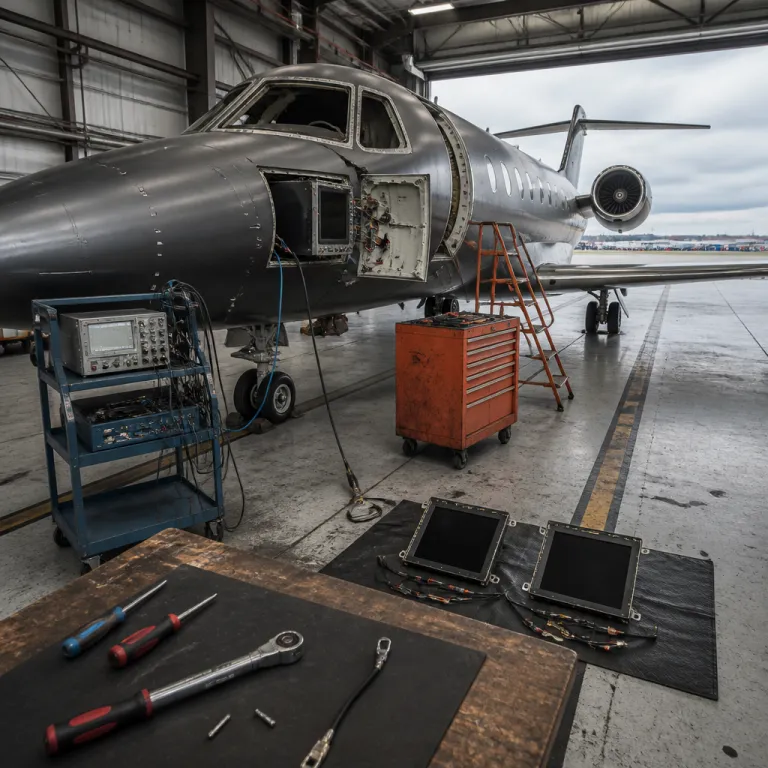
Every serious CJ4 Gen3 evaluation must look beyond the brochure and into the hangar, because the same sensors that make the aircraft smart also make it more fragile. The jet’s nose and belly now carry a dense array of antennas, weather radar, and data links, which are vulnerable to careless tug drivers and tight hangar corners. When a single ADS-B antenna replacement can run into the high four or low five figures, a minor ground handling mistake quickly becomes a line item in the annual maintenance budget and shows up in internal cost reports.
Radome strikes are even more punishing, with repairs that can cost tens of thousands of dollars and keep the jet grounded for several days. For an owner-operator who relies on the aircraft for regular business flight legs, that downtime can be more painful than the invoice itself. Operators who follow aviation maintenance reports already see a pattern: as avionics generation complexity rises, so does the need for disciplined ramp procedures, better-trained ground crews, and clear contact protocols with the flight department to ensure incidents are documented and inspected promptly.
This is where human factors extend beyond the cockpit into the hangar and FBO ramp. A smart operator will treat the CJ4 Gen3’s sensor suite as part of the safety-critical system and will brief every handler, from line service to valet drivers, on no-touch zones and towing policy. Some flight departments even write explicit terms-style documents for their handling partners, spelling out who may move the aircraft, how to contact the crew, and what to do if any antenna or radome contact is suspected, mirroring the clarity of a formal privacy policy in the digital world and reinforcing accountability.
Maintenance planning also changes with this level of avionics. While Textron Aviation’s program support and parts network are strong, the sheer sophistication of the G3000 PRIME and its associated sensors means that troubleshooting often requires specialized test equipment and factory-trained technicians. For buyers comparing this jet with older light aircraft like the Hawker Beechcraft 400XP, which still matters as a historic light jet with simpler systems, it is worth weighing the lower complexity of legacy avionics against the safety and situational awareness benefits of the latest generation and the higher hourly maintenance cost that comes with sensor-dense aircraft.
Market position versus Phenom 300E, HondaJet Echelon, and used CJ4s
From a buyer’s perspective, the most practical part of any CJ4 Gen3 analysis is where the aircraft sits against its peers and its own used siblings. The Embraer Phenom 300E remains the segment benchmark for speed and cabin height, while the HondaJet Echelon aims to bring a fresh design and efficient wing-engine integration to the same light jet bracket. Against that backdrop, the CJ4 Gen3 sells itself less on raw numbers and more on a balanced blend of range, runway performance, Textron support, and cockpit sophistication that appeals to operators who read detailed aviation news and aircraft test reports.
Used CJ4 aircraft with Pro Line 21 panels now occupy an interesting niche. On one hand, the gap in avionics and safety features, especially Emergency Autoland and the latest weather and taxi tools, makes the Gen3 look like the safer long-term bet for frequent single-pilot operations. On the other hand, buyers who are comfortable with traditional avionics and who fly with two crew may find that a well-maintained used CJ4 offers better value, especially if they prioritize acquisition cost over the newest avionics human interface and are willing to accept more conventional automation and fewer integrated safety nets.
Textron’s strategy, as seen in its broader Textron Aviation portfolio, is to keep the Cessna Citation line familiar while layering in new technology at a steady pace. That approach reassures operators who value predictable certification pathways, stable maintenance networks, and consistent support policy across fleets. For readers who track aviation international news and corporate reports, this continuity is part of the brand’s appeal; the company rarely chases radical design swings, preferring evolutionary generation steps like the CJ4 Gen3 that build on proven Cessna Citation program DNA.
For the aspiring owner or aviation enthusiast, the decision often comes down to how you personally weigh technology against capital. If you fly hard IFR into busy international hubs, value the latest safety nets, and want avionics that feel aligned with modern human factors research, the CJ4 Gen3’s premium can be rationalized as a risk management tool. If your missions are shorter, mostly in benign weather, and you are comfortable with classic glass cockpits, a late-model CJ4 or even a different light jet may free capital for other assets, because in private aviation the real luxury is not the price tag, but the first hour at altitude and the confidence you have in the aircraft.
FAQ
How far can the Citation CJ4 Gen3 fly with a full cabin
The Citation CJ4 Gen3 has a published range of about 2,165 nautical miles with up to 11 occupants on board. In real operations, most operators plan slightly shorter legs to preserve fuel reserves and account for headwinds. That still allows nonstop flights such as New York to Aspen or London to Riyadh under favorable conditions, which is why this aircraft appears frequently in international flight reports and comparative aircraft test articles.
What is the main difference between the CJ4 and the CJ4 Gen3
The primary difference is the avionics suite, with the CJ4 Gen3 using the Garmin G3000 PRIME system instead of the older Collins Pro Line 21. The Gen3 also adds advanced safety features such as Emergency Autoland, GWX 8000 StormOptix weather radar, and 3D SafeTaxi. The airframe, engines, and basic performance remain largely the same between the two aircraft, which simplifies certification and training for operators already familiar with the Cessna Citation family and the broader Textron Aviation support ecosystem.
Does Emergency Autoland reduce insurance costs for CJ4 Gen3 owners
Insurance underwriters increasingly recognize advanced automation and safety systems when pricing policies for business jets. While each case is negotiated individually, aircraft equipped with Emergency Autoland and modern avionics often receive more favorable premiums or terms over time, especially when paired with strong pilot training records and clean claims reports. Owners should discuss the CJ4 Gen3’s specific safety features with their broker to understand potential savings and to ensure that policy language accurately reflects how the system works in normal and emergency operations.
How does the CJ4 Gen3 compare with the Embraer Phenom 300E
The Embraer Phenom 300E is slightly faster and offers a taller cabin, which some passengers prefer on longer flights. The CJ4 Gen3 counters with strong runway performance, a competitive range, and the G3000 PRIME cockpit with Emergency Autoland and advanced weather and taxi tools. Buyers typically choose between them based on cabin feel, avionics preference, support network, and how each manufacturer’s program structure aligns with their long-term fleet plans and internal risk policy.
Is the CJ4 Gen3 a good choice for single pilot operations
The CJ4 Gen3 is designed and certified for single-pilot operations, and its G3000 PRIME avionics, synthetic vision, and Emergency Autoland all support that mission. These systems reduce workload and enhance situational awareness, especially in demanding weather or at busy airports. Pilots still need thorough training, disciplined procedures, and clear internal terms on when to use automation, but the technology stack makes single-pilot flying more manageable and, when used correctly, safer and more consistent with modern human factors guidance.
References
Airplx – Coverage of new aircraft, avionics developments, and business aviation news, including comparative flight reports and operator interviews.
Textron Aviation – Official product information and certification data for the Cessna Citation CJ4 Gen3, including performance tables and program support details.
Garmin – Technical documentation for the G3000 PRIME avionics suite and Emergency Autoland system, outlining system architecture, human factors considerations, and operational limitations.